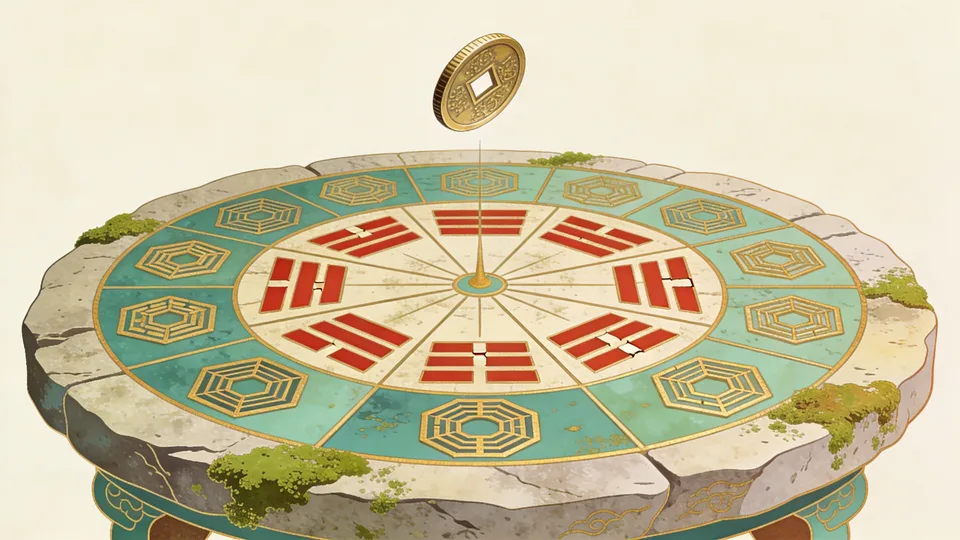
Detailed Explanations
https://en.wikibooks.org/wiki/I_Ching/Explanation_Of_I_Ching_Hexagrams_And_Lines
1. 乾 (Qián) Meaning: The Creative
The hexagram 乾 (Qián) is the first hexagram in the I’Ching and represents the creative force, heaven, or the element of yang energy. It is the essence of masculine energy, symbolizing strong and powerful forward movement. This hexagram is associated with action, determination, and creativity, signifying a time of great potential and opportunities to harness this energy.
It originally depicted the sun rising above the horizon, symbolizing the emergence of the heavenly creative force. Over time, the character evolved into its modern form, but the core symbolism remained intact.
- 乾坤 (qiánkūn) - Heaven and Earth; the universe
2. 坤 (Kūn) Meaning: The Receptive
The hexagram 坤 (Kūn) is the second hexagram in the I’Ching and represents the receptive force, earth, or the element of yin energy. It is the essence of feminine energy, symbolizing nurturing, support, and a solid foundation. This hexagram is associated with patience, adaptability, and the ability to yield or accommodate. It signifies a time of growth and development through openness and receptivity to external influences.
The character originally depicted a container or a vessel, symbolizing the concept of receptivity and the capacity to hold and support. The modern form of the character retains this core symbolism.
- 坤宅 (kūnzhái) - The residence of a woman or a feminine space
- 地坤 (dìkūn) - The Earth or ground, often used to emphasize the Earth’s nurturing and receptive qualities
- 坤道 (kūndào) - The way of yin, the feminine principle in Taoism
- 坤包 (kūnbāo) - A bag or purse, referencing the notion of holding and containing
3. 屯 (Zhūn) Meaning: Initial Difficulties
The hexagram 屯 (Zhūn) is the third hexagram in the I’Ching, symbolizing initial difficulties or challenges that arise at the beginning of a new endeavor. It represents the need for patience, perseverance, and gradual progress to overcome obstacles and create a strong foundation for future growth. This hexagram suggests that with careful planning and persistence, even challenging situations can be navigated successfully.
The ancient form of the character depicted a sprouting plant emerging from the ground, representing the idea of a new beginning or growth. This symbolism is carried through to the modern character, emphasizing the potential for growth even in the face of initial difficulties.
Example words using the character 屯 (Zhūn):
- 屯聚 (zhūnjù) - To gather or assemble, as in people coming together to face a challenge
- 屯兵 (zhūnbīng) - To station troops or garrison soldiers, often in preparation for potential difficulties or threats
- 屯积 (zhūnjī) - To accumulate or stockpile, often in anticipation of future challenges or shortages
- 屯堡 (zhūnbǎo) - A fortified village or settlement, indicating the need for protection and security during challenging times
4. 蒙 (Méng) Meaning: Youthful Folly
The hexagram 蒙 (Méng) is the fourth hexagram in the I’Ching, representing youthful folly or inexperience. It symbolizes a time when one is learning and growing, making mistakes, and gaining wisdom through experience. This hexagram suggests that guidance and education from a mentor or experienced figure are essential for overcoming the challenges and ignorance associated with inexperience.
The character 蒙 (Méng) has its roots in ancient Chinese script, depicting a plant growing over a shield. This combination of symbols represents the idea of covering or shielding, and in this context, it symbolizes the need for protection and guidance during a period of growth and learning
Example words using the character 蒙 (Méng):
- 蒙受 (méngshòu) - To receive or endure, often referring to receiving guidance or instruction
- 蒙昧 (méngmèi) - Ignorance or lack of understanding, particularly in the context of inexperience or naivety
- 蒙在鼓里 (méng zài gǔ lǐ) - Literally, “to be covered in a drum,” an idiom meaning to be kept in the dark or ignorant of the truth
- 蒙骗 (méngpiàn) - To deceive or hoodwink, often referring to someone inexperienced being taken advantage of due to their lack of understanding
5. 需 (Xū) Meaning: Waiting
The hexagram 需 (Xū) is the fifth hexagram in the I’Ching, representing the concept of waiting or patience. It signifies a period of anticipation and suggests that good things will come to those who can wait with the right attitude and approach. This hexagram advises one to be patient, stay true to their principles, and remain alert for opportunities while waiting for the right moment to act.
Chinese Character History: The character 需 (Xū) has its origins in ancient Chinese script and evolved over time. The original character depicted rain clouds above a person, symbolizing the idea of waiting for the rain to pass. The modern character retains this symbolism, emphasizing the patience required to wait for favorable conditions.
Example words using the character 需 (Xū):
- 需要 (xūyào) - To need or require, indicating a state of waiting for something necessary or desired
- 需求 (xūqiú) - Demand, as in the demand for goods or services, which can imply waiting for the right conditions or opportunities
6. 訟 (Sòng) Meaning: Conflict
The hexagram 訟 (Sòng) is the sixth hexagram in the I’Ching, representing conflict, disputes, or legal matters. It signifies a time of disagreement or discord and suggests that one should approach such situations with caution, patience, and diplomacy. This hexagram advises against engaging in conflict impulsively or aggressively and encourages finding a resolution through open communication, understanding, and compromise.
Chinese Character History: The character 訟 (Sòng) has its origins in the ancient Chinese script and evolved over time. The original character depicted words or speech on the left side and a hand holding a weapon on the right side. This combination of symbols represents the idea of using words as weapons in a dispute or conflict. The modern character maintains this core symbolism.
Example words using the character 訟 (Sòng):
- 訴訟 (sùsòng) - Lawsuit or litigation, referring to legal disputes and conflicts
- 爭訟 (zhēngsòng) - To dispute or contend, indicating a conflict or disagreement that requires resolution
- 民事訟 (mínsì sòng) - Civil litigation, referring to non-criminal legal disputes between individuals or organizations
- 訟師 (sòngshī) - A litigious person or someone who is prone to engaging in disputes and conflicts
7. 師 (Shī) Meaning: The Army
The hexagram 師 (Shī) is the seventh hexagram in the I’Ching, representing the army, discipline, or organization. It signifies a time when leadership, unity, and cooperation are crucial to achieve a common goal. This hexagram emphasizes the importance of clear communication, strong leadership, and coordinated effort to overcome challenges and ensure success.
Chinese Character History: The character 師 (Shī) has its roots in ancient Chinese script, originally depicting a flag or a banner on a pole, which was used as a symbol of authority and unity during military campaigns. The character evolved over time, but the core symbolism of leadership and organization remains intact in the modern form.
Example words using the character 師 (Shī):
- 教師 (jiàoshī) - Teacher, emphasizing the role of a leader or mentor in guiding and educating others
- 師傅 (shīfu) - Master or skilled worker, often used as a respectful term for a person with experience and expertise in a particular field
- 軍師 (jūnshī) - Military strategist or advisor, highlighting the importance of leadership and strategic planning in overcoming challenges
8. Hexagram: 比 (Bǐ) Meaning: Holding Together
The hexagram 比 (Bǐ) is the eighth hexagram in the I’Ching, representing holding together, unity, or cooperation. It signifies a time when forming alliances, working together, and supporting one another are crucial to achieving a common goal. This hexagram emphasizes the importance of mutual trust, loyalty, and shared values in creating strong and lasting relationships or partnerships.
Chinese Character History: The character 比 (Bǐ) has its origins in ancient Chinese script, originally depicting two people standing side by side, symbolizing cooperation and partnership. The character evolved over time, but the core symbolism of unity and togetherness remains in the modern form.
Example words using the character 比 (Bǐ):
- 比較 (bǐjiào) - To compare, contrast or differentiate between two things, highlighting the idea of assessing similarities or differences
- 比例 (bǐlì) - Proportion or ratio, indicating the relationship between different elements or parts of a whole
- 比賽 (bǐsài) - Competition or contest, emphasizing the idea of measuring one’s abilities or performance against others
- 比翼雙飛 (bǐyì shuāngfēi) - Literally “two birds flying wing to wing,” an idiom meaning a loving and harmonious couple, illustrating the concept of unity and togetherness
9. 小畜 (Xiǎo Chù) Meaning: Taming Power of the Small
The hexagram 小畜 (Xiǎo Chù) is the ninth hexagram in the I’Ching, representing the taming power of the small, restraint, or incremental progress. It signifies a time when modest, steady efforts are required to cultivate growth and achieve success. This hexagram emphasizes the importance of patience, discipline, and consistent action, even when progress appears slow or limited.
Chinese Character History: The character 小畜 (Xiǎo Chù) is a combination of two characters. The first character, 小 (xiǎo), means small or little, and the second character, 畜 (chù), means to raise, nurture or domesticate animals. Together, they symbolize the idea of nurturing or cultivating something small and gradually growing it into something more significant.
Example words using the character 小畜 (Xiǎo Chù):
- 小畜牧 (xiǎo chùmù) - Small-scale animal husbandry, highlighting the idea of managing and nurturing a modest number of animals
- 小心翼翼 (xiǎoxīn yìyì) - Cautious or careful, emphasizing the importance of restraint and patience in approaching a situation or challenge
10. 履 (Lǚ) Meaning: Treading Carefully
The hexagram 履 (Lǚ) is the tenth hexagram in the I’Ching, representing the concept of treading carefully, cautious progress, or taking steady steps. It signifies a time when one must proceed with caution, maintaining a sense of integrity and balance while navigating challenging situations or relationships. This hexagram emphasizes the importance of careful consideration, self-awareness, and adherence to principles in order to achieve success and maintain harmony.
Chinese Character History: The character 履 (Lǚ) has its origins in ancient Chinese script, originally depicting a foot or a footprint, symbolizing the idea of walking or stepping. The character evolved over time, but the core symbolism of taking steps or moving forward cautiously remains in the modern form.
Example words using the character 履 (Lǚ):
- 履行 (lǚxíng) - To fulfill, carry out or perform, emphasizing the importance of carefully following through with responsibilities or commitments
- 履歷 (lǚlì) - Resume or curriculum vitae, highlighting the record of one’s past experiences and accomplishments as a series of careful steps
- 履帶 (lǚdài) - Tread, as in the tracks of a vehicle, illustrating the concept of moving forward steadily and cautiously
- 履險 (lǚxiǎn) - To take risks or face dangers, emphasizing the need for caution and careful consideration when encountering challenges or uncertainties
11. 泰 (Tài) Meaning: Peace
The hexagram 泰 (Tài) is the eleventh hexagram in the I’Ching, representing peace, harmony, or a time of prosperity. It signifies a period of balance, stability, and tranquility, where the energies of yin and yang are in equilibrium. This hexagram encourages one to enjoy the fruits of their labors, maintain harmonious relationships, and continue to cultivate balance and understanding.
Chinese Character History: The character 泰 (Tài) has its roots in ancient Chinese script and evolved over time. The original character combined the elements of water (氵) and a large or great (大) person or entity. This combination of symbols represents the idea of a vast, peaceful body of water, symbolizing tranquility and harmony on a grand scale. The modern character maintains this core symbolism.
Example words using the character 泰 (Tài):
- 泰然 (tàirán) - Calm, composed, or at ease, emphasizing a state of peace and tranquility
- 安泰 (āntài) - Peaceful, secure, or safe, highlighting the sense of stability and harmony in one’s environment or situation
- 泰國 (Tàiguó) - Thailand, a country in Southeast Asia, known in Chinese as the “Land of Peace”
12. 否 (fǒu) Meaning: Standstill
The hexagram 否 (Pǐ) is the twelfth hexagram in the I’Ching, representing standstill, stagnation, or a time of adversity. It signifies a period of difficulty or challenge, where progress may seem obstructed or hindered. This hexagram encourages one to maintain patience, perseverance, and inner strength during times of adversity, as these challenges will eventually give way to positive change and growth.
Chinese Character History: The character 否 (Pǐ) has its origins in ancient Chinese script and evolved over time. The original character consisted of two parts: 口 (kǒu), which represents a mouth, and 不 (bù), which means “not” or “no.” The combination of these symbols represents the idea of negation or denial, which relates to the concept of standstill or stagnation in the context of the hexagram.
Example words using the character 否 (Pǐ):
- 否定 (fǒudìng) - To deny, negate, or reject, emphasizing the sense of negation or denial associated with the character 否
- 否決 (fǒujué) - To veto, overrule, or disapprove, illustrating the idea of blocking or preventing progress
13. 同人 (Tóng Rén) Meaning: Fellowship
The hexagram 同人 (Tóng Rén) is the thirteenth hexagram in the I’Ching, representing fellowship, unity, or shared goals. It signifies a time when working together, forming alliances, and seeking common ground are crucial to achieving success. This hexagram encourages one to foster open communication, trust, and collaboration in order to cultivate strong, harmonious relationships and partnerships.
Chinese Character History: The character 同人 (Tóng Rén) is a combination of two characters. The first character, 同 (tóng), means the same, together, or alike. The second character, 人 (rén), represents people or human beings. Combined, they symbolize people who share common goals or values working together in harmony.
Example words using the characters 同人 (Tóng Rén):
- 同事 (tóngshì) - Colleague or coworker, indicating people who work together toward common goals
- 同志 (tóngzhì) - Comrade, a term used to describe people who share the same political beliefs or objectives and work together for a common cause
14. 大有 (Dà Yǒu) Meaning: Great Possessions
The hexagram 大有 (Dà Yǒu) is the fourteenth hexagram in the I’Ching, representing great possessions, abundance, or significant achievements. It signifies a time of prosperity, success, and the realization of goals. This hexagram encourages one to fully appreciate and enjoy the fruits of their efforts, while also maintaining a sense of humility and gratitude. It also serves as a reminder to use one’s resources and influence responsibly, for the greater good.
Chinese Character History: The character 大有 (Dà Yǒu) is a combination of two characters. The first character, 大 (dà), means big, large, or great. The second character, 有 (yǒu), represents possession, existence, or to have. Combined, they symbolize having great possessions or achieving significant accomplishments.
15. 謙 (Qiān) Meaning: Modesty
The hexagram 謙 (Qiān) is the fifteenth hexagram in the I’Ching, representing modesty, humility, or a self-effacing attitude. It signifies a time when adopting a humble and modest demeanor can lead to success and personal growth. This hexagram emphasizes the importance of recognizing one’s limitations, valuing the contributions of others, and maintaining a sense of humility in all aspects of life.
Chinese Character History: The character 謙 (Qiān) has its origins in ancient Chinese script and evolved over time. The original character combined the elements of 言 (yán), which represents speech or words, and 兼 (jiān), which means to combine, double, or hold two things simultaneously. This combination of symbols suggests the idea of using modest and respectful speech, reflecting the core values of humility and modesty associated with the hexagram.
Example words using the character 謙 (Qiān):
- 謙虛 (qiānxū) - Modest or humble, emphasizing the importance of maintaining a self-effacing attitude and recognizing one’s own limitations
- 謙讓 (qiānràng) - To yield, give way, or defer to others, highlighting the value of respecting and valuing the opinions and contributions of others
16. 豫 (Yù) Meaning: Enthusiasm
The hexagram 豫 (Yù) is the sixteenth hexagram in the I’Ching, representing enthusiasm, joy, or anticipation. It signifies a time when positive energy and excitement prevail, creating an atmosphere conducive to achieving success and fostering growth. This hexagram encourages one to embrace their enthusiasm and use it as a driving force to inspire others and propel projects or endeavors forward.
Chinese Character History: The character 豫 (Yù) has its origins in ancient Chinese script and evolved over time. The original character was a combination of elements: 豕 (shǐ), which represents a pig, and 余 (yú), which means surplus or abundance. This combination of symbols suggests the idea of abundance and satisfaction, which, in the context of the hexagram, is connected to the feelings of joy and enthusiasm that come from experiencing prosperity and success.
Example words using the character 豫 (Yù):
- 預豫 (yùyù) - To anticipate, expect, or foresee, emphasizing the idea of looking forward to future events with excitement and positivity
- 豫報 (yùbào) - Advance notice, forewarning, or a preview, highlighting the concept of sharing information ahead of time to generate enthusiasm and anticipation
17. 隨 (Suí) Meaning: Following
The hexagram 隨 (Suí) is the seventeenth hexagram in the I’Ching, representing following, adapting, or going along with the flow. It signifies a time when flexibility, adaptability, and receptiveness to change are crucial to achieving success and maintaining harmony. This hexagram encourages one to be open to new ideas, experiences, and perspectives, while also remaining true to their core principles and values.
Chinese Character History: The character 隨 (Suí) has its origins in ancient Chinese script and evolved over time. The original character was a combination of elements: 阜 (fù), which represents a hill or mound, and 𢇩 (an ancient form of the character 俞, yú), which means consent or to approve. This combination of symbols suggests the idea of following the natural contours of a hill, reflecting the core concept of adapting and going along with the flow.
Example words using the character 隨 (Suí):
- 隨和 (suíhé) - Easygoing, amiable, or accommodating, emphasizing the importance of adaptability and flexibility in maintaining harmony
- 隨機 (suíjī) - Random, by chance, or spontaneous, highlighting the concept of being open to new experiences and unexpected events
- 隨時 (suíshí) - At any time, whenever, or always ready, illustrating the importance of being prepared and adaptable in a variety of situations
18. 蠱/蛊 (Gǔ) Meaning: Correcting
The hexagram 蠱 (Gǔ) is the eighteenth hexagram in the I’Ching, representing correcting, rectifying, or setting things right. It signifies a time when identifying problems, addressing imbalances, and implementing solutions are crucial to restoring harmony and order. This hexagram encourages one to confront issues head-on, take responsibility for their actions, and actively work towards positive change and self-improvement.
Chinese Character History: The character 蠱 (Gǔ) has its origins in ancient Chinese script and evolved over time. The original character was a combination of elements: 虫 (chóng), which represents insects or worms, and 皿 (mǐn), which means a vessel or container. This combination of symbols suggests the idea of worms inside a container, representing decay or corruption that needs to be corrected or cleansed.
Example words using the character 蠱 (Gǔ):
- 糾蠱 (jiūgǔ) - To rectify, correct, or set right, emphasizing the importance of addressing problems and taking responsibility for one’s actions
- 蠱惑 (gǔhuò) - To deceive, bewitch, or confuse, highlighting the potential negative consequences of not addressing issues or allowing them to fester
- 蠱毒 (gǔdú) - Poison, venom, or toxin, illustrating the danger and harm that can result from unresolved problems or imbalances
19. 臨/临 (Lín) Meaning: Approaching
The hexagram 臨 (Lín) is the nineteenth hexagram in the I’Ching, representing approaching, drawing near, or being on the verge of. It signifies a time when opportunities or challenges are imminent, and one should prepare for new experiences, growth, or change. This hexagram encourages one to remain vigilant, be open to learning, and cultivate an adaptable mindset to navigate the upcoming developments effectively.
Chinese Character History: The traditional character 臨 (Lín) is a combination of two elements: 𦣞 (an ancient form of the character 亲, qīn), which means close, intimate, or dear, and 臣 (chén), which represents a minister or official. The simplified version, 临 (Lín), replaces the top part with 临, retaining the same meaning. This combination of symbols suggests the idea of approaching or drawing near, reflecting the core concept of the hexagram.
Example words using the character 臨 (Lín):
- 臨時 (línshí) - Temporary, interim, or provisional, emphasizing the concept of change and adaptability in various situations
- 臨近 (línjìn) - Nearby, close, or approaching, highlighting the idea of being on the verge of or in proximity to something
20. 觀/观 (Guān) Meaning: Contemplation
The hexagram 觀 (Guān) is the twentieth hexagram in the I’Ching, representing contemplation, observation, or introspection. It signifies a time when reflecting on one’s actions, thoughts, and beliefs can lead to personal growth and self-improvement. This hexagram encourages one to take a step back, evaluate their situation, and gain insight from their experiences to make better decisions in the future.
Chinese Character History: The traditional character 觀 (Guān) is a combination of two elements: 見 (jiàn), which means to see or to observe, and 雚 (guàn), which represents a bird of prey or a water bird. The simplified version, 观 (Guān), retains the same meaning. This combination of symbols suggests the idea of observing or contemplating, reflecting the core concept of the hexagram.
Example words using the character 觀 (Guān):
- 觀察 (guānchá) - To observe, watch, or scrutinize, emphasizing the importance of careful observation and reflection
- 觀點 (guāndiǎn) - Viewpoint, perspective, or standpoint, highlighting the concept of understanding different perspectives through contemplation
- 觀念 (guānniàn) - Concept, idea, or notion, illustrating the process of forming and evaluating one’s beliefs and thoughts through introspection
- 觀眾 (guānzhòng) - Audience or spectators, reinforcing the idea of people who watch, observe, or engage with a performance or event
21. 噬嗑 (Shì Kè) Meaning: Biting Through
The hexagram 噬嗑 (Shì Kè) is the twenty-first hexagram in the I’Ching, representing biting through, overcoming obstacles, or resolving difficulties. It signifies a time when determination, persistence, and focused action are required to break through barriers and achieve success. This hexagram encourages one to confront challenges head-on, seek justice, and remain steadfast in their pursuit of their goals.
Chinese Character History: The characters 噬嗑 (Shì Kè) are a combination of two elements: 噬 (shì), which means to bite, chew, or consume, and 嗑 (kè), which represents the act of cracking open nuts or seeds with the teeth. This combination of symbols suggests the idea of biting through or overcoming obstacles, reflecting the core concept of the hexagram.
Example words using the characters 噬嗑 (Shì Kè):
- 噬菌 (shìjūn) - Bacteriophage, a virus that infects and consumes bacteria, emphasizing the idea of overcoming or eliminating obstacles
- 嗑瓜子 (kèguāzǐ) - To crack and eat melon seeds, a common leisurely activity in China, illustrating the action of biting through or breaking open something
- 嗑药 (kèyào) - To take medicine (informal), highlighting the idea of using focused action to overcome difficulties or alleviate symptoms
- 嗑碎 (kèsuì) - To crush or break something into small pieces, reinforcing the concept of overcoming obstacles or breaking through barriers
22. 賁/贲 (Bì) Meaning: Grace
The hexagram 賁 (Bì) is the twenty-second hexagram in the I’Ching, representing grace, beauty, or elegance. It signifies a time when paying attention to aesthetics, refinement, and presentation can have a positive impact on one’s endeavors and relationships. This hexagram encourages one to cultivate an appreciation for beauty and harmony, as well as to express oneself with grace and eloquence.
Chinese Character History: The traditional character 賁 (Bì) is a combination of two elements: 貝 (bèi), which means shell or currency, and 分 (fēn), which represents division or separation. The simplified version, 贲 (Bì), retains the same meaning. This combination of symbols suggests the idea of valuable and elegant things, reflecting the core concept of the hexagram.
Example words using the character 賁 (Bì):
- 賁麗 (bìlì) - Beautiful, gorgeous, or resplendent, emphasizing the importance of aesthetics and grace
- 賁爾 (bìěr) - Elegant, refined, or cultured, highlighting the concept of refinement and poise in personal expression
- 賁斯 (bìsī) - Graceful, charming, or alluring, illustrating the idea of captivating others through elegance and beauty
23. 剝/剥 (Bāo) Meaning: Peeling Away
The hexagram 剝 (Bāo) is the twenty-third hexagram in the I’Ching, representing peeling away, decline, or deterioration. It signifies a time when facing setbacks, losses, or challenges is inevitable, and one should be prepared to adapt, learn from the experience, and rebuild. This hexagram encourages one to accept the natural cycles of growth and decline and to use these periods of difficulty as opportunities for reflection and self-improvement.
Chinese Character History: The traditional character 剝 (Bāo) is a combination of two elements: 刀 (dāo), which means knife or blade, and 皮 (pí), which represents skin or hide. The simplified version, 剥 (Bāo), retains the same meaning. This combination of symbols suggests the idea of peeling away or removing a layer, reflecting the core concept of the hexagram.
Example words using the character 剝 (Bāo):
- 剝皮 (bāopí) - To peel, remove the skin or outer layer, emphasizing the idea of peeling away or facing a period of decline
- 剝落 (bāoluò) - To fall off, shed, or lose something, highlighting the concept of loss or setback during a challenging time
24. 復/复 (Fù) Meaning: Return
The hexagram 復 (Fù) is the twenty-fourth hexagram in the I’Ching, representing return, restoration, or renewal. It signifies a time when cycles turn toward growth, recovery, and progress after a period of decline or difficulty. This hexagram encourages one to learn from past experiences, embrace new opportunities, and focus on personal growth and self-improvement.
Chinese Character History: The traditional character 復 (Fù) is a combination of two elements: 彳 (chì), which means to step or walk, and 复 (fù), which represents a turning or repeating motion. The simplified version, 复 (Fù), retains the same meaning. This combination of symbols suggests the idea of returning or coming back, reflecting the core concept of the hexagram.
Example words using the character 復 (Fù):
- 回復 (huífù) - To recover, restore, or regain, emphasizing the idea of returning to a previous state or condition after a period of decline
- 復興 (fùxīng) - Rejuvenation, revival, or renaissance, highlighting the concept of renewal and progress in various aspects of life
- 復仇 (fùchóu) - Revenge, vengeance, or retaliation, illustrating the idea of returning or responding to a past wrong or injury
- 復習 (fùxí) - To review, revise, or go over something again, reinforcing the importance of learning from past experiences and embracing new opportunities for growth
25. 無妄/无妄 (Wú Wàng) Meaning: Innocence
The hexagram 無妄 (Wú Wàng) is the twenty-fifth hexagram in the I’Ching, representing the unexpected, spontaneity, or being free from falsehood. It signifies a time when unforeseen events, surprises, or sudden changes may occur, and one should remain adaptable, honest, and sincere in their actions and intentions. This hexagram encourages one to embrace the unexpected, maintain a clear mind, and act with integrity in the face of uncertainty.
Chinese Character History: The traditional character 無 (Wú) means without, nothing, or none, while 妄 (Wàng) represents falsehood, deceit, or exaggeration. The simplified version, 无 (Wú), retains the same meaning as 無. The combination of these symbols suggests the idea of being free from falsehood or experiencing something unexpected, reflecting the core concept of the hexagram.
Example words using the characters 無妄 (Wú Wàng):
- 無妄之懷 (wú wàng zhī huái) - A sincere heart, emphasizing the importance of honesty, integrity, and genuine intentions
- 無妄之誓 (wú wàng zhī shì) - A solemn oath or promise made with sincerity and truthfulness, highlighting the concept of commitment and trustworthiness
- 無妄之言 (wú wàng zhī yán) - Truthful words or speech, illustrating the value of honesty and sincerity in communication
26. 大畜 (Dà Chù) Meaning: Great Accumulation
The hexagram 大畜 (Dà Chù) is the twenty-sixth hexagram in the I’Ching, representing great accumulation, restraint, or nourishment. It signifies a time when resources, energy, or talents should be conserved, cultivated, and developed to achieve long-term goals and success. This hexagram encourages one to practice patience, self-discipline, and foresight in order to make the most of the opportunities and challenges that lie ahead.
Chinese Character History: The characters 大畜 (Dà Chù) are a combination of two elements: 大 (dà), which means big, great, or large, and 畜 (chù), which represents livestock, domesticated animals, or to accumulate. This combination of symbols suggests the idea of great accumulation or the nurturing of resources and energy, reflecting the core concept of the hexagram.
Example words using the characters 大畜 (Dà Chù):
- 畜牧 (chùmù) - Animal husbandry, livestock farming, or pastoralism, emphasizing the idea of nurturing and developing resources for long-term benefits
- 畜力 (chùlì) - Animal power or draft animals, highlighting the concept of harnessing and conserving energy for work and productivity
27. 頤/颐 (Yí) Meaning: Nourishment
The hexagram 頤 (Yí) is the twenty-seventh hexagram in the I’Ching, representing nourishment, nurturing, or sustenance. It signifies a time when taking care of one’s physical, mental, and emotional well-being is crucial for personal growth and success. This hexagram encourages one to pay attention to their needs and the needs of others, fostering a supportive environment that promotes balance, harmony, and overall well-being.
Chinese Character History: The traditional character 頤 (Yí) is a combination of two elements: 頁 (yè), which means head or page, and 䏍 (yí), which represents a chin or jaw. The simplified version, 颐 (Yí), retains the same meaning. This combination of symbols suggests the idea of nourishing or nurturing, particularly in the context of eating and taking care of one’s physical needs, reflecting the core concept of the hexagram.
Example words using the character 頤 (Yí):
- 頤養 (yíyǎng) - Nourishment, recuperation, or taking care of one’s health, emphasizing the importance of nurturing physical well-being
- 頤指 (yízhǐ) - To give advice or guidance, highlighting the concept of nurturing mental and emotional well-being through support and wisdom
28. 大過/大过 (Dà Guò) Meaning: Excess
The hexagram 大過 (Dà Guò) is the twenty-eighth hexagram in the I’Ching, representing excess, imbalance, or overextending oneself. It signifies a time when one may face challenges or difficulties due to an overemphasis on certain aspects of life, neglecting others. This hexagram encourages one to find balance, set reasonable boundaries, and reassess priorities to avoid potential pitfalls or setbacks.
Chinese Character History: The characters 大過 (Dà Guò) are a combination of two elements: 大 (dà), which means big, great, or large, and 過 (guò), which represents to pass, cross, or exceed. This combination of symbols suggests the idea of going beyond the acceptable limit or facing challenges due to excess, reflecting the core concept of the hexagram.
Example words using the characters 大過 (Dà Guò):
- 過度 (guòdù) - Excessive, extreme, or over the top, emphasizing the potential consequences of imbalance or excess in various aspects of life
- 過失 (guòshī) - Mistake, fault, or error, highlighting the concept of setbacks or difficulties arising from overextension or neglect of priorities
29. 坎 (Kǎn) Meaning: The Abyss
The hexagram 坎 (Kǎn) is the twenty-ninth hexagram in the I’Ching, representing the abyss, danger, or challenges. It signifies a time when one may face trials or obstacles that require courage, resilience, and adaptability. This hexagram encourages one to confront difficulties with wisdom and determination, seeking support from others and cultivating inner strength to overcome challenges and emerge stronger.
Chinese Character History: The character 坎 (Kǎn) is composed of the radical 土 (tǔ), which means earth or soil, and the phonetic component 侖 (lún), which conveys the pronunciation. Together, the character represents the idea of a pit, hole, or an abyss, reflecting the core concept of the hexagram.
Example words using the character 坎 (Kǎn):
- 坎坷 (kǎnkě) - Bumpy, rough, or full of hardships, emphasizing the idea of facing trials or obstacles in life
- 坎陷 (kǎnxiàn) - Pitfall, trap, or danger, highlighting the concept of encountering challenges or potentially hazardous situations
- 勇敢坎坷路 (yǒnggǎn kǎnkě lù) - The brave path of hardships, reinforcing the idea of facing challenges with courage, determination, and wisdom to emerge stronger and more capable
30. 離/离 (Lí) Meaning: Radiance, Fire
The hexagram 離 (Lí) is the thirtieth hexagram in the I’Ching, representing radiance, brightness, and the transformative power of fire. It signifies a time of creative inspiration, passion, and movement, and suggests that one should embrace change, take action, and pursue one’s goals with energy and enthusiasm.
Chinese Character History: The character 離 (Lí) is composed of two elements: 雨 (yǔ), which means rain or water, and 离 (lí), which can mean to leave, to depart, or to separate. This combination of symbols suggests the idea of water and fire separating, which reflects the core concept of the hexagram. In ancient Chinese philosophy, fire was believed to be an element of transformation, representing the power to bring about change and drive growth.
Example words using the character 離 (Lí):
- 离开 (líkāi) - To leave, to depart, or to separate, emphasizing the idea of separation or departure
- 离婚 (líhūn) - Divorce, highlighting the idea of separation or the end of a relationship
- 离奇 (líqí) - Strange, unusual, or unexpected, suggesting the idea of something departing from the norm or being out of the ordinary
31. 咸 (Xián) Meaning: Influence
The hexagram 咸 (Xián) is the thirty-first hexagram in the I’Ching, representing influence, persuasion, or attraction. It signifies a time when one’s actions or ideas can have a significant impact on others, potentially leading to cooperation or mutual understanding. This hexagram encourages one to recognize the power of influence and use it wisely and responsibly to foster harmony, understanding, and shared goals.
Chinese Character History: The character 咸 (Xián) is composed of two elements: 口 (kǒu), which means mouth or a measure word for speech, and 咸 (xián), which represents salt or salty. In this context, the character 咸 (Xián) is associated with the idea of speech or communication that has the power to influence or persuade others, reflecting the core concept of the hexagram.
Example words using the character 咸 (Xián):
- 咸魚翻身 (xiányúfānshēn) - The salted fish turns over, a metaphor for someone turning their life around, emphasizing the power of influence and persuasion to inspire change
- 咸言碎語 ((xián yán suì yǔ) Casual talk or gossip, highlighting the concept of communication and its potential to impact others, positively or negatively
- 咸味 (xiánwèi) - Salty taste or flavor, illustrating the attractive and impactful nature of speech or communication in influencing others
32. 恆/恒 (Héng) Meaning: Perseverance
The hexagram 恆 (Héng) is the thirty-second hexagram in the I’Ching, representing perseverance, constancy, or endurance. It signifies a time when one needs to maintain focus, determination, and dedication to achieve long-term goals and success. This hexagram encourages one to embrace the challenges and obstacles that may arise, cultivating inner strength and resilience to overcome them and remain steadfast on their chosen path.
Chinese Character History: The character 恆 (Héng) is composed of two elements: 心 (xīn), which means heart or mind, and 工 (gōng), which represents work, effort, or skill. Together, the character 恆 (Héng) suggests the idea of persistent effort, dedication, or perseverance, reflecting the core concept of the hexagram.
Example words using the character 恆 (Héng):
- 恆心 (héngxīn) - Perseverance, persistence, or determination, emphasizing the importance of maintaining focus and dedication in the face of challenges
- 恆久 (héngjiǔ) - Long-lasting, enduring, or perpetual, highlighting the concept of constancy and the ability to remain steadfast in one’s goals and aspirations
33. 遯/遁 (Dùn) Meaning: Retreat
The hexagram 遯 (Dùn) is the thirty-third hexagram in the I’Ching, representing retreat, withdrawal, or disengagement. It signifies a time when one may need to step back, regroup, or disengage from a situation, either due to unfavorable circumstances or the need for introspection and reflection. This hexagram encourages one to recognize the value of strategic retreats and take the time to reassess priorities, regain strength, and prepare for future endeavors.
Chinese Character History: The character 遯 (Dùn) is composed of two elements: 辶 (chuò), which is a radical associated with walking or movement, and 豕 (shǐ), which represents a pig or swine. Together, the character 遯 (Dùn) suggests the idea of retreating, escaping, or withdrawing, reflecting the core concept of the hexagram.
Example words using the character 遯 (Dùn):
- 退遯 (tuìdùn) - To retire, withdraw, or seclude oneself, emphasizing the importance of strategic retreats for introspection and reflection
- 遁逃 (dùntáo) - To flee, escape, or elude, highlighting the concept of disengagement from unfavorable or challenging situations
34. 大壯 (Dà Zhuàng) Meaning: Great Power
The hexagram 大壯 (Dà Zhuàng) is the thirty-fourth hexagram in the I’Ching, representing great power, strength, or capability. It signifies a time when one may have the potential to achieve significant accomplishments or make a substantial impact, thanks to their skills, resources, or influence. This hexagram encourages one to recognize and harness their power responsibly and use it to create positive change, overcome challenges, and achieve their goals.
Chinese Character History: The characters 大壯 (Dà Zhuàng) are a combination of two elements: 大 (dà), which means big, great, or large, and 壯 (zhuàng), which represents strength, robustness, or vigor. Together, these symbols suggest the idea of great power, capability, or potential, reflecting the core concept of the hexagram.
Example words using the characters 大壯 (Dà Zhuàng):
- 壯志 (zhuàngzhì) - Lofty ambitions, great aspirations, or high goals, emphasizing the potential for achievement through the responsible use of power and influence
- 壯觀 (zhuàngguān) - Magnificent, grand, or impressive, highlighting the impact of great power and capability in creating awe-inspiring results
- 壯年 (zhuàngnián) - Prime of life, the peak of one’s strength and vigor, illustrating the importance of harnessing one’s power and potential during favorable times
35. 晉/晋 (Jìn) Meaning: Progress
The hexagram 晉 (Jìn) is the thirty-fifth hexagram in the I’Ching, representing progress, advancement, or improvement. It signifies a time when one may experience growth, success, or favorable circumstances that enable them to move forward in their personal or professional endeavors. This hexagram encourages one to seize opportunities, cultivate wisdom and knowledge, and continue working diligently to maintain momentum and achieve their goals.
Chinese Character History: The traditional character 晉 (Jìn) is composed of the radical 日 (rì), which means sun or day, and 伐 (fá), which represents to cut down or attack. The simplified version, 晋 (Jìn), retains the same meaning. Together, the character 晋 (Jìn) suggests the idea of moving forward or advancing, reflecting the core concept of the hexagram.
Example words using the character 晋 (Jìn):
- 晋升 (jìnshēng) - Promotion, advancement, or elevation, emphasizing the potential for growth and success in personal or professional endeavors
- 晋级 (jìnjí) - Upgrade, move up a level, or progress to a higher stage, highlighting the concept of continuous improvement and progress
36. 明夷 (Míng Yí) Meaning: Darkening of the Light
The hexagram 明夷 (Míng Yí) is the thirty-sixth hexagram in the I’Ching, representing the darkening of the light, adversity, or difficult times. It signifies a period when one may face challenges, obstacles, or unfavorable circumstances that can obscure their path or hinder progress. This hexagram encourages one to cultivate inner strength, patience, and adaptability, seeking wisdom and guidance to navigate through the darkness and emerge stronger and more resilient.
Chinese Character History: The characters 明夷 (Míng Yí) are a combination of two elements: 明 (míng), which means bright, clear, or understanding, and 夷 (yí), which represents level, even, or barbarians (used historically to describe non-Chinese people). Together, these symbols suggest the idea of obscured clarity, adversity, or difficult times, reflecting the core concept of the hexagram.
37. 家人 (Jiā Rén) Meaning: Family
The hexagram 家人 (Jiā Rén) is the thirty-seventh hexagram in the I’Ching, representing family, home, and the importance of relationships with loved ones. It signifies a time when one should focus on cultivating strong bonds with family and close friends, and when one can find support and comfort in the warmth of home.
Chinese Character History: The characters 家人 (Jiā Rén) are a combination of two elements: 家 (jiā), which means home or family, and 人 (rén), which means person or people. This combination of symbols suggests the idea of people living together in a family or household, reflecting the core concept of the hexagram. In ancient Chinese culture, the family was considered the fundamental unit of society, and filial piety and respect for one’s elders were highly valued virtues.
38. 睽 (Kuí) Meaning: Opposition
The hexagram 睽 (Kuí) is the thirty-eighth hexagram in the I’Ching, representing opposition, conflict, or disharmony. It signifies a period when one may encounter challenges, disagreements, or misunderstandings with others. This hexagram encourages individuals to practice patience, understanding, and open communication to overcome these obstacles and restore balance and harmony in their relationships.
Chinese Character History: The traditional character 睽 (Kuí) is composed of the radical 目 (mù), which means eye, and 隹 (zhuī), which represents a short-tailed bird. Together, the character 睽 (Kuí) suggests the idea of two eyes looking in different directions, symbolizing the core concept of opposition and conflict within the hexagram.
Example words using the character 睽 (Kuí):
- 睽违 (kuíwéi) - To be at odds, to diverge or deviate from a common understanding, emphasizing the potential for disagreements or misunderstandings in relationships
- 睽视 (kuíshì) - To glare or stare with hostility, highlighting the tension or conflict that can arise from opposition and disharmony
39. 蹇 (Jiǎn) Meaning: Obstruction
The hexagram 蹇 (Jiǎn) is the thirty-ninth hexagram in the I’Ching, representing obstruction, difficulty, or adversity. It signifies a period when one may face challenges, hindrances, or setbacks in their personal or professional endeavors. This hexagram encourages individuals to remain patient, persistent, and adaptable in overcoming obstacles, finding solutions, and making progress despite the challenges they encounter.
Chinese Character History: The traditional character 蹇 (Jiǎn) is composed of the radical 足 (zú), which means foot or leg, and 健 (jiàn), which represents health or strength. Together, the character 蹇 (Jiǎn) suggests the idea of difficulty in movement or progress, symbolizing the core concept of obstruction and adversity within the hexagram.
Example words using the character 蹇 (Jiǎn):
- 蹇测 (jiǎncè) - Difficult to measure or estimate, emphasizing the potential for uncertainty or challenges in assessing a situation or making decisions
- 蹇驹 (jiǎnjū) - A lame or disabled horse, highlighting the concept of hindered movement or progress due to obstacles or difficulties
40. 解 (Xiè) Meaning: Dispersion
The hexagram 解 (Xiè) is the fortieth hexagram in the I’Ching, representing dispersion, dissolving, or breaking up. It signifies a time when one may need to address and dissolve conflicts, misunderstandings, or obstacles in order to achieve harmony and progress. This hexagram encourages one to seek open communication, foster understanding, and promote cooperation to overcome challenges and restore balance in relationships or situations.
Chinese Character History: The character 解 (Xiè) is composed of two elements: 角 (jiǎo), which means horn or angle, and 刀 (dāo), which represents a knife or blade. Together, the character 解 (Xiè) suggests the idea of cutting or separating, reflecting the core concept of the hexagram, which involves breaking up, dissolving, or dispersing conflicts and obstacles.
Example words using the character 解 (Xiè):
- 解決 (jiějué) - To solve, resolve, or settle, emphasizing the importance of addressing and dissolving conflicts or misunderstandings
- 解釋 (jiěshì) - To explain, interpret, or clarify, highlighting the concept of open communication and fostering understanding in relationships or situations
41. 損/损 (Sǔn) Meaning: Decrease
The hexagram 損 (Sǔn) is the forty-first hexagram in the I’Ching, representing decrease, reduction, or sacrifice. It signifies a time when one may need to make sacrifices, let go of something, or accept a temporary loss for the sake of long-term gain or overall well-being. This hexagram encourages one to practice moderation, prioritize essential needs, and recognize the value of balance and sustainability in all aspects of life.
Chinese Character History: The traditional character 損 (Sǔn) is composed of two elements: 扌 (shǒu), which is a radical associated with hand or action, and 亶 (dǎn), which means sincere or real. The simplified version, 损 (Sǔn), retains the same meaning. Together, the character 损 (Sǔn) suggests the idea of decreasing, reducing, or sacrificing, reflecting the core concept of the hexagram.
Example words using the character 损 (Sǔn):
- 损失 (sǔnshī) - Loss, damage, or deficit, emphasizing the importance of accepting temporary setbacks or sacrifices for long-term gain or well-being
- 减损 (jiǎnsǔn) - To reduce, cut down, or decrease, highlighting the concept of moderation and balance in all aspects of life
42. 益 (Yì) Meaning: Increase
The hexagram 益 (Yì) is the forty-second hexagram in the I’Ching, representing increase, growth, or enhancement. It signifies a time when one may experience expansion, success, or positive developments in various aspects of life, such as personal growth, relationships, or career. This hexagram encourages one to seize opportunities, cultivate gratitude and generosity, and share the benefits of their growth with others, promoting harmony and abundance for all.
Chinese Character History: The character 益 (Yì) is composed of two elements: 皿 (mǐn), which is a radical associated with a vessel or container, and 𠂤 (yí), an ancient form of the character 已 (yǐ), which means already or to stop. Together, the character 益 (Yì) suggests the idea of increasing, growing, or filling up, reflecting the core concept of the hexagram.
Example words using the character 益 (Yì):
- 利益 (lìyì) - Benefit, profit, or interest, emphasizing the positive outcomes and advantages associated with growth and expansion
- 公益 (gōngyì) - Public welfare, common good, or public interest, reinforcing the idea of sharing the benefits
43. 夬 (Guài) Meaning: Breakthrough
The hexagram 夬 (Guài) is the forty-third hexagram in the I’Ching, representing breakthrough, decisiveness, or determination. It signifies a time when one may need to make bold decisions, take assertive action, or overcome obstacles in order to achieve their goals and make progress. This hexagram encourages one to embrace their inner strength, courage, and conviction, harnessing these qualities to navigate through challenges and create positive change.
Chinese Character History: The character 夬 (Guài) is a unique character in the Chinese language and is mainly used in the context of the I’Ching. It is composed of two elements: 大 (dà), which means big, great, or large, and 丙 (bǐng), which represents the third of the ten Heavenly Stems in the Chinese calendrical system. Together, the character 夬 (Guài) suggests the idea of breaking through or making decisive actions, reflecting the core concept of the hexagram.
44. 姤 (Gòu) Meaning: Encounter
The hexagram 姤 (Gòu) is the forty-fourth hexagram in the I’Ching, representing encounter, meeting, or coming together. It signifies a time when one may experience new connections, relationships, or collaborations, which can bring both opportunities and challenges. This hexagram encourages one to be open to new experiences, but also to be mindful of potential risks, maintaining discernment and balance in their interactions with others.
Chinese Character History: The character 姤 (Gòu) is composed of two elements: 女 (nǚ), which is a radical associated with women or females, and 句 (jù), which means sentence, phrase, or clause. Together, the character 姤 (Gòu) suggests the idea of meeting or encountering, reflecting the core concept of the hexagram.
45. 萃 (Cuì) Meaning: Gathering
The hexagram 萃 (Cuì) is the forty-fifth hexagram in the I’Ching, representing gathering, assembly, or coming together. It signifies a time when people, resources, or energies come together for a common purpose, creating a powerful synergy that can lead to growth, progress, and success. This hexagram encourages one to cultivate unity, cooperation, and collaboration, recognizing the potential for greater achievements when working together with others.
Chinese Character History: The character 萃 (Cuì) is composed of two elements: 艹 (cǎo), which is a radical associated with grass or plants, and 卒 (zú), which means sudden, abrupt, or soldier. Together, the character 萃 (Cuì) suggests the idea of gathering, collecting, or assembling, reflecting the core concept of the hexagram.
Example words using the character 萃 (Cuì):
- 聚萃 (jùcuì) - To gather, assemble, or come together, emphasizing the importance of unity and collaboration in achieving common goals
- 精萃 (jīngcuì) - Essence, cream, or elite, highlighting the idea of gathering the best resources or talents for greater success
46. 升 (Shēng) Meaning: Ascending
The hexagram 升 (Shēng) is the forty-sixth hexagram in the I’Ching, representing ascending, rising, or promotion. It signifies a time of growth, progress, and upward movement in various aspects of life, such as personal development, career, or relationships. This hexagram encourages one to embrace opportunities for advancement, cultivate diligence and perseverance, and maintain a positive outlook as they strive for success.
Example words using the character 升 (Shēng):
- 上升 (shàngshēng) - To rise, ascend, or go up
- 提升 (tíshēng) - To improve, enhance, or elevate
- 升级 (shēngjí) - To upgrade or advance to a higher level
47. 困 (Kùn) Meaning: Confinement
The hexagram 困 (Kùn) is the forty-seventh hexagram in the I’Ching, representing confinement, restriction, or being trapped. It signifies a time of difficulty, challenge, or limitation, which may require patience, resilience, and inner strength to overcome. This hexagram encourages one to seek inner wisdom, adapt to challenging circumstances, and maintain a determined spirit in the face of adversity.
Example words using the character 困 (Kùn):
- 困境 (kùnjìng) - Predicament, dilemma, or difficult situation
- 困扰 (kùnrǎo) - To bother, trouble, or distress
- 疲困 (píkùn) - Fatigue, tiredness, or weariness
- 井 (Jǐng) Simplified Chinese Character: 井 (Jǐng)
48. 井 (Jǐng) Meaning: Well
The hexagram 井 (Jǐng) is the forty-eighth hexagram in the I’Ching, representing a well, a source of sustenance and nourishment. It signifies the importance of maintaining a reliable foundation or resource to support personal and communal growth, as well as the value of shared wisdom, cooperation, and mutual support. This hexagram encourages one to cultivate a deep understanding of their own needs and the needs of others and to work together to create a sustainable and nurturing environment.
Example words using the character 井 (Jǐng):
- 井然有序 (jǐngrán yǒuxù) - Well-organized, orderly, or systematic
- 水井 (shuǐjǐng) - Water well, a source of water for a community
- 井底之蛙 (jǐngdǐzhīwā) - A frog in a well, a metaphor
49. 革 (Gé) Meaning: Revolution
The hexagram 革 (Gé) is the forty-ninth hexagram in the I’Ching, representing revolution, change, and transformation. It signifies a time of great upheaval, when old ways of thinking and behaving are being challenged, and new possibilities are emerging.
Chinese Character History: The character 革 (Gé) is composed of two elements: 革 (gé), which means animal hide or leather, and 壳 (ké), which means shell or husk. This combination of symbols suggests the idea of something old and worn being stripped away, and replaced with something new and fresh, reflecting the core concept of the hexagram. In ancient Chinese culture, the transformation of animal hides into leather was seen as a metaphor for the transformative power of revolution and change.
Example words using the character 革 (Gé):
- 变革 (biàngé) - Change or reform, emphasizing the idea of revolution and transformation
- 革命 (gémìng) - Revolution or uprising, highlighting the idea of dramatic change and transformation
50. 鼎 (Dǐng) Meaning: Cauldron
The hexagram 鼎 (Dǐng) is the fiftieth hexagram in the I’Ching, representing a cauldron or a large cooking vessel. It signifies transformation, change, and renewal, as the cauldron is used to cook and transform raw ingredients into nourishing meals. This hexagram encourages one to embrace new opportunities, adapt to changing circumstances, and be open to personal growth and development. It also emphasizes the importance of balance and stability in the face of change.
Example words using the character 鼎 (Dǐng):
- 鼎盛 (dǐngshèng) - The height of prosperity, the peak of success
- 鼎力 (dǐnglì) - Full strength, full support, or utmost effort
- 鼎新 (dǐngxīn) - To create something new, to innovate or reform
51. 震 (Zhèn) Meaning: Shock
The hexagram 震 (Zhèn) is the fifty-first hexagram in the I’Ching, representing arousal, awakening, or sudden change. It signifies a time of unexpected events, disruptions, or surprises that can serve as a catalyst for personal growth and transformation. This hexagram encourages one to embrace the challenges and opportunities that come with change, maintaining adaptability and resilience in the face of uncertainty.
Chinese Character History: The character 震 (Zhèn) is composed of two elements: 雨 (yǔ), which is a radical associated with rain or precipitation, and 顷 (qǐng), which means to incline, lean, or slant. Together, the character 震 (Zhèn) suggests the idea of sudden movement, shock, or tremor, reflecting the core concept of the hexagram.
Example words using the character 震 (Zhèn):
- 震动 (zhèndòng) - Vibration, shaking, or tremor
- 震惊 (zhènjīng) - Shock, amazement, or
52. 艮 (Gèn) Meaning: Immobility
The hexagram 艮 (Gèn) is the fifty-second hexagram in the I’Ching, representing immobility, stillness, or stability. It signifies a time when one may need to pause, reflect, and cultivate inner strength and wisdom, rather than focusing on external action or movement. This hexagram encourages one to develop patience, self-awareness, and mindfulness, finding inner balance and tranquility in the face of challenges or uncertainty.
Chinese Character History: The character 艮 (Gèn) is composed of two elements: 艹 (cǎo), which is a radical associated with grass or plants, and 艮 (gèn), which is a character that represents a specific trigram in the I’Ching and symbolizes stillness, immobility, or resistance. Together, the character 艮 (Gèn) reflects the core concept of the hexagram.
Example words using the character 艮 (Gèn):
- 艮山 (Gèn Shān) - “Mountain of Immobility,” a term related to the I’Ching, highlighting the concept of stillness and stability in the hexagram
- 艮卦 (Gèn Guà) - The hexagram 艮 (Gèn) itself, representing immobility and stillness
53. 漸/渐 (Jiàn) Meaning: Gradual Progress
The hexagram 漸 (Jiàn) is the fifty-third hexagram in the I’Ching, representing gradual progress, steady development, or incremental growth. It signifies a time when one may need to cultivate patience, perseverance, and a steady approach to achieve their goals and aspirations. This hexagram encourages one to focus on consistent and deliberate effort, rather than seeking immediate results or success.
Chinese Character History: The character 漸 (Jiàn) is composed of two elements: 氵 (shuǐ), which is a radical associated with water, and 斩 (zhǎn), which means to chop, cut, or sever. Together, the character 漸 (Jiàn) suggests the idea of gradual movement, progress, or change, reflecting the core concept of the hexagram.
Example words using the character 漸 (Jiàn):
- 逐渐 (zhújiàn) - Gradually, progressively, or step by step
- 渐变 (jiànbiàn) - Gradual change, transition, or transformation
- 渐进 (jiànjìn) - Gradual progress, steady advancement, or incremental improvement
54. 歸妹/归妹 (Guīmèi) Meaning: The Marrying Maiden
The hexagram 歸妹 (Guīmèi) is the fifty-fourth hexagram in the I’Ching, representing the marrying maiden, or a union that comes with challenges or limitations. It signifies a time when one may encounter new relationships, partnerships, or collaborations that require adaptation, compromise, and mutual understanding. This hexagram encourages one to be open to change, maintain a flexible and receptive attitude, and work together with others to overcome challenges and create lasting, harmonious connections.
Chinese Character History: The phrase 歸妹 (Guīmèi) is composed of two characters: 歸 (guī), which means to return, go back, or belong to, and 妹 (mèi), which means younger sister or maiden. Together, the phrase 歸妹 (Guīmèi) suggests the idea of a maiden returning to her family after marriage, reflecting the core concept of the hexagram.
55. 豐/丰 (Fēng) Meaning: Abundance
The hexagram 豐 (Fēng) is the fifty-fifth hexagram in the I’Ching, representing abundance, prosperity, or fullness. It signifies a time of flourishing, growth, and success in various aspects of life, such as personal development, relationships, or career. This hexagram encourages one to embrace the opportunities that come with abundance, share their blessings with others, and maintain gratitude and humility even in times of prosperity.
Chinese Character History: The character 豐 (Fēng) is an ancient form of the character 丰 (Fēng), which means abundance, plentiful, or ample. The character 豐 (Fēng) is composed of two elements: 豆 (dòu), which represents a container or vessel, and 风 (fēng), which means wind or breeze. Together, the character 豐 (Fēng) suggests the idea of an abundance of resources, overflowing like the wind, reflecting the core concept of the hexagram.
Example words using the character 豐 (Fēng):
- 豐收 (fēngshōu) - Bountiful harvest, abundant crop
56. 旅 (Lǚ) Meaning: Journey
The hexagram 旅 (Lǚ) is the fifty-sixth hexagram in the I’Ching, representing a journey, travel, or exploration. It signifies a time of movement, change, and adventure, as well as the challenges and growth opportunities that come with venturing into new experiences or unfamiliar environments. This hexagram encourages one to cultivate adaptability, resilience, and resourcefulness as they embark on their journey, remaining open to learning and growth along the way.
Chinese Character History: The character 旅 (Lǚ) is composed of two elements: 亻 (rén), which is a radical associated with people or human beings, and 㐬 (yǔ), which means to go or proceed. Together, the character 旅 (Lǚ) suggests the idea of people going on a journey or traveling, reflecting the core concept of the hexagram.
Example words using the character 旅 (Lǚ):
- 旅行 (lǚxíng) - Travel, journey, or trip
- 旅游 (lǚyóu) - Tourism, vacation, or sightseeing
57. 巽 (Xùn) Meaning: Gentle Wind
The hexagram 巽 (Xùn) is the fifty-seventh hexagram in the I’Ching, representing a gentle wind, softness, or adaptability. It signifies a time when subtle, gentle, and persistent influences can lead to positive outcomes, transformation, or progress. This hexagram encourages one to cultivate a flexible and adaptable approach to life, embracing change, and using softness and patience to overcome challenges and achieve their goals.
Chinese Character History: The character 巽 (Xùn) is composed of two elements: 入 (rù), which means to enter, go into, or join, and 巳 (sì), which is a character representing one of the twelve Earthly Branches in the Chinese calendar. Together, the character 巽 (Xùn) suggests the idea of entering gently or softly, reflecting the core concept of the hexagram.
Example words using the character 巽 (Xùn):
- 巽卦 (Xùn Guà) - The hexagram 巽 (Xùn) itself, representing the gentle wind and adaptability
- 巽宮 (Xùn Gōng) - In traditional Chinese music theory, 巽宮 (Xùn Gōng) is one of the twelve musical modes, corresponding to the wind element.
58. 兌/兑 (Duì) Meaning: Joy, Satisfaction
The hexagram 兌 (Duì) is the fifty-eighth hexagram in the I’Ching, representing joy, satisfaction, or pleasure. It signifies a time when one experiences contentment, happiness, and harmony in various aspects of life, such as relationships, personal growth, or career. This hexagram encourages one to embrace the positive emotions, share their joy with others, and use this period of satisfaction to build a strong foundation for future growth and success.
Chinese Character History: The character 兌 (Duì) is composed of two elements: 八 (bā), which means eight, and 一 (yī), which means one. Together, the character 兌 (Duì) suggests the idea of joy, pleasure, or satisfaction, reflecting the core concept of the hexagram.
Example words using the character 兌 (Duì):
- 兑换 (duìhuàn) - Exchange, convert, or redeem (e.g., currency, points, or vouchers)
59. 渙/涣 (Huàn) Meaning: Dispersion, Dissipation
The hexagram 渙 (Huàn) is the fifty-ninth hexagram in the I’Ching, representing dispersion, dissipation, or scattering. It signifies a time when obstacles, tensions, or misunderstandings may need to be resolved or cleared away to restore harmony, balance, and progress. This hexagram encourages one to address issues directly, communicate openly, and seek resolution through understanding, empathy, and adaptability.
Chinese Character History: The character 渙 (Huàn) is composed of two elements: 氵 (shuǐ), which is a radical associated with water, and 宽 (kuān), which means wide, broad, or spacious. Together, the character 渙 (Huàn) suggests the idea of water spreading out or dispersing, reflecting the core concept of the hexagram.
Example words using the character 渙 (Huàn):
- 涣散 (huànsàn) - To scatter, disperse, or dissipate (e.g., a crowd or group)
- 涣然冰释 (huànránbīngshì) - A Chinese idiom that means “to melt away like ice and snow,” used to describe the dissipation of misunderstandings or tensions between people
- 涣变 (huànbiàn) - To change, transform, or evolve (as a result of dispersion or dissipation)
60. 節/节 (Jié) Meaning: Restraint, Moderation
The hexagram 節 (Jié) is the sixtieth hexagram in the I’Ching, representing restraint, moderation, or self-control. It signifies a time when one should practice discipline, balance, and mindfulness in their actions, decisions, and relationships. This hexagram encourages one to set limits, respect boundaries, and cultivate a sense of harmony and equilibrium in all aspects of life.
Chinese Character History: The traditional character 節 (Jié) is composed of two elements: 竹 (zhú), which is a radical associated with bamboo, and 卩 (jié), which means seal or sign. Together, the character 節 (Jié) suggests the idea of a bamboo joint or node, symbolizing restraint or limits. In simplified Chinese, 節 has been replaced with 节 (Jié), which uses the 艹 (cǎo) radical associated with plants, instead of 竹.
Example words using the character 节 (Jié):
- 节约 (jiéyuē) - Economize, save, or conserve (e.g., resources, energy, or time)
- 节奏 (jiézòu) - Rhythm, tempo, or pace
61. 中孚 (Zhōng Fú) Meaning: Inner Truth, Sincerity
The hexagram 中孚 (Zhōng Fú) is the sixty-first hexagram in the I’Ching, representing inner truth, sincerity, or authenticity. It signifies a time when one’s inner truth, integrity, and honesty play a crucial role in building trust, fostering harmonious relationships, and achieving success. This hexagram encourages one to cultivate self-awareness, embrace their true nature, and communicate openly and honestly with others.
Chinese Character History: The phrase 中孚 (Zhōng Fú) is composed of two characters: 中 (zhōng), which means middle, center, or within, and 孚 (fú), which means trust, sincerity, or confidence. Together, the phrase 中孚 (Zhōng Fú) suggests the idea of inner truth or sincerity, reflecting the core concept of the hexagram.
62. 小過/小过 (Xiǎo Guò) Meaning: Minor Excess, Small Transgressions
The hexagram 小過 (Xiǎo Guò) is the sixty-second hexagram in the I’Ching, representing minor excess or small transgressions. It signifies a time when one might have overstepped boundaries or made small mistakes, but these transgressions are not severe enough to cause significant harm. This hexagram encourages one to acknowledge these minor missteps, learn from them, and make adjustments to avoid further mistakes or excesses.
63. 既濟/既济 (Jì Jì) Meaning: Completion, Consummation
The hexagram 既濟 (Jì Jì) is the sixty-third hexagram in the I’Ching, representing completion, consummation, or achievement. It signifies a time when one has accomplished a significant goal or reached the end of a cycle, bringing a sense of fulfillment and satisfaction. This hexagram encourages one to celebrate their achievements, reflect on the lessons learned, and prepare for new challenges and opportunities that lie ahead.
Chinese Character History: The phrase 既濟 (Jì Jì) is composed of two characters: 既 (jì), which means already, since, or both, and 济 (jì), which means to cross, aid, or benefit. In traditional Chinese, 济 is written as 濟. Together, the phrase 既濟 (Jì Jì) suggests the idea of completion, achievement, or fulfillment, reflecting the core concept of the hexagram.
Example words using the characters 既 (Jì) and 济 (Jì):
- 救济 (jiùjì) - Relief, aid, or assistance (e.g., in times of disaster or hardship)
64. 未濟/未济 (Wèi Jì) Meaning: Unfinished, Not Yet Completed
The hexagram 未濟 (Wèi Jì) is the sixty-fourth hexagram in the I’Ching, representing unfinished, not yet completed, or in progress. It signifies a time when one is still in the process of achieving their goals or completing a project, and challenges or obstacles may still lie ahead. This hexagram encourages one to remain patient, persevere, and stay focused on their objectives while adapting to changing circumstances and addressing any challenges that arise.
Chinese Character History: The phrase 未濟 (Wèi Jì) is composed of two characters: 未 (wèi), which means not yet, still, or future, and 济 (jì), which means to cross, aid, or benefit. In traditional Chinese, 济 is written as 濟. Together, the phrase 未濟 (Wèi Jì) suggests the idea of something unfinished, in progress, or not yet completed, reflecting the core concept of the hexagram.
Example words using the characters 未 (Wèi) and 济 (Jì):
- 未来 (wèilái) - Future, coming, or forthcoming
- 未成年 (wèichéngnián) - Underage, minor, or juvenile
- 求济 (qiújì) - Seek help, assistance, or relief (e.g., in times of need or distress)