Nobody stays furious about the dishes for ten years. Something else has been waiting in the sink.
Suppose every evening ends the same way. One partner comes home to a sink full of dishes and snaps, the other says “calm down, they’re just dishes,” and the fight that follows is louder than the one before. Everyone in the house, including the angry one, treats the problem as anger: too much of it, too often, about too small a thing. So they try what people usually try. Suppress it, vent it, reason with it, count to ten. None of it ends the loop.
Why not? Because the anger is the second thing that happened. If someone is angry, they were something else first: hurt, ashamed, afraid, or worn out. Anger is the response to that more vulnerable response, the one the system did not want to stay with. Anger’s true name is protection: clean anger protects a boundary, chronic anger protects a wound, and hatred protects the identity built around never feeling the wound directly.
Why anger gets the job
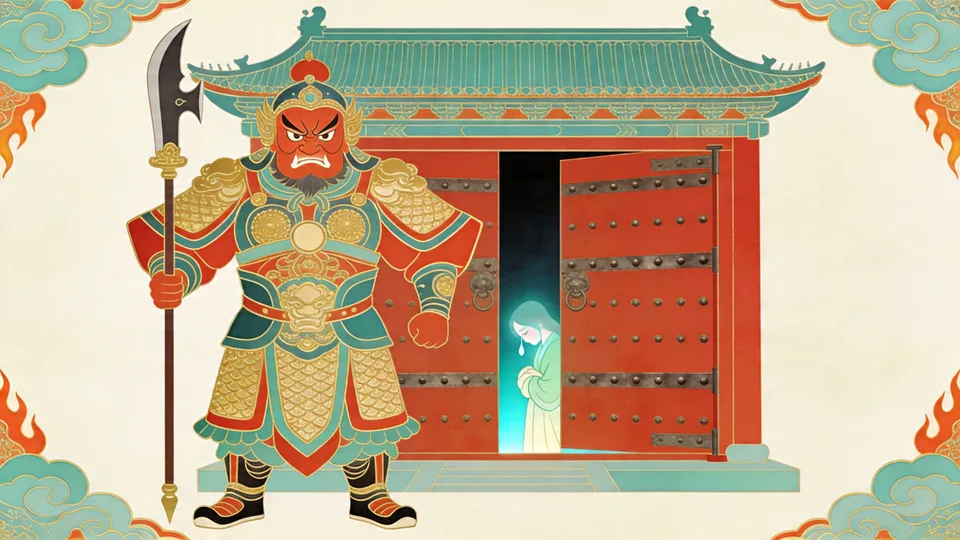
Think of anger as a bouncer at a door. Behind the door are hurt, grief, shame, fear, betrayal and exhaustion. The bouncer keeps everyone out, including you, and because the door stays locked, the bouncer starts to look like the whole show.
Anger gets this job because it converts vulnerability into agency. Sadness is passive, shame paralyzes, and fear disorients, but anger points outward, names a target and makes you feel capable. It promises control over something that just exposed your lack of it. In IFS terms anger is a protector: loud and often badly calibrated, but doing an intelligible job, which is to keep the more vulnerable feeling from flooding the system. Anger lets you be affected without being vulnerable. You discharge the energy without having to say what hurt.
The partner at the sink gets to be angry about plates. What they would have to admit, if they felt the thing underneath, is that they have spent years feeling unheard in their own house, and that they care more about being noticed than feels safe to show. The blunt version:
You’re not angry. You’re just fucking exhausted from being unheard for way too long. Anger is just the mask sadness wears when it gets too tired of being ignored.
Exhaustion is the version most often missed. Sadness that old has no words left, so it surfaces in the only register still loud enough to be noticed.
The duration tell
How can you tell protective anger from the useful kind? Mostly by how long it lasts. Short anger is information. Long anger is protection. A flash of anger at a crossed line passes once the line is restored. Anger that has run for years almost always has sadness running alongside it, unmet:
Just an observation: if you have been angry for a long time, it is likely that you have also been sad for a long time because anger is usually a secondary emotion. This can deceive you into thinking that you are coping with anger, but you are really coping with anger and sadness.
The silent partner in that pair does the damage, because it is the one that never gets to finish. And repressed anger does not disappear when it is forbidden; it changes route. Turned inward, it becomes harsh self-criticism, because the self is the one target that cannot leave. Blocked long enough, it collapses into depression: anger is movement toward what matters, and when the movement is stopped for years, the organism stops preparing to move. That is why depression so often travels with rage.
Clean anger
None of this makes anger a malfunction. Joe Hudson’s view in Emotional Wisdom is that anger, before it is bent into something else, is a clean signal of care:
Anger in its purity is beautiful; it points you to what you care about. You don’t get angry about anything you don’t care deeply about. — Joe Hudson
Clean anger’s name is No: the body’s shortest signal that a boundary or value has been crossed. It is not domination with therapeutic vocabulary. Trying to scare, punish or control someone is manipulation, and blame turns the signal back into shame, which sends the whole system back into repression. The clean version carries no intention to control and no blaming, and it leaves things clearer rather than more contracted. It sounds like a sentence the body knows before the mind negotiates it: this is unacceptable.
So the working question is not “how do I get rid of this anger?” It is: What do I care about so much that my anger is fighting for it? What boundary was crossed? At the sink, the clean answer might be “I can’t keep carrying this house alone,” which is a boundary someone can respond to. “You never do anything” is not.
Why “calm down” makes it worse
You cannot move an emotion that is doing protection work by attacking the protection. The bouncer does not leave because you shout at him; he leaves when the room behind the door is shown to be safe enough to enter. That is why “calm down” and “they’re just dishes” escalate the fight. To the angry partner’s system, they are proof that the hurt underneath is still not welcome, so the bouncer doubles down.
The alternative is the focusing move. Sit with the anger as a felt sense. Don’t ask what it is about, because it already has a story about that, and the story leads in circles back to the dishes. Ask what it is protecting, and wait. The body usually answers, because it already knew.
The cure for chronic anger, then, is not becoming less angry. It is becoming more capable of being hurt directly, which is exactly the move the anger was invented to prevent, and the only one that ends the loop. In its most calcified form, where anger has hardened into hatred, piercing the heart of hatred describes what that looks like: noticing that the blade has been pointed inward all along, and that putting it down means ending an effort you never knew you were making.