Lying awake hating yourself feels like taking it seriously. It’s how the habit survives.
You promised yourself you would stop snapping at your partner when you’re tired. Tonight you snapped again. Afterward you lie awake replaying it and asking what kind of person does that. The self-punishment feels like the responsible part, proof that you take the problem seriously. Next week, tired again, you snap again. If the punishment is so sincere, why doesn’t it work?
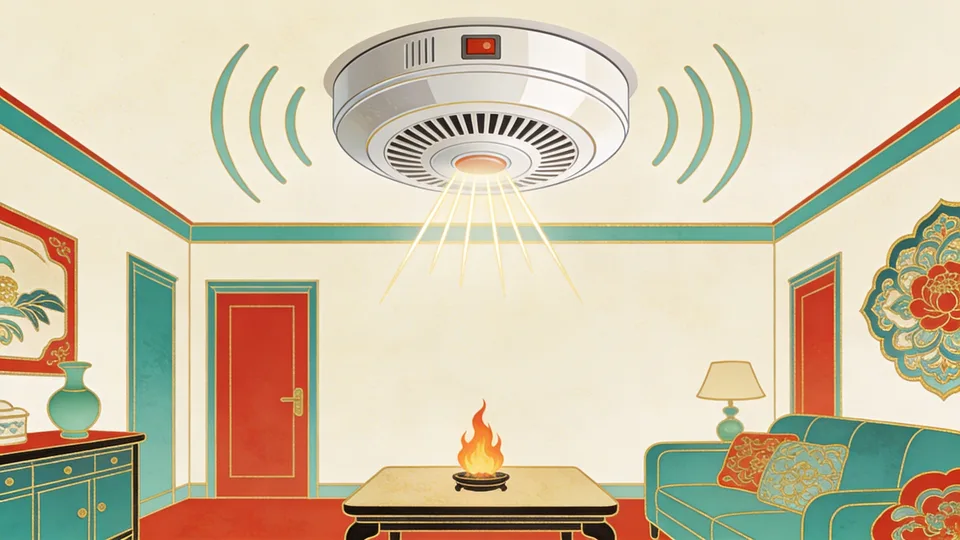
Pain is a signal, not a solution. We have confused the alarm for the fire truck. The bad feeling after the argument tells you something is wrong. It does not fix what caused it. Setting off more smoke detectors doesn’t put out the fire, yet that is what punishment, including the kind you aim at yourself, amounts to. Meanwhile the fire burns, and the pain adds secondary injuries of its own: tension, isolation, a shorter fuse the next day.
Why punishment teaches the wrong thing
Punishment activates threat circuitry: fight, flight, freeze. In threat mode the prefrontal cortex goes offline, so an organism being punished learns to avoid the punisher, not to change the behavior. This is Skinner’s oldest finding, and it holds up: punishment suppresses behavior temporarily but teaches nothing about what to do instead. At 2 a.m. you are not working out why tiredness turns into snapping. You are just being hit.
What the punishment produces is shame, and the difference from guilt is load-bearing. Guilt says “I did a bad thing.” It is specific and actionable, and it resolves when the lesson lands. Shame says “I am bad.” It is identity-level and diffuse, and it does not resolve through action, because the problem it names is a self rather than a behavior. “What kind of person does that?” is a shame sentence. Shame also isolates. The shamed person hides, which cuts off the one conversation, with your partner, that might show what actually happened.
How shame freezes feeling
Joe Hudson names the deeper mechanism: when an emotion gets attached to shame, it blocks the emotional movement. Emotions have a natural arc. They arise, peak and pass. Shame freezes them mid-cycle. Grief that would have moved through becomes depression; fear that would have passed becomes anxiety. What often surfaces over the frozen feeling is anger doing protective work, so that the shame-locked feeling underneath never has to be felt directly. The snapping may be exactly that: hurt or fear you are ashamed to feel, coming out as irritation.
So self-punishment builds a loop. You punish yourself for not being better, which produces shame, which freezes the feeling that drives the behavior, which makes you worse, which you punish yourself for. Hudson puts it plainly:
If you’re shaming yourself to improve or pushing yourself hard to improve, that force will be resisted. — Joe Hudson
Self-improvement through shame is self-abuse in a productivity wrapper.
What works instead
If threat blocks learning, what state does the nervous system need in order to change? The answer is safety, in the specific sense of the ventral vagal state: socially engaged, connected, prefrontal cortex online. That is why connection, understanding and repair work where isolation, judgment and retribution fail, and why natural consequences teach more than imposed punishment. Touching a hot stove contains information, because the pain is coupled to the cause. Being hit for touching the stove contains only threat, because the pain is coupled to the punisher. Applied to the argument, the useful move is to investigate the shame instead of obeying it: to ask, with some curiosity, what you were feeling just before you snapped, and then to tell your partner.
The strongest objection is that punishment visibly works. Parents, bosses and inner critics keep using it because it produces fast compliance. But compliance only looks like change from the outside, while the pattern goes underground, calcifies and resurfaces worse. And because it comes quickly, it rewards the punisher, which is why the inner critic tends to get louder rather than retire.
Hudson’s shortest version is “Shame is the lock that holds the chains.” More punishment only adds locks to the same chains. The hardest part is that this applies to the voice you hear at 2 a.m. “You should be better at this” is itself the shame that keeps you from getting better at it, which means the voice is the problem, not the person it is addressing. If it went quiet for one night, what might you finally notice about why you snapped?
References:
- Joe Hudson, The Anatomy of Shame — Art of Accomplishment
- Joe Hudson, Healing Shame by Being Ourselves — Art of Accomplishment
- Joe Hudson on X: “Shame is the lock that holds the chains”
- Joe Hudson, 23 Lessons For Being Kinder To Yourself — Modern Wisdom #925