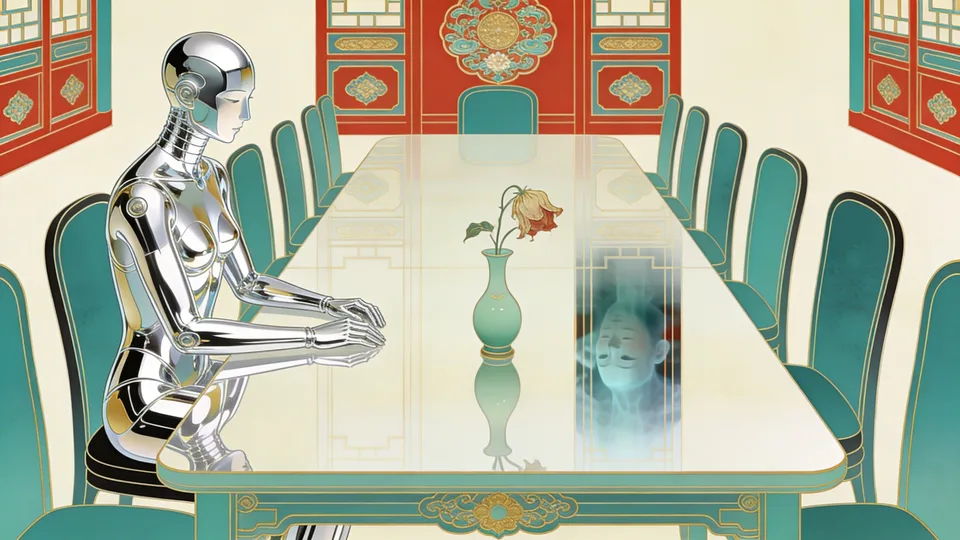
The perfect morning routine has one thing in common: nobody else is in it.
Picture a young man’s morning. He wakes early enough for stoic journaling, does an internet-sourced workout and an ice bath, eats macro-calculated meal prep, takes his nootropics, then grinds through an underpaid day job with an Andrew Huberman podcast in his ears. At night he studies whatever laws of science supposedly govern the female mind, hoping for a leg up in a ruthless dating market. He is doing everything he has been told will make him whole. Why does it so often leave him alone?
The usual belief is that this is preparation: work on yourself first and the right people will come. But follow the project to its end point. Trying to control everything turns you into something like a machine, emotionally detached, hyper-productive, super-efficient, and alone. Eventually other people start to look like distractions. To him, women seem like obstacles to ambition and self-development. Women running the parallel project through therapy culture, under pressure to become whole and healed before letting anyone in, come to see men as obstacles to healing and mental health. Both arrive perfected, with no one to share the perfection with.
The constant cultural message is that we are better off alone. But loneliness is not empowerment.
Why the project never ends
On its own terms the optimization works. Productivity goes up and body composition improves. What it cannot deliver is the thing it was supposed to lead to, and when the young man feels that absence, he reads the emptiness as a sign he needs to optimize harder.
Part of the reason is diagnostic culture. We are so determined to de-stigmatize mental health issues that we have started to stigmatize being human, having human reactions to things. When young people say they feel crippling anxiety, we rarely ask whether the cause is a morally ambiguous world, the collapse of real community, or the sense that they cannot rely on anyone but themselves. We diagnose them and are done with it, sorting suffering into categories so it can be managed rather than understood.
The deeper reason is where authority now lives. In the name of liberation, it has been relocated to the isolated individual, so the guidance that once came from elders, communities and institutions now comes from the internet. The result is widespread infantilization, not because young people are weak, but because the structures that would have supported their development were dismantled. What remains is a platitude: whatever you want to do, do it, as long as it makes you happy. It sounds like permission and functions as abandonment.
What the tools can’t do
So the ice bath is not the villain. The cruelty is not that the tools are bad. It is that the task is impossible to do alone, and the culture insists it must be done alone. Take non-neediness, the quality the dating advice is really chasing. Genuine non-neediness comes from a secure internal base, and that base is built by being reliably held by others. The culture prescribes the opposite of the cure: become non-needy by being alone.
That is the difference between the self and the soul. The self is the project, the optimized, curated, diagnosed version of you that can be presented, measured and improved. The soul is whatever is left when you stop performing the project. The young man’s morning has room for every part of the self and none for the soul, which leaves him a question no protocol answers: who did he expect to be there when all the work was done?
References:
- The Self and the Soul: A Dialogue — The Upheaval