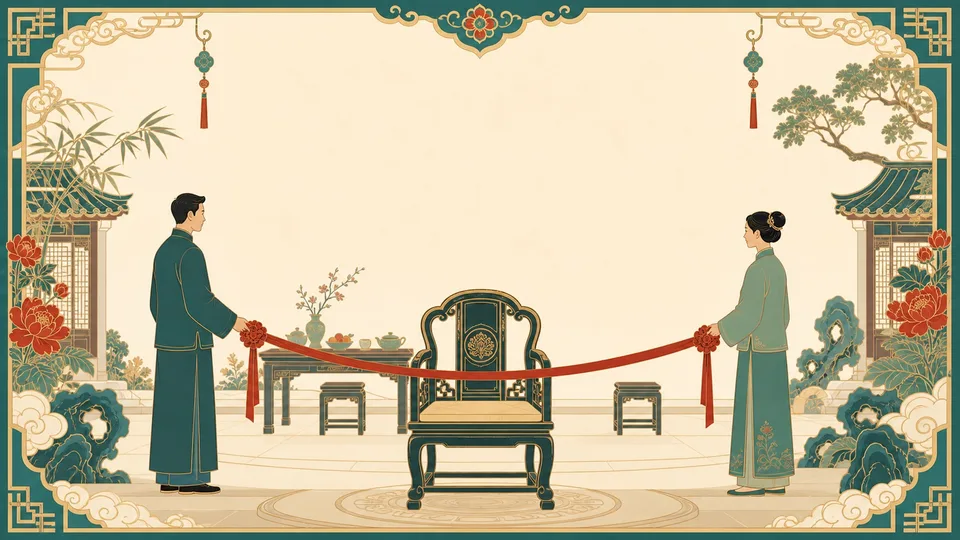
Modern feminism removed real coercions: dependency traps, domestic confinement, abuse tolerance, sexual double standards, and legal vulnerability. That part was necessary. The failure mode is what came after. Women were liberated from compulsory following, but neither sex was initiated into a replacement grammar for authority, sacrifice, hierarchy, and interdependence.

The result is authority without authority: men are often expected to carry the traditional burdens of leadership while being denied the authority required to lead, and women are often trained to reject being led without being trained into the costs of command.

Simple Picture

ELI5: a team used to have a captain. Sometimes the captain was unfair, so the team abolished captains. That fixed some abuse. But the team still has to choose where to go, who carries what, who decides in emergencies, and who takes blame when the plan fails.

Everyone likes having a vote. Fewer people like being responsible when the plan fails. So the team argues, litigates, renegotiates, and calls the stalemate equality.

The Deleted Social Technology

Traditional gender roles were not only oppression. They were also a crude coordination protocol:

  • Someone must decide.
  • Someone must yield sometimes.
  • Families need role clarity.
  • Erotic polarity often depends on asymmetry.
  • Leadership is burden, not status.
  • Following is trust plus discernment, not inferiority.

The old script said: a good man leads, provides, and protects; a good woman supports, nurtures, and stabilizes. The script contained real injustice. But it also solved practical coordination problems that do not disappear when the script is morally discredited.

Modern culture often teaches women: never settle, never depend, never shrink, never defer, never let a man tell you what to do. It does not teach with equal force: then you must accept loneliness, decision-fatigue, blame, provider pressure, emotional containment, and the burden of becoming legible and stable for others.

This is freedom unemploying the old counterpart role without creating a new one. The liberated person exits the script. The remaining social machinery still expects someone to carry the load.

The Fake Leader

Healthy following does not mean obedience. It means recognizing competent leadership and letting it operate without constant status-testing, vetoing, correcting, or renegotiating every micro-decision.

A healthy follower says: I trust your judgment here. I will support the direction unless something important is wrong.

An unhealthy follower says: I want you to lead, but every move you make must pass through my anxiety, preferences, and approval.

That second arrangement produces a fake leader. He is expected to plan, initiate, provide, protect, regulate the emotional field, and absorb blame. But he lacks decision-rights. He has responsibility without authority. This is the romantic version of a boss saying “take initiative” and then punishing every initiative that does not match the boss’s invisible preference.

False trust has exactly this structure: responsibility without authority. The person appears trusted but is actually shackled. The betrayal is sharper than open distrust because the role says “lead” while the mechanism says “wait for permission.”

Liberation Without Initiation

The visible contradiction is not that women became free. It is that freedom arrived faster than initiation.

Many women sincerely value the status symbols of leadership: independence, money, standards, boundaries, voice, options, not needing a man. These are real goods. But the costs of leadership are less glamorous: being the one who decides when nobody knows, being blamed, pursuing, risking rejection, providing materially, suppressing panic, becoming predictable enough that others can rest inside your frame.

The male equivalent is equally common: wanting feminine loyalty, softness, beauty, and trust without becoming strong, competent, disciplined, or responsible enough to deserve it. Both sexes want the old role’s benefits without the old role’s disciplines.

This is the hidden bargain underneath much modern dating:

Women: I want equality when it grants autonomy and traditionalism when it grants protection.

Men: I want deference when it grants comfort and modernity when it releases me from provision, discipline, and sacrifice.

The asymmetry is sharper for women because female liberation moved faster than the cultural redesign of romance, family, and adulthood. The old female role was attacked explicitly. The old male role was often left in place as an expectation while being stripped of its reciprocal authority.

The Impossible Spec

The dating-market pathology follows naturally.

Women say they want a masculine man who leads. But when he leads, leadership is easily experienced as control. Men hear: be confident, decisive, ambitious, emotionally open, respectful, non-controlling, high-status, vulnerable, safe, dominant but not domineering, spontaneous but predictable, exciting but stable.

Many men conclude the specification is impossible. They become passive, retreat into porn, games, work, money, or detached irony, or perform the harmless nice-guy routine that avoids leadership entirely.

Then women complain that men no longer lead. From the male side, the hidden rule feels like: lead only in the direction I already wanted, at the intensity I find attractive, while making it feel like my idea.

This is where gendered-emotional-needs becomes a coordination problem rather than a communication problem. He needs trust and respect to feel competent enough to lead. She needs love and safety to relax enough to follow. Each waits for the other to move first, and the waiting itself becomes evidence that the other is deficient.

The Family As Committee State

Families are coordination machines. They have to decide child discipline, spending, saving, relocation, eldercare, domestic labor, social obligations, sacrifice allocation, and the thousand small policies that turn cohabitation into a life.

If nobody can follow and nobody can lead, every decision becomes a committee meeting. The home becomes a tiny dysfunctional democracy where every tradeoff requires emotional litigation.

That raises the cost of marriage. People delay commitment, avoid children, or outsource the household to markets: daycare, therapy, food delivery, eldercare, tutoring, entertainment, dating apps, domestic labor. The home stops being a production unit and becomes a consumption unit.

This is one clean way to connect gender ideology to fertility decline without reducing the argument to “women got selfish.” The old family operating system was coercive but cheap. The new system is freer but expensive, unstable, and psychologically exhausting. The future-sorting machine then converts marriage from shared fate into a risk-underwriting exercise.

Hierarchy Without Tyranny

Modern liberal culture flattens rank into consent, preference, identity, and contract. That grants exit. It also weakens apprenticeship, reverence, duty, loyalty, and role-formation.

Not all asymmetry is oppression. Some asymmetry is choreography.

Parent over child. Teacher over student. Expert over novice. Captain over crew. Elder over youth. Leader over follower. These are not all domination structures. They are often developmental structures. The question is not whether hierarchy exists. The question is whether hierarchy is accountable to competence, sacrifice, and reality.

Leader-leader gives the organizational version: authority can be distributed only when competence and clarity are high enough to carry it. Empowerment without competence is chaos. Control without trust is fragility. Romance has the same architecture. Equality cannot mean nobody leads. It has to mean leadership is earned, legible, revisable, and paired with real accountability.

The Strongest Objection

Many women do not follow because many men are not worth following.

A lot of men confuse leadership with entitlement. They want deference before competence, authority without provision, dominance without discipline, sex without commitment, respect without sacrifice. A sane woman should not follow that. Refusing bad male leadership is not neurosis. It is discernment.

The distinction that matters:

  • Refusing bad leadership is wisdom.
  • Being unable to receive good leadership is a wound.

The first protects the self. The second protects the ego from the vulnerability of trust. The Ick often detects the first: the body noticing that there is no individuated man there to follow. But autonomy can curdle into a universal veto, where the ability to refuse bad partnership becomes the inability to say yes to good partnership.

The Better Model

The answer is not female obedience or male entitlement. It is earned authority and intelligent trust.

Following requires discernment, loyalty, emotional regulation, the ability to let small things go, and the refusal to use veto power as a status weapon. It requires not confusing anxiety with intuition.

Leading requires competence, sacrifice, direction, protection, accountability, calm under pressure, and the refusal to demand submission as ego validation. It requires not mistaking dominance for authority.

The relational unit is not dominance/submission. It is a loop: one person takes responsibility for direction, the other grants enough trust for direction to become real, and both remain accountable to whether the arrangement produces more life, stability, erotic charge, and shared competence.

This is where feminine power needs an adult complement. Refusal is necessary but insufficient. The mature feminine skill is not submission to any man. It is the ability to recognize worthy authority and relax into it without losing discernment. The mature masculine skill is not command over women. It is becoming the kind of person whose authority reduces fear because it has already paid its price in discipline.

Dimwit / Midwit / Better Take

The dimwit take is “women got too uppity; put them back in the kitchen.”

This notices a real coordination disorder and then explains it with resentment. It wants the old operating system back because it cannot imagine a freer one that still has roles.

The midwit take is “feminism is simply equality; any criticism is misogyny; relationships should be fully egalitarian partnerships.”

This is clean on paper and false in bodies. Desire, pregnancy, danger, fertility, money, status, strength, beauty, age, risk, and testosterone did not disappear when the ideology changed. Groups still need decision rules. Families still need sacrifice allocation. Erotic polarity still often needs asymmetry.

The better take is that modern feminism removed unjust coercion but accidentally dissolved the symbolic and practical role system that made family formation psychologically easy. The crisis is not female freedom. The crisis is freedom without initiation into adult interdependence.

Main Payoff

Modern people are excellent at saying no. They are less trained in the adult art of saying yes to something demanding.

Love requires asymmetry: someone initiates, someone receives, someone sacrifices first, someone trusts before certainty, someone yields without humiliation, someone leads without tyranny. Modern ideology struggles because it sees asymmetry and suspects oppression. Sometimes it is right. Sometimes the suspicion protects people from abuse. But a culture that cannot distinguish oppressive asymmetry from functional asymmetry loses the grammar of adulthood.

Authority without authority is the unstable compromise: leadership demanded, authority denied; protection desired, deference refused; autonomy worshiped, loneliness resented; equality praised, redesign avoided.

The repair is not a return to obedience. It is harder: men becoming worthy of trust, women becoming capable of granting it, and both sexes accepting that adult freedom is not the absence of roles. It is the capacity to choose roles whose burdens you are actually willing to carry.