The fields where mistakes kill are the ones that hand their experts checklists.
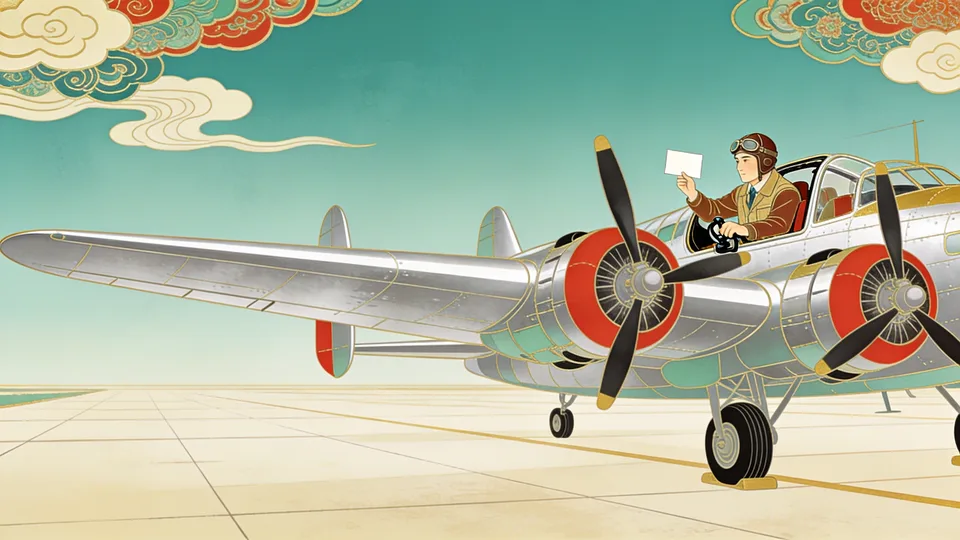
In 1935 Boeing’s Model 299, the bomber that became the B-17, crashed on a demonstration flight at Wright Field in Ohio. The pilot, Major Ployer Hill, was one of the Army Air Corps’ most experienced test pilots, and he had forgotten to release a lock on the elevator and rudder controls. A newspaper called the plane “too much airplane for one man to fly.” The Army’s answer was not more training. Its test pilots wrote a short list of steps to read aloud before takeoff, and the test fleet went on to fly 1.8 million miles without an accident.
That checklist is one of seven habits that keep turning up in fields that rarely talk to one another. A thread by Kpaxs lists them: write the process down, stop early when something is wrong, leave a buffer, fix the system instead of blaming people, get feedback fast, hand over in a fixed format, and ramp up gradually. Toyota has the andon cord, software teams have error budgets and canary releases, kitchens have mise en place, armies have commander’s intent. The usual reading treats all of this as scaffolding for people who don’t yet know what they’re doing, the bureaucracy an expert outgrows. But Hill was no beginner. So why do pilots, surgeons, chefs, and engineers keep inventing the same habits, and why do they hand them to their best people?
What the habits fit
Kpaxs answers with biology:
It’s when unrelated lineages arrive at the same answer. It usually means the answer fits something real about the problem. — Kpaxs
The camera eye evolved separately in vertebrates and octopuses, from ancestors with nothing you could call an eye, and both ended up with a lens, a retina, and a way to control how much light gets in. The design fits the physics of light. The question is what the seven habits fit.
Aviation now runs on all seven, which makes it a good place to look. Pilots read checklists because even the best memory drops a step under pressure. An approach that isn’t stable by a set height becomes a go-around, because momentum makes a bad landing feel easier to finish than to abandon. Fuel rules require reserves beyond the alternate airport, because weather and traffic will eventually do something no one planned for. Since 1976 NASA’s Aviation Safety Reporting System has given pilots limited immunity for reporting their own errors, because errors punished in secret are errors nobody learns from. Crews debrief, use standard phraseology, and put new captains on the line under a check airman before they fly alone.
Each habit guards a different weak point (memory, momentum, surprise, concealment, slow learning, lossy handoffs, overconfidence at scale), but they share a premise. Every one of the seven assumes the person doing the work will fail, and arranges for the failure to be caught early, kept small, and made cheap. That is why experts get them. Skill lowers the error rate without bringing it to zero, and in a cockpit or an operating room the remaining errors are the expensive ones.
Why these fields
Convergent evolution needs selection pressure, and the fields that converged share one: failure there is fast, visible, and traceable to a cause. Bitter manioc shows the opposite case. Cultural evolution took generations to assemble a safe way of processing it because cyanide poisoning is slow and silent, so no one could see which step mattered. A crash, an infected incision, a ruined service, or a production outage arrives within hours with a cause attached. So the practices that prevent such failures get selected within decades rather than centuries.
The same logic says where to expect the habits to be missing. In fields where failure is quiet, slow, or easy to attribute to bad luck, such as much of management, teaching, and most personal lives, nothing punishes the absence of a buffer or a debrief. Practices there are free to drift with fashion.
Copying the form
Not all of the convergence is independent. Surgery borrowed its checklist from aviation, and software borrowed the andon cord from Toyota. Borrowing is often the right move, but it weakens the biological analogy, because a borrowed form can arrive without the conditions that made it work. The WHO surgical checklist cut deaths in its pilot hospitals from 1.5% to 0.8%, and part of its effect came from an item that looks like etiquette: everyone in the room introduces themselves by name and role, so a nurse who sees something wrong can stop the surgeon. A blameless-postmortem policy installed on a team that lacks a shared story gets the forms of forgiveness without the substance. Convergence shows that a habit fits a real problem. It doesn’t show that the habit will work where the problem’s conditions are absent.
Organizations converge in the other direction too. Ones that select for control rather than against failure arrive at the same committees, channels, and written approvals whether or not anyone intends sabotage. Both lists look like process from the outside. What separates them is what the process is selected against, the operator’s mistakes or the operator’s blame, and in most workplaces that is decided by whether failure or blame is the louder thing in the room.
References:
- Kpaxs, thread on universal patterns across fields, X, October 2026
- Atul Gawande, The Checklist Manifesto
- Alex B. Haynes et al., “A Surgical Safety Checklist to Reduce Morbidity and Mortality in a Global Population,” New England Journal of Medicine 360 (2009)