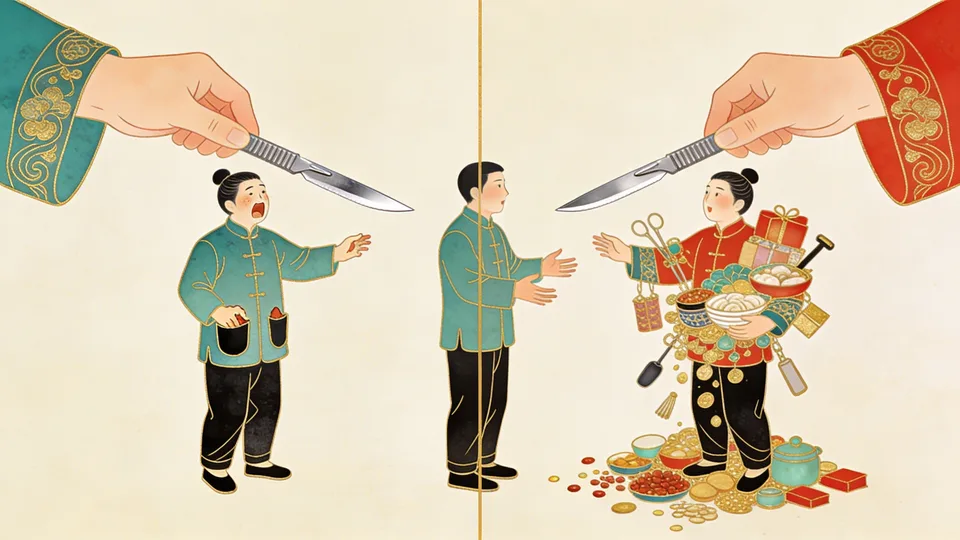
People will take your criticism exactly as far as it leaves them stronger.
Two people who both know cars look at yours. One fixes it for free, teaches you what went wrong, then mentions that you should check your brakes. The other walks up, points at the brakes, and says “that’s dangerous.” It is the same criticism, and both are right, yet you thank the first and bristle at the second.
The usual diagnosis is tone, and the usual advice is to be more diplomatic. But a politer second mechanic would still grate. So what earns someone the right to criticize? Not expertise alone. The right is granted only when expertise is in such superabundance that it is literally falling off: the expert has enough for her own goals, shares freely with others, and the sharing visibly boosts their goals too. By the time the first mechanic mentions the brakes, he has already shown he is on your side.
What the listener is calculating
When criticism arrives, the recipient asks, mostly without noticing, whether accepting it will strengthen or weaken their position. People have exquisite intuition for this calculation even when they can’t articulate it. When expertise is zero-sum, competing with the recipient’s authority rather than adding to it, accepting the criticism means subordination, so it gets rejected however accurate it is. It is a deal with the devil — accurate knowledge offered at the price of your authority. The second mechanic isn’t wrong about the brakes. He has made agreeing with him expensive.
That is worse news for experts than it used to be. With information and AI a click away, raw expertise accounts for maybe 5% of the ability to actually lead a team. Unless you have a compounded superabundance of knowledge that genuinely can’t be found elsewhere, your expertise isn’t scarce enough to command deference, so it has to earn its welcome by what it adds.
The other way in
There is a second route to the right to criticize, and it doesn’t run through expertise: social ingenuity. Some people can criticize with such precision and wit that it pierces the masks people wear to protect themselves, insulting someone while making them laugh, landing the truth in a form that disarms before it cuts. It works because the delivery is proof of calibration: someone that socially precise is probably perceptually precise too. But it is rare, and most people who think they have it are the second mechanic with better jokes.
What both routes share is containment. People want to follow a guiding light but they will reject uncontrolled fire no matter how brightly it illuminates. The expert sharing from overflow can afford to be patient, because nothing of hers is at stake. The expert who is always proving, always defending, always frustrated when the proof doesn’t land is signalling that her expertise is scarce, and scarcity is precisely what makes criticism feel like a weapon.
So before mentioning the brakes, ask whether the person would be stronger or weaker for having accepted what you are about to say. If the honest answer is that it would mostly reposition you above them, it will be rejected, and it should be. The rejection isn’t ignorance; it is self-preservation. That leaves a harder question for anyone who is often right: how much would you have to give before your criticism stopped costing the other person anything?
References:
- Original observations on expertise, leadership, and the social dynamics of criticism