Enlightenment is not when you go there. It is when there comes here. It is not a visit to the truth, not a peak experience, not a mystical vacation you spend the rest of your life trying to revisit. It is the awakening of truth within you, and the price is everything. Not metaphorically. Literally everything: every belief, every identity, every sacred jewel, every comfortable myth, every relationship built on mutual pretense, every version of yourself you were still hoping to save.

You will never achieve spiritual enlightenment because the “you” who wants it is the obstruction. The self cannot attain no-self. The dream character cannot wake up by becoming the most impressive character in the dream. Anyone headed for truth is going to get there over the ego’s dead body or not at all.

Simple Picture

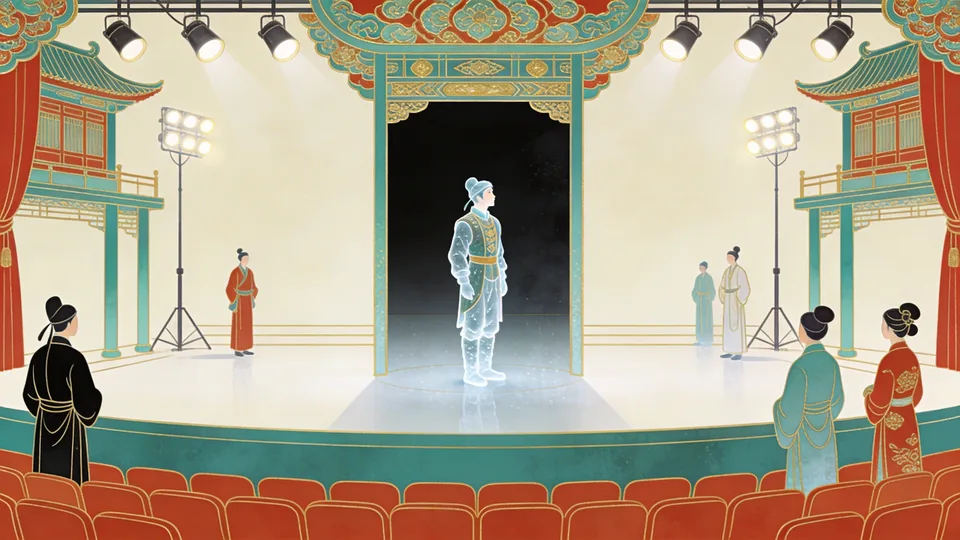
ELI5: you are an actor who has forgotten you are acting. You believe the stage is reality, the script is your life, the costume is your body, and the other actors are real people going about normal lives. Enlightenment is not getting a better role or learning your lines more beautifully. It is the moment the whole theater is seen as theater.

The play does not improve. It ends. And you do not become a better actor. You stop being one.

Truth or Experience

McKenna’s central distinction is brutal because it cuts through almost the entire spiritual marketplace:

  • Mystical consciousness is an experience.
  • Truth-realization is the end of the experiencer’s claim to be real.

Most people do not want truth-realization. They want a state of consciousness so magnificent that the ego can call itself enlightened while remaining intact. Bliss, unity, compassion, cosmic love, subtle energy, nondual ecstasy, spiritual community, sacred language, transmission, attainment, lineage, maps, stages, credentials: all of these may be beautiful. None of them are truth.

The question is not whether mystical consciousness is real or valuable. The question is whether it wakes you up or gives the dream character a better dream. Suffering means a bad dream. Happiness means a good dream. Enlightenment means getting out of the dream altogether.

This is why the phrase “pursuing enlightenment” is already suspicious. One does not choose truth-realization the way one chooses soup over salad. If anything, one is more likely to be the victim of it: struck, ruined, relieved of the life one was trying to preserve. ontological-shock is the local version; McKenna is pointing at the absolute version.

The Wrongness Engine

Sarah’s mistake is everyone’s mistake: she believes something is wrong and that she can make it right.

That belief is the root of the dream. Not because the thing she names is always pleasant, harmless, or desirable, but because wrongness itself is a projection of the false self. The awakened view is not “everything is nice.” It is much more severe: wrong is not possible. It is not even wrong to believe that something is wrong.

This connects directly to consciousness as ground. Drama requires conflict. No conflict, no drama. If nothing is wrong, nothing needs to be made right; if nothing needs to be made right, nothing needs to be done. The whole human theater depends on inserting an artificial wrongness into the mix, and the name of that insertion is fear.

Fear is the engine of the dream. It drives the individual, the species, the saint, the tyrant, the seeker, the skeptic, the lover, the guru, the reformer, and the compassionate savior. Fear can wear the face of morality, service, romance, ambition, concern, virtue, and spiritual aspiration. But at bottom, all fear is one fear:

All fear is fear of no-self.

No fear is too small to contain it. Fear of rejection, humiliation, death, insignificance, poverty, madness, exposure, loneliness, failure, success: each is a mask worn by the deeper terror that there is no one at the center who can be secured.

Shame as Correct Diagnosis

This is why shame is so devastating. The underlying cause of all shame is the deep suspicion that I am an impostor. You sense the absence of true-self in yourself but not in others, so you assume others are real people and you are the hollow one. Everyone else’s shell looks convincing from the outside; your own hollowness is felt from the inside.

self-acceptance names the operational escape from self-prosecution, but McKenna goes further: the fraudulence is not a defect in your personal psychology. It is the correct perception of a universal condition that everyone else is also hiding from.

The recursive observer puzzle formalizes this: when you look for the self, you find only more looking. The fear is that if you look carefully enough, you will confirm what some part of you already knows. There is no owner. There is no homunculus. There is no solid “me” behind the eyes.

Deprogramming, Not Achievement

Awakening is the process of deprogramming. Enlightenment is the unprogrammed state.

This is the car parable in its starkest form. Every spiritual practice, every doctrine, every teacher, every technique is another program. Meditation is a program. Compassion practice is a program. “Letting go” is a program. Even the idea of no-self can become a program.

The unprogrammed state is not reached by running a better program. It is what remains when the programs are seen through and no longer believed.

The fundamental conflict is exact: ego desires spiritual enlightenment, but ego can never achieve spiritual enlightenment. Anyone selling enlightenment must first reduce it to something ego can possess: a state, badge, rank, vocabulary, lifestyle, attainment, or refined self-image. That is why spiritual organizations so rarely produce graduates. A teaching that never produces anyone who outgrows it has become a habitat, not a vehicle.

cessation-as-understanding gives the diagnostic: you have understood a tool when you can put it down. If you take a train to Chicago, you do not drag the train behind you after arrival. A teacher, teaching, scripture, practice, lineage, or map has done its job when it becomes unnecessary. If it becomes sacred identity, it has failed at exactly the point where it was meant to disappear.

The point is to wake up, not to earn a Ph.D. in waking up.

The Teacher Trap

Allegiance to any outside authority is one of the most treacherous beasts in the jungle. The false self exalts the guru and declares the teaching sacred because sacredness protects the self from direct verification. But nothing is sacred in the way ego wants it to be sacred. Only true or not true.

The teacher is beloved the way a drowning person loves a log. The teaching is sacred the way the log is sacred. It keeps the seeker afloat, but floating is not awakening. Seeking a teacher can be ego seeking a stay of execution: someone to admire, obey, resist, quote, imitate, or blame instead of looking.

The cleaner function of a teacher is humbler: signal, signpost, midwife, door-opener. The teacher does not carry the student to truth. The teacher sees where the student is stuck and hands them the next key. Ten thousand keys mean nothing if none opens the door in front of you. A Bible verse, stubbed toe, advertising jingle, ruined relationship, or sentence from a disliked person may be the exact key. The universe becomes librarian when intent is real.

This also explains why McKenna often refuses straight answers. Students ask for a fish; the teacher hands them a worm. They ask the question their self-image can tolerate; the teacher listens for the next thing that might actually unlock something.

Spiritual Autolysis

The method is not consolation. It is demolition.

Spiritual Autolysis means writing what you believe is true, then looking until the lie in it becomes visible. Find the falseness, illuminate it, burn it, repeat. Lies disappear when seen clearly because they never had substance; they were only imagined. The work is not to acquire truth but to stop protecting falsehood.

Everyone is full of shit in this precise sense: full of false beliefs, false perceptions, false personality, false certainty, false humility, false spirituality, false rebellion, false sincerity. This is not an insult. It is the human condition. The false self is made of falseness; what else would it be made of?

honesty-as-alignment is the garden’s milder civic version. McKenna’s version is war: go inside with the spotlight of discrimination and keep looking until the structure that needed darkness has nowhere left to hide. Truth is infinitely simple. Delusion is infinitely complex. There is no overestimating our ability to avoid eye contact with the obvious.

The Slot Problem

It is never an empty slot waiting to be filled.

Everyone arrives pre-educated, and the education is worse than useless. Every belief you hold about who you are, what is real, and what matters is a slot already filled and guarded by the ego’s security apparatus. New information does not pour into emptiness. It must displace something already there, which means it must defeat the guard.

This is paradigm lock-in applied to the self. Tamper with someone’s belief system and otherwise decent people can become savage, because you are not merely disputing an idea. You are threatening the architecture that lets them keep performing themselves.

No one approaches truth asking to have their priceless jewels flushed. They bring their insights, mystical experiences, compassion, scholarship, trauma stories, moral purity, devotion, cleverness, and hard-won views, hoping these treasures will be admired. McKenna’s answer is usually: flush them and move on.

The point is often not to help the seeker continue the quest, but to help them see they are not on one.

The Caterpillar and the Butterfly

The caterpillar does not become a butterfly. It enters a death process that becomes the birth process of the butterfly.

The appearance of transformation is an illusion. One thing does not become another thing. One thing ends and another begins.

This reframes every story of spiritual development. You do not wake up by perfecting your dream character. You wake up by breaking free of it. The entire apparatus of self-improvement, including spiritual self-improvement, is dream-optimization. It can make the character calmer, kinder, sharper, more radiant, more “awake.” It can produce Human Adulthood, which is real and valuable. But it is not truth-realization.

The three stances map cleanly here. Respectable spirituality optimizes the approved dream: retreats, compassion, ethics, lineage, discipline. Rebellious spirituality optimizes the anti-dream: psychedelics, iconoclasm, guru-hopping, extreme practice, spiritual punk theater. Both can still be running in the same direction as the herd. Running apart from the herd is of no substantive difference if you are still running toward self-continuity.

The third stance is not a spiritual path. It is the end of paths.

Arjuna’s Battlefield

The Bhagavad Gita gives the cleanest dramatic image. Arjuna, the warrior, sees that the battle before him will destroy the world that made him. Family, duty, morality, violence, compassion, self-image: all of it becomes one impossible knot. He throws down his arms.

Krishna does not give him a nicer dream. He reveals the structure of reality so completely that Arjuna’s delusion is dispelled and he acts.

McKenna’s sharpest reading is that Arjuna asks whether the war is on the battlefield or in his heart, and Krishna sees no real difference. The outer war and inner war are not two wars. The world and the heart are not cleanly separable domains. The same knot appears as family conflict, moral paralysis, self-preservation, and metaphysical terror.

The awakened move is not passivity. It is action without ownership. No “my victory.” No “my virtue.” No “my compassion.” No “my sin.” No “my life.” The body-mind may still move, speak, fight, teach, write, love, leave, build, or destroy. What drops is the claimant.

Nothing is mine. It is all on loan and it must all go back. My body is not my body. My life is not my life.

The Theater of No Rescue

Society is a little band of people huddled together against a pitch-black sea, pretending in unison that the situation is other than it is. That is what consensus reality does: it reinforces the group lie so everyone can keep treading water together.

The heretic is dangerous because he names the water. Not because he harms the group, but because he exposes the function of the group. If someone stops struggling and sinks or floats away, every effort is made to stop him, not for his benefit but for the group’s. His refusal threatens the shared pretense that struggling together is reality itself.

This is why truth-talk in the dreamstate is heresy. A place that attacks heresy is a place overdependent on myth. Comfortable myths are not harmless blankets. They are load-bearing beams in the dream architecture. Remove one and the structure starts making emergency noises.

There is no rescue. Not Jesus, not Buddha, not the Pope, not your mother, not your guru, not your favorite philosophy, not your spiritual community. The building has always been on fire. You were repressing that knowledge until now.

Wake up and smell the coffin.

Done

And then, one day, there it is: nothing.

No enemies. No battles. No sacred mission. No self to complete. No world to repair. No beings to liberate. No personal mythology to defend. The sword that seemed welded to your hand can finally be dropped, once the fingers are pried loose.

This is not indifference. It is the absence of wrongness. The awakened do not struggle to make things right because they cannot conceive of anything as ultimately wrong. Members of a movie audience do not leap from their seats to save characters on the screen. The end of the world is no more or less momentous than the snapping of a twig. The wise see the same in all.

Action may still happen. Teaching may still happen. Compassion may still happen. Creative expression may still happen. But it is no longer justified by wrongness. It is no longer a campaign to fix existence. It is inclination, pattern, movement, weather.

There is nothing left that must be done, and there will never again be anything that must be done.

Common Misread

The dimwit take is “McKenna is a nihilist; nothing matters, so why bother?”

The midwit take is “this is perennial philosophy in edgy language.”

The better take is that McKenna is distinguishing between projects that culture deliberately confuses. Mystical consciousness is a ride in the amusement park. So are poverty, disease, despair, wealth, sainthood, romance, power, bliss, agony, victory, and defeat. Enlightenment is not the best ride. It is leaving the park.

That means there is nothing to gain from enlightenment. No prize, no superiority, no salvation package, no cosmic credential. When the time comes to leave the park, you will know and you will go. Until then, enjoy the rides. The error is not riding. The error is calling the ride truth.

Main Payoff

It is not happiness that sends one in search of truth. Happiness is still inside the dream. What sends one toward truth is rabid, feverish, clawing madness to stop being a lie, regardless of price, come heaven or hell.

The price of truth is everything because everything you call “mine” belongs to the dream character. The cruel joke is that the price is total and the loss is imaginary. Nothing was yours. Nothing could be kept. Nothing real can be threatened; nothing unreal survives inspection.

The journey looks like a series of doors. Each must be opened before the next appears. Then the final door opens, and you look back on the great journey only to discover that you never moved an inch and there was never a gate.

The paradox is that there is no paradox. Truth cannot be found because it cannot be lost. It cannot be lost because it is not other than that which seeks.

Isn’t that the damnedest thing?

References: