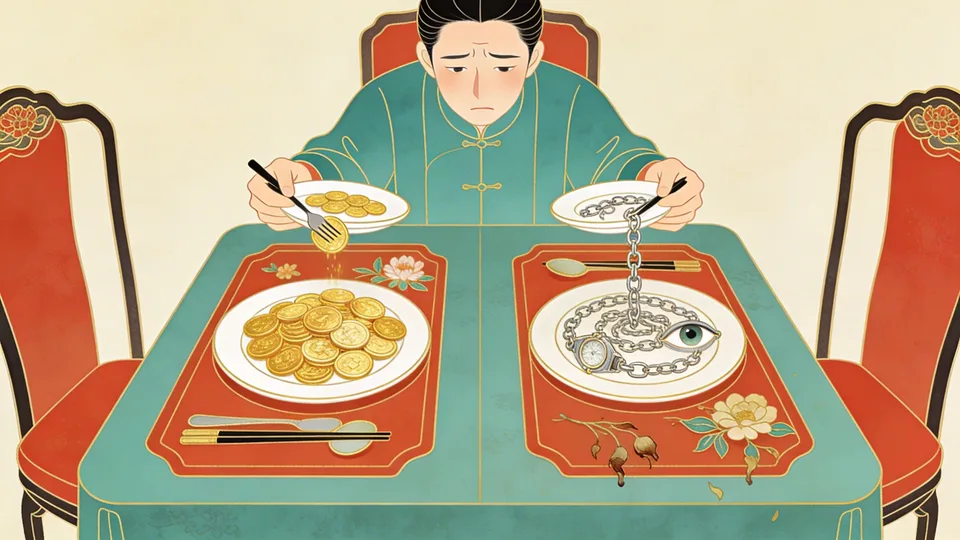
Korea kept the family’s judgment and lost the family’s spare bedroom.
South Korea has one of the world’s richest economies and one of its highest suicide rates. The usual explanations assume a country either modernizes or keeps its tradition: Korea is suffering growing pains, or Confucian pressure hasn’t caught up with modern life. What Korea actually did was select. It kept some traits from each system and dropped others, and the pattern of what survived explains the misery better than “too modern” or “too traditional” can.
What survived the filter
From capitalism, Korea absorbed materialism, with status measured in consumption, appearance and brand, and money as the main measure of a person’s worth. It discarded what makes capitalist competition tolerable: self-expression, and the right to define success on your own terms. From Confucianism it kept shame and social judgment, and the habit of recasting structural problems as individual moral deficits. It abandoned the family and community bonds that once came with them.
The result is a society that demands conformity without belonging, competition without self-expression, and achievement without meaning.
The selection isn’t random. The surviving traits are the ones useful to economic growth: materialism drives consumption, money drives labor, shame drives compliance, and treating failure as personal makes workers blame themselves rather than the system. The dropped traits are the ones that resist economic instrumentalization. Self-expression is inefficient, individuality is unpredictable, and family obligations compete with the office for a person’s evenings.
Shame without the care
Confucian shame was never meant to work alone. In a village, the people judging you were also the people feeding you, housing you, and raising your children alongside you. The judgment and the care came bundled, so a failure brought a scolding and also a place at the table.
Strip the care and keep the judgment and you get surveillance without support. A young Korean who fails the exam or loses the job carries the full weight of social expectation, with none of the communal infrastructure that was supposed to share it. Depression then reads as one more personal failure, so the suffering itself becomes a source of shame. The values aren’t inherently pathological; they are running outside the context they were designed for.
Why it doesn’t fade
The comforting reading is that this is a phase. But the surviving traits reinforce each other: materialism feeds the pursuit of money, shame enforces it, and with community and self-expression gone, nothing releases the pressure. Every component makes narrow economic sense, which makes the system Locally Optimal, a stable equilibrium with world-class GDP and world-class suicide rates.
Korea is the clearest case because its selection was so rapid and so complete, but every modernizing society takes capitalism and tradition apart under the same pressure. The question is which traits will survive the filter, and whether anyone is paying attention to what is being lost.
References: