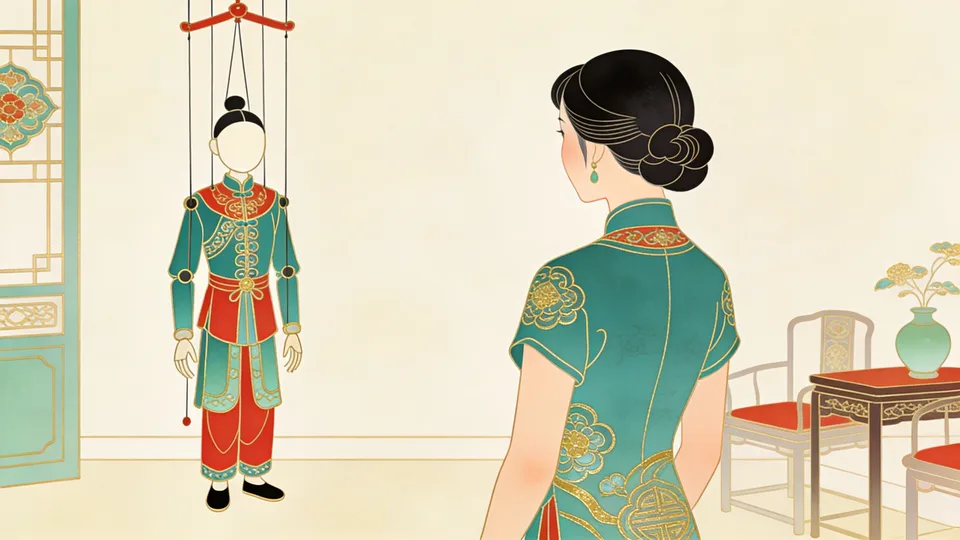
The upbringing that made him a safe husband is the one that gives her the ick.
A woman dates a kind, reliable man until one small thing, perhaps a message his mother clearly helped draft, and she can’t see him the same way again. The usual explanations are that she is shallow or that TikTok taught a generation of women to be repulsed by normal men. Why has a passing flash of disgust become a reason to end things?
The signal itself is old. What changed is that women can afford to listen to it. In previous generations, the fear of starvation or social exile bonded couples despite a lack of romantic affinity. When you are running from a fire, you don’t complain that your rescuer’s clothes are out of style. When the fire is out, you start to notice the smell of smoke. Women’s autonomy has outpaced the development of many men, so disgust that used to be overridden now works as a filter.
What the Ick detects
The Ick is the body’s detection of a void where a person should be. Passion needs the threat of the unknown, which is another person’s individuality. A man who moves only when his mother speaks and thinks only what his textbook says offers nothing unknown to meet.
The dynamic is sharpest in modern China, where it feeds a demographic crisis. Sons raised under maternal over-protection and academic rote-learning emerge functional but not vibrant, optimized for a bureaucratic machine that rewards compliance. Meanwhile Chinese women have absorbed global standards of self-actualization. To them the un-individuated man is not just a poor partner but someone who has not yet become a person.
This is neediness at the scale of a culture: a self outsourced to mother, exam scores and employer. Women pick this up not through analysis but through revulsion, which is emotional information: disgust arguing to exclude something from the self. And it produces a paradox. The system that creates safe, reliable men is the same one that makes them repulsive to women who no longer need safety above all else.
Where the filter can go wrong
The economic explanation, that housing costs and 996 work culture leave no room for dating, is not wrong, but it treats a developmental problem as a scheduling one. The stronger caution runs the other way. Singlehood is shifting from failure to status symbol, proof of being autonomous enough to refuse the un-individuated. The pressure to be single warns that this autonomy can harden into ideology, where refusing bad partners becomes indistinguishable from refusing partnership itself. An Ick can be accurate information about a void, or a reflex that protects someone from the risk of meeting anyone at all.
No subsidy, policy or dating app can supply individuation. If the Ick is the body noticing that someone hasn’t yet become a person, the only cure is for him to become one. Can a system built to produce compliant sons produce that?
References:
- Chinese demographic and cultural analysis on the 厌恶感 (yànwùgǎn) phenomenon