The couponer and the store are both sure they’re winning. Only one of them is.
An extreme couponer spends forty hours a week clipping, sorting, and planning shopping trips in order to save three hundred dollars on groceries. The shelves in the garage fill with more mustard and deodorant than the household will ever use. Asked about it, the couponer describes the hobby as a string of victories over the stores. The strange part is that the stores also think they are winning. Both sides cannot be getting the better deal, so who is?
The two familiar ways of thinking about addiction do not explain this case. The first says it is a matter of willpower: the couponer could stop and simply chooses not to. The second says it is a systemic problem: retailers engineer the promotions, and individual choice hardly matters against them. Neither accounts for the part that is most obviously true of the couponer, which is that quitting would not feel like saving time. It would feel like losing a self.
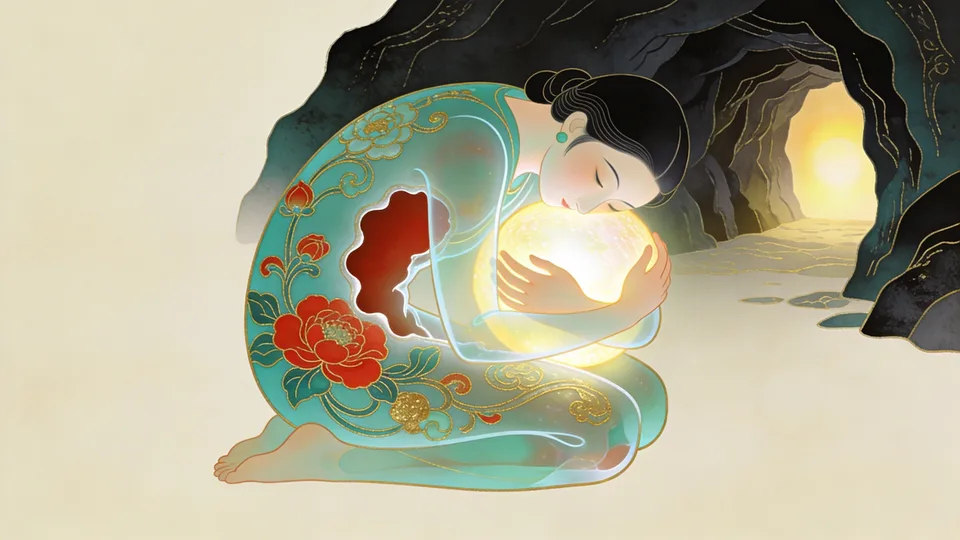
Venkatesh Rao calls this the Gollum Effect, after the creature in Tolkien who carries the Ring for centuries in a cave under the Misty Mountains. His diet, his hiding place, his murderous vigilance all serve one function, which is keeping the Ring safe, and the Ring in turn stretches his life far past its natural span. He believes he possesses it. It possesses him. The system maintains just enough of the host organism to keep it functional as a vehicle for the fetish.
That picture suggests an answer to the couponer’s puzzle. Addiction is fetishization carried to completion. An object, a substance, or a consumer role is promoted from something you use to something that defines you, until the person is hollowed out and only the customer-role remains.
How a habit becomes a self
The promotion runs through three stages that are hard to tell apart from the inside. The first is wanting. The first big coupon haul gives you a rush. The wanting originates in you, and you could walk away. The second is needing. Life has been reorganized around the thing: couponing acquires a weekly schedule, a filing system, and a garage. Every step away from the routine now looks like a loss.
The third is being. The consumption pattern has become an identity, “couponer,” and removing it no longer feels like quitting a habit. It feels like dying. At this stage the Ring does not need Gollum to love it. It needs him to be unable to conceive of himself without it. Few people go that far; most live in what Rao calls a fragile stalemate, aware the habit is engineered and taking part anyway. Gollum marks the far end of the gradient, the person who has been so thoroughly consumed by their fetish that the human and the customer-role are indistinguishable.
What drives the gradient is fetishization, the elevation of a part until it stands for the whole. Marx described an earlier version: under commodity fetishism, relations between people come to look like relations between things, so that a pair of shoes carries status and belonging rather than just leather and rubber. The Gollum Effect pushes the same logic down to the level of identity: the fetishized object does not just mediate your social relations, it replaces your self. The couponer does not merely have a relationship with the store. Much of who the couponer is now consists of that relationship. That is why addiction feels like love and withdrawal feels like grief: the object occupies the place where a self should be, so removing it does not open up freedom. It opens a hole.
Who is winning
Now the opening puzzle can be answered. The stores are winning because the couponer provides free marketing labor. The obsessive evangelizes deals, generates social proof, and inspires casual imitators who spend more than they save. The store does not need to pay for any of this, because the habit rewards itself: the thrill of the hunt, the identity of the savvy shopper, the community of fellow optimizers.
A con needs someone to stay behind and cool the mark out after the loss. The couponer does the cooling from the inside: the game feels won, and the couponer would defend the store’s system, because attacking it would mean admitting what the hobby has become.
Both of the familiar views fall short at this point. The willpower view treats the habit as a series of decisions the couponer could reverse, but nobody can will their way out of an identity, because the self doing the willing is the thing at stake. The systemic view is right that the stores benefit, but “structural forces” is too abstract to explain why the couponer cooperates so eagerly. The better account is that addiction and fetishization describe the specific mechanism by which structural forces become individual identity. The system does not need to coerce anyone. It only needs to make a consumption pattern load-bearing for the self.
What would be left
The useful question about the couponer was never whether the couponer is addicted. Nearly everyone is attached to something, and an attachment is not a pathology. The useful question is what would remain if the coupons disappeared tomorrow. If the answer is a person with more free evenings and a slightly larger grocery bill, the habit is still a habit. If the answer is someone who no longer knows what to do with themselves, the habit has already become the self, and the stores have been the main beneficiaries of that self all along.
The distance between you and Gollum is measured not in dollars spent but in how much of your identity would survive if you stopped buying. Most people avoid asking because they suspect the answer. But the question does not have to end in a void. In C.S. Lewis’s The Great Divorce, a ghost carries a lizard of lust on his shoulder, and when he finally lets an angel kill it, the lizard comes back as a stallion that carries him forward. The cramped object has to die, but the desire beneath it can return with a larger body and a different job. The couponer’s appetite for the hunt, for mastery, and for a community of fellow enthusiasts is real. Under the Ring it served a store. Freed from the Ring, it could serve a life.
References:
- Venkatesh Rao, The Gollum Effect, Ribbonfarm (2011)