The child who says “I wasn’t trying” has already stopped learning.
Josh Waitzkin had won eight national chess championships as a young player, with more fans and recognition than he could have dreamed of. He found that none of it was helping his search for excellence, let alone happiness. Being at the pinnacle in other people’s eyes had nothing to do with quality of life. So what keeps someone getting better once winning has stopped teaching them anything? The Art of Learning is his answer.
Two ways to lose
Two theories of intelligence produce opposite responses to the same defeat. Entity theorists believe intelligence is fixed. They stick to what comes easy, and a loss becomes a crisis: proof of inadequacy. On the playground they say “I wasn’t trying” after missing a shot. Incremental theorists believe ability is built through effort, so a loss is information rather than a verdict, and they put themselves out there to collect the lesson.
The entity theorist is like an anorexic hermit crab, starving itself so it doesn’t grow, to avoid having to find a new shell. Waitzkin, by contrast, loved the struggle that was the heart of chess, and that let him lose without losing himself.
Why depth slows time
The incremental learner still has to choose what to practice, and here Waitzkin makes his strongest claim: Depth beats breadth any day of the week, because it opens a channel for the intangible, unconscious, creative components of our hidden potential.
The reason is bandwidth: the conscious mind can process only so much per moment. Give it too much and the font shrinks until you can’t see details; give it a small amount and you see everything, and time feels slowed down. Reworking the same material until it is unconsciously integrated frees attention for what matters now. That is why refined martial artists appear mystical: they perceive and act within slices of time too small for untrained minds, because depth has done the compressing for them.
From child to adult to child again
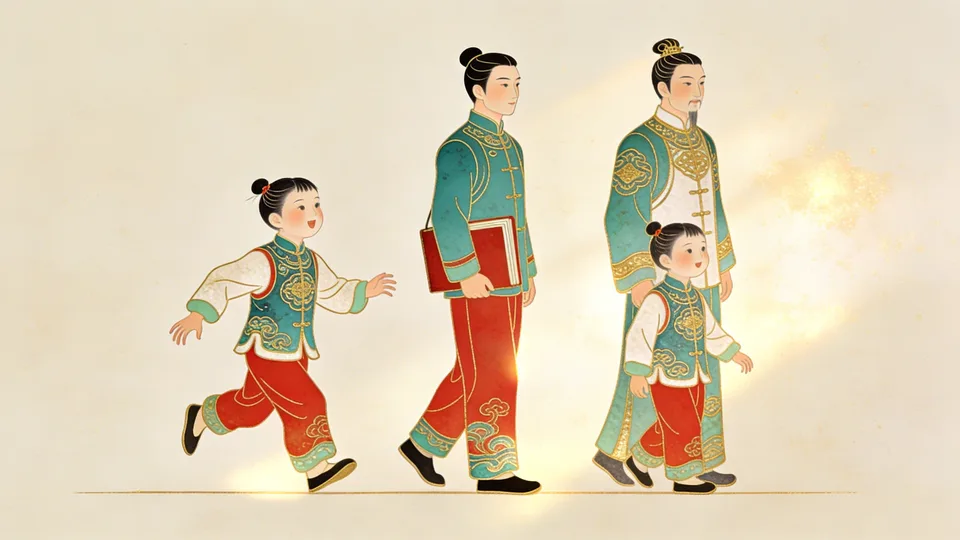
Depth changes the learner as well as the skill. This journey — from child back to child again — is at the very core of my understanding of success, Waitzkin writes. The child plays naturally. The adult learns technique and discipline and often loses the play. The master returns to spontaneity with the technique absorbed underneath. Jackson Pollock could draw like a camera and chose to splatter paint that pulsed with emotion: he studied form to leave form.
This is where the two theories of intelligence come back, because the art of learning is not about accumulating more but about integrating deeper — and the integration requires willingness to be vulnerable, to lose, and to return to the child’s openness after earning the adult’s discipline. The entity theorist can’t afford that vulnerability, because every return to beginner status threatens the fixed identity. Even for the willing, it has a cost: learners in this phase are inevitably vulnerable, soft and in flux, and they need protected time to cultivate.
What all this depth trains, in the end, is attention to the present. Not only do we have to be good at waiting, we have to love it. Because waiting is not waiting — it is life. Too many people live without fully engaging, waiting for their real lives to begin. A learner who can dive into the banal, rainwater on pavement or a housecat crossing a room, finds teachers everywhere. The open question is whether you can choose that attention, or only arrive at it after the trophies stop meaning anything.
References:
- Josh Waitzkin, The Art of Learning: An Inner Journey to Optimal Performance