The partner you can’t afford to lose is the one you’ll end up trying to change.
Finding the right person can feel like being rescued. For years there was a low hum of not being enough, then someone chose you and the hum stopped. Richard Schwartz, the founder of Internal Family Systems (IFS), asks a question that spoils the feeling a little: if their love fixed it, why does the hum come back whenever they are away, or tired, or in a bad mood?
His answer is that we look to our partners for what we need to feel good because we don’t believe we can get much of it from ourselves. But nothing outside can do that job. Your partner can no more cleanse your sense of unworthiness than can food, drugs, achievement, or perfect appearance. The problem was never that you chose the wrong person.
The basement
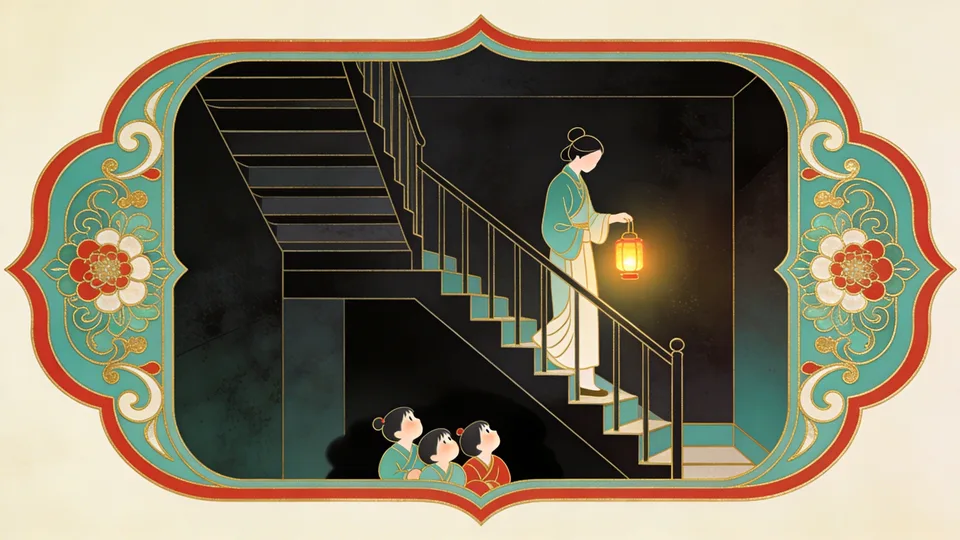
IFS treats the mind as a family of parts. The most wounded ones, carrying old shame and fear, are exiles, locked away because their pain was too much to feel. Picture a house with children locked in the basement. When a partner arrives with pizza, the basement children go wild with joy. They idolize the pizza guy and will do anything to please him, and if he turns out to be cruel sometimes, they put up with it, because they are afraid of starving in the dark again.
So what we call happiness is often relief about not being in unbearable states. The partner has become a life preserver in a dark sea, and any sign that they might leave feels like drowning.
When the food stops
When love stops flowing, even for an evening, the frightened parts go to work on one of three projects. We try to force the partner to change. We sculpt ourselves, using self-criticism and shame to carve yourself into what you think they want. Or we give up and close our hearts.
Each is an exiling project. In the first you push your partner to lock away their threatening parts, in the second you lock away your own, and in the third you exile the parts of you that are attached to them. Whenever a relationship creates exiles, it will pay a price. The first project shows the price most clearly. He asked her to model herself on his fears, and now he faces the result of those fears — her nothingness — and he no longer loves her. The partner controlled into safety becomes the one thing the controller cannot love: the marvelous wild beast is reduced to a domestic pet; the tropical flower, plucked from its environment, droops in a little vase by the window.
Going down yourself
The solution is not a better pizza guy. It is going into the basement yourself, feeding the children, and bringing them upstairs. You can become your own healer — the special person your vulnerable parts have been waiting for. In IFS terms, the Self, the calm and curious core beneath the parts, becomes the primary caretaker of the exiles, and the partner becomes the secondary one.
That changes what a partner is for. Schwartz’s point is that you cannot meet your partner’s deepest needs and they cannot meet yours — because those needs belong to exiled children who require a parent, and your partner is not your parent. Once the basement children have a parent, you can enjoy your partner for who she is, not what you need her to be. Schwartz calls this courageous love: accepting all of the other person’s parts because you no longer need to keep them in the roles of parent, redeemer, ego booster or protector.
None of this means you shouldn’t need anyone. Schwartz says nearly the opposite. Your partner is an invaluable tor-mentor, someone who mentors you by tormenting you, because many basement children only make themselves known when an intimate partner triggers them. Alone, you might never find the door. The fight that leaves you shaking is also telling you where it is.
References:
- Richard C. Schwartz, You Are the One You’ve Been Waiting For: Applying Internal Family Systems to Intimate Relationships