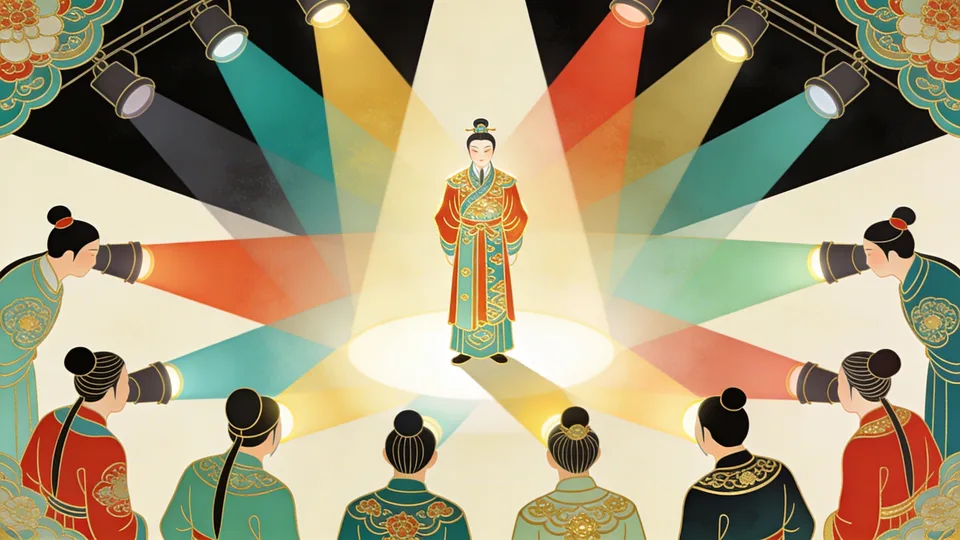
Nobody can be enough people for you, not even the right one.
A common hope about marriage is that the right partner will be enough: lover, best friend, therapist, sparring partner, co-parent and adventure buddy at once. When a marriage strains under that load, the usual conclusion is that the partner was the wrong one. Venkatesh Rao, in “The World Is Not Enough People,” draws a different conclusion, and follows it all the way to why some workplaces feel alive. The question underneath is how many people a person needs, and what those people have to be doing together.
Human social needs are too diverse, and too often in conflict, for one person to meet. Ask a spouse for intimacy, income, chores, dramatic entertainment, nurturance and intellectual stimulation, and you will probably have a miserable marriage; spread those needs across more people and you have a shot at a happy one. The partner who fails at being everything was not inadequate, because one person is structurally not enough people. Rao puts the number we need at roughly 12 to 40. We need to be seen — “recognized” in the philosophical sense — in enough different ways to validate our unique sense of ourselves, and that recognition has to be freely given by people acting with their own agency inside a shared story. A nation or a tribe can’t supply it, because neither notices you in particular.
Where the cast comes from
Kurt Vonnegut argued that extended families used to meet this need. Rao’s twist is that they still do, except that today we mostly find them through work. When leaders claim their organizations are like families, they are not bullshitting. Good organizations really do fulfill the needs traditionally met by extended family.
That changes what leadership is for. If I had to distill everything I’ve learned about organizations, leadership, and management into one sentence: if you put people in the right story, all hard problems become easy; if you put them in the wrong story, all easy problems become hard.
The right story has 12 to 40 characters striving for something worthwhile over a 15- to 40-year horizon. It must be big enough to get something interesting done, which is the mission, and big enough to solve the enough-people problem for everyone in it. So the “enough people” problem is a first-class citizen of the problem stack, equal to the mission. Accomplish the mission without solving it and the victory feels hollow; solve it without a mission and you get an artificial extended family that does little beyond existing. A good leader solves both problems at once. A bad leader thinks one or the other is unimportant.
When the family is too good
None of this means the warmest group is the best. A story that meets all its members’ social needs internally loses the motivation to strive outward. That is why “traditional values” organizations tend to be sleepy, complacent, and vulnerable. There needs to be a shared itch that can only be satisfied by working on something bigger along non-social dimensions — often a man-versus-nature story. Even the happiest extended family cannot get to Mars through cuddle-puddle energy alone. With the mission pointing the family outward, members can act with relatively uninhibited energy, trusting that the consequences will be net good because everyone competes to win without damaging anyone else’s ability to keep playing.
The opposite failure is a cast too thin to live in. Rao’s rough rule is that you are healthy if about 80% of your narrative energy is local, from a story where you have a named role and act as an independent, unpredictable person. Invert that ratio and you get the pathology he names directly: Toxic tribalism and ethnonationalism are bad narrative energy distributions: too little local action, too much narrative energy derived from larger scales as a narrative subsidy. The person with no local cast borrows meaning from the nation, which feels like belonging but cannot recognize them.
Back in the marriage, then, the fix is a bigger cast rather than a better partner. Rao runs the same reasoning up the scale until he reaches the claim in his title, that even the world is not enough people, and says this is why religions work the way they do. If it takes a cast of 40 to hold one person, what does it take to hold a story the size of humanity?
References:
- Venkatesh Rao, The World Is Not Enough People