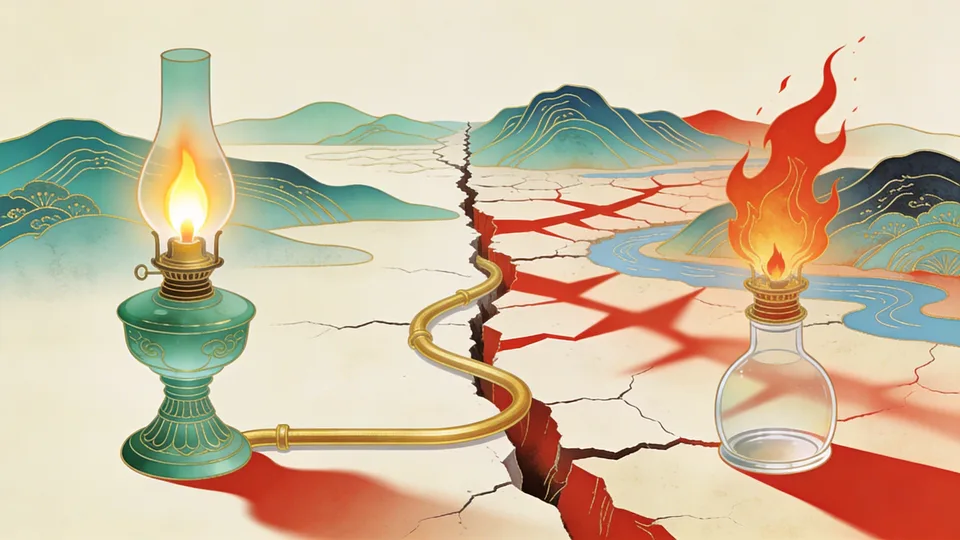
The ten minutes of meditation you skipped come back as a vacation you can’t afford.
When life is going fine, mental well-being feels like a luxury. The meditation app, the gratitude journal, the silent retreat, the “10% Happier” dividend Dan Harris pitched to skeptical professionals: all of it feels like upgrading your airline seat. It is pleasant, and it is the first thing cut when work gets busy. Economists would call that elastic demand. Another ten minutes of meditation buys a modest, roughly linear improvement in your day, and skipping it costs about as much.
That pricing holds as long as you stay above a certain level, and fails badly once you drop below it. Oil shows how. A 20% reduction in oil flow through the Strait of Hormuz does not cause a 20% price increase. The price does not go from $100 to $120. It goes to $500. Near the margin, demand is inelastic: the world’s infrastructure cannot run on less than its baseline, so buyers will pay almost any price to get back to it.
Your mind behaves the same way. Suppose your baseline emotional regulation drops just 10% below the threshold. You do not become 10% less effective. You cross into the region where small shortfalls produce outsized damage: you blow up a relationship, wreck a professional reputation, burn down your household. The small buffer is not a nice-to-have dividend. It is your entire strategic reserve, preventing convex, catastrophic failure.
What the ten minutes were doing
A phone makes the point concrete. Most of the time the battery is fine and you don’t bother closing the apps running in the background. Below 10%, those same apps decide whether the phone lasts until you get home. In your head the background apps are constant mild resentment, low-grade anxiety and the unresolved argument from Tuesday. They were always draining you; you just couldn’t feel it while the reserve was full.
Seen this way, meditation is not an upside dividend. It is a task manager, closing those programs before they overwhelm the core system. That is why the “10% Happier” branding misprices its own product: it packages existential infrastructure as corporate wellness optimization. Few people keep a practice for years to reach higher consciousness. They keep it to maintain the structural integrity of their lives against penalties that arrive all at once.
The 10x price of feeling good enough
Now suppose you skipped the cheap maintenance for months because it felt optional. You are running a deficit, and your demand to feel “good enough” has turned inelastic. You have to get back above the threshold, and the cheap route no longer works fast enough, so you pay a 10x price for reactive relief instead:
- the six-month-salary vacation to escape the stress of your job
- the luxury bag for a transient flash of social validation over a void of genuine connection
- the Michelin-star duck foam for a moment of sensory exquisiteness against a round-the-clock deficit
These are emergency responses, not thoughtful purchases, and they rarely close the gap. Dopamine fires at the anticipation of relief rather than at the relief itself, so the escape produces a spike and then a crash, leaving the deficit where it was, minus a month’s salary. True wealth states the same curve in money: a purchase counts as wealth only if it lowers the baseline deficit instead of charging a premium for temporary relief.
So proactive maintenance is elastic, but reactive recovery is inelastic — and the curve between them is not gradual but convex. The “10% happier” framing is correct in the elastic region, which is where most people are most of the time; there, an extra ten minutes really is a modest upgrade. It becomes catastrophically misleading only below the threshold, and the trouble is that you rarely know how close the threshold is until you have crossed it.
Over decades the curve produces something worse than a crisis. A person who lives permanently below threshold pays the 10x premium on every minor disturbance, until the chronic deficit hardens into personality. Bitterness is what the curve looks like at that timescale: someone who can no longer feel the buffer they used to have. Would you notice if you were already spending yours?