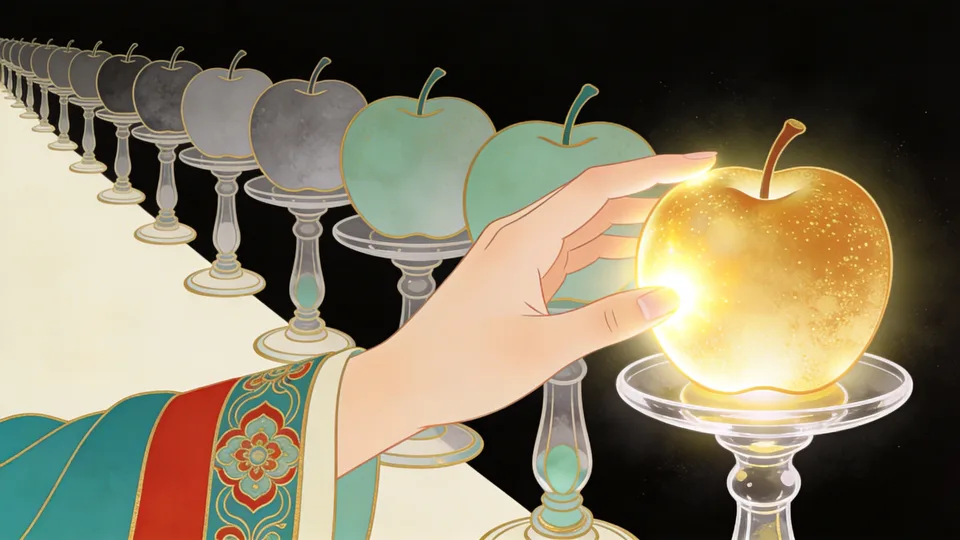
Your brain does not want stuff. It does not even want new stuff. It wants to engage in the process and anticipation of getting new stuff. That single distinction reshapes how motivation, addiction, desire, and satisfaction actually work.
Simple Picture
ELI5: dopamine is not the feeling of eating the cookie. It is the feeling of reaching for the cookie. The moment you have it, the signal drops. The system was never designed to make you happy with what you got. It was designed to keep you reaching.
Core Claim
Dopamine encodes prediction error and anticipated reward, not experienced pleasure. The spike happens before the reward arrives — when the possibility becomes salient. Once the reward lands, the signal diminishes. If the reward is exactly what was predicted, the dopamine response is minimal. If it is better than predicted, the spike is large. If it is worse, the signal dips below baseline.
This means the dopamine system is structurally oriented toward wanting, not having. It is a search engine, not a satisfaction engine. Buying the feeling of progress is the hobbyist version: the purchase recreates the anticipatory spike of early improvement without delivering the mastery the buyer subconsciously hoped the object would purchase. Luxury escapes the same loop only when the acquired object begins a second life of attention, practice, and care instead of prompting another search.
The implications ripple outward:
- Novelty addiction is the default. The system fires hardest for unpredicted rewards. Familiar rewards produce diminishing responses. This is not pathology — it is the system working as designed.
- The chase is the reward. People who “lose interest once they get the thing” are not broken. They are experiencing exactly what the dopamine system was built to produce: motivation that peaks during pursuit and drops at acquisition.
- Satisfaction requires a different system. Dopamine does not produce contentment. That comes from the opioid and serotonin systems. Conflating dopamine with happiness is like confusing hunger with nutrition.
- Dopamine is the neural implementation of infinite demand. The psychic economy needs a goal that never arrives — because the system that arrived would stop producing dopamine, and the factory would idle. The Ask supplies the telos; dopamine supplies the pursuit chemistry. Permanent dissatisfaction is not a flaw but the engine of all striving.
Why Desire Feels Like Need
The dopamine system explains why desire feels so much more urgent than love. Desire is anticipatory — it is the dopamine system firing at full power, encoding the gap between what you have and what you are reaching for. Love is calm, present, and runs on different neurochemistry. The wounded psyche chases desire because the dopamine spike feels like proof that something important is happening. Calmness produces no spike, so it registers as emptiness.
This is also why neediness is self-reinforcing. The needy person organizes their life around the anticipation of approval. Each moment of uncertainty about whether approval will arrive produces a dopamine spike that feels like evidence the relationship matters. Stable, predictable affection generates less signal — so the needy person gravitates toward inconsistent sources, mistaking the neurochemical noise for depth.
The Local Optimum of Dopamine Seeking
Dopamine-seeking behavior is a textbook locally-optimal strategy. Scrolling, gaming, pornography, drama-seeking, and novelty-chasing all produce reliable anticipatory spikes. They solve the proximate problem — “I feel flat and unmotivated” — efficiently. But they solve it by exploiting the same system they are depleting, creating a cycle where the baseline drops and the hits need to get bigger.
The system was not designed for an environment where anticipatory reward is available on demand with zero effort. It was designed for an environment where the chase involved real physical and social cost, which naturally rate-limited dopamine exploitation.
Common Misread
The dimwit take is “dopamine is the pleasure chemical — just do things that release dopamine.”
The midwit take is “dopamine is bad — do a dopamine detox.”
The better take is that dopamine is the wanting chemical, not the liking chemical. You cannot detox from wanting. But you can understand that the signal it produces is about the distance between here and there, not about the value of there. The most intense desire often points at the largest gap, not the most worthwhile destination.
Main Payoff
Once you see dopamine as an anticipation signal rather than a happiness signal, several confusing patterns resolve:
- Why getting the thing never feels as good as wanting the thing
- Why inconsistent rewards are more addictive than reliable ones
- Why calm, stable relationships feel “boring” to people calibrated on chaos
- Why the person who withholds is more magnetically attractive than the person who gives freely
The system is not malfunctioning in any of these cases. It is doing exactly what it was built to do. The problem is mistaking its output for guidance about what is actually good for you.