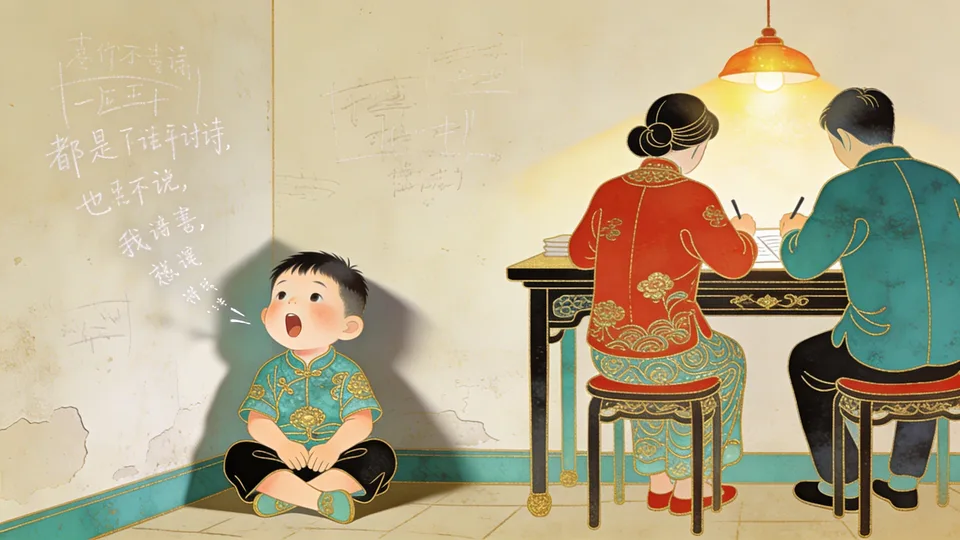
The child who stopped bringing problems home still had them.
爸爸妈妈,谢谢多年以来无私的支持和照顾。
I always mention to people here how strong you were. I joke that today’s immigrants come to buy houses — you came with borrowed money. The hardships of your generation are beyond what ours can understand. You are right about that.
But precisely because we cannot understand, we cannot appreciate everything you have done. And there are things you cannot understand either.
You do not understand what it feels like to grow up between two cultures.
Going from top of the class to the very bottom. The grief and the blow to self-worth — did you ask me how I felt? Your answer might have been: “Who cares what they think? This is nothing compared to when I ate eggs and chicken every day back then.”
Losing touch with all my middle school friends because of the constant moves. When you ask “how’s so-and-so doing these days?” — I am too embarrassed to say we are strangers now. He does not care about me. I do not care about him. We each went our own way.
A baby cries over small things because that is the hardest moment of their entire life. Adults know better than to judge the baby’s reaction by their own standard. But when the child starts growing, they forget this, and begin to resent the crying. “How can you be so immature!”
你们真正理解过我吗?
Did you ever truly understand me? Did your eyes see the real person, or the ideal one? What was my happiest moment as a child? My saddest? Did it matter?
一个小孩,找不到谈心的对象会忘记这个能力。 A child who finds no one to confide in forgets the ability to confide. The person who originally wanted to run and share joy and sorrow ends up talking to corners, heart gradually growing cold. “Nobody cares anyway.”
I understand this about myself very well. My partner sees it as a flaw too. Why did my own parents only notice now?
I do not know how to be a warm person. I cannot express the gratitude in my heart. You seem to have everything you need. The only thing left is our future. But please understand — everyone walks their own path. When I hit obstacles, I may ask for your advice — your experience is vast. But I may also want to try on my own.
另一个人的生活不能随便插手的。 You cannot casually interfere in another person’s life. To do so is not treating them as family — it is treating them as a puppet controllable within your shadow.
冷漠请原谅。I did not realize my coldness caused you so much pain.
The letter’s imagined reply is eat bitterness turned on a child’s grief: when suffering is competitive, the child’s always loses, so the child stops mentioning it. The coldness that grew in that silence protected the child and hurt the parents. There is no version of this story where nobody gets hurt.
References:
- Personal correspondence