The most dangerous bet you’ll make is the one right after your best one paid off.
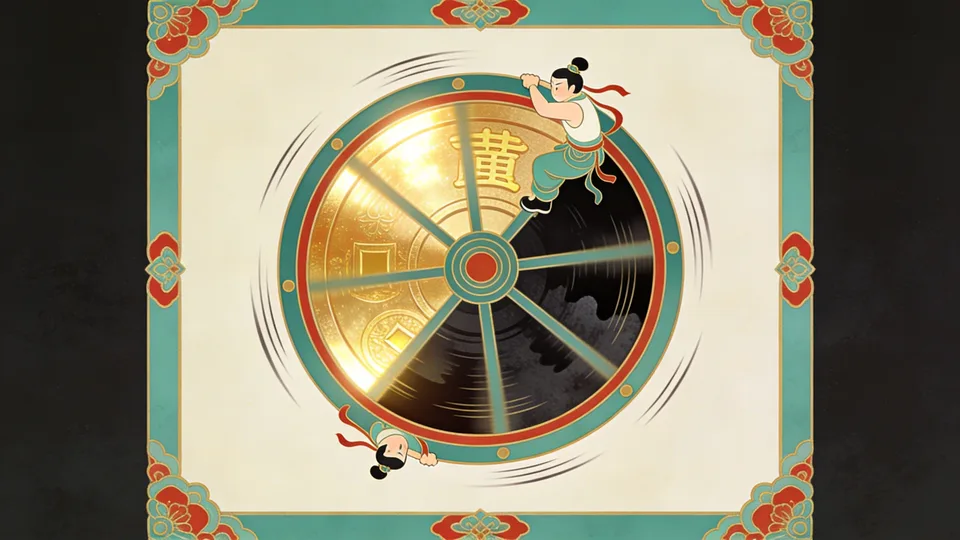
The standard advice treats greed and fear as opposite moods that swing the market, and tells a disciplined investor to play against them: be fearful when others are greedy, and greedy when others are fearful. Follow one investor through a single cycle, though, and they look like one engine in different gears.
Suppose you study a company for months, think carefully, and buy. The stock doubles. The natural conclusion is that you were right because you are smart, so the next bet is bigger. It falls, you buy the dip, and it falls further. Eventually you sell near the bottom and you emerge “wiser.” The first thing your wiser self concludes is that this time you have really figured it out. What drives every stage of that loop, the greed on the way up and the fear on the way down, is the belief that you deserve to be right.
Greed: believing you earned it
Greed is less about wanting more than about believing you earned it. You put in the study, the effort and the hard thinking, and greed is the conviction that you deserve a return on that investment. When the return arrives, especially an above-average one, a complex world with many causes collapses into a single explanation: me. The stock might have doubled because of interest rates, a sector rally or luck, but the story you tell credits your research, and that story supplies the confidence for the bigger bet. While the bets keep paying, the loop looks like wisdom, even as success removes any incentive to explore ideas that conflict with the one that just worked.
Fear: protecting the story
So when the bigger bet goes wrong, the first response is reinterpretation rather than learning. Buy the dip; the market is being irrational. Each reframing protects the belief by making the failure someone else’s problem, and you become immune to feedback. The signals keep arriving, but your defenses reject every one that threatens the self-model. What all this reframing guards against is the unbearable possibility that the world is complex, partly random, and indifferent to whether you deserve anything.
Then the pain breaks through, and you sell just to make it stop. Like the ruin asymptote in a portfolio, the doubling down has consumed your capacity to think as well as your capital. Then you emerge with a new lesson: you were too aggressive, and now you will be patient.
Now you deserve to be right.
The content of the lesson changed, but the structure is the same: I have figured it out, and this time my framework is correct.
Why seeing the cycle doesn’t free you
The obvious escape is to learn the cycle and step outside it. But the greed-fear cycle is not a market phenomenon you observe — it is a cognitive structure you inhabit. The investor who believes they have transcended greed and fear is in the greed phase of a meta-cycle, greedy for the status of being beyond greed.
Nobody can invest without a view; the trouble is a view you feel entitled to, and the only defense is the will to think: to keep questioning while the framework is producing results, and to keep questioning when it stops. You will not eventually find the right framework, because the moment you believe you have found it is the moment the cycle begins again.
That makes success, not failure, the dangerous moment. Failure at least produces pain that forces attention, while success makes attention feel unnecessary. The question worth asking, then, is less about your last loss than your last win: what, besides you, made the stock double?
References:
- Morgan Housel, Origins of Greed and Fear, Collaborative Fund