Find the thing a proud man can’t bring himself to say, and you’ll find where he was hurt.
Prince Zuko insists he feels no shame, because he is proud. His uncle Iroh hears it differently:
Pride is not the opposite of shame, but its source. True humility is the only antidote to shame. — Uncle Iroh
Most of us would side with Zuko. Shame says you are less and pride says you are more, so if shame is the disease, pride looks like the cure, and plenty of self-esteem advice works on that assumption. Iroh’s line says it is backwards. The reason lies in what shame does to a person.
What shame builds
Shame is identity-level pain. Guilt says “I did a bad thing” and can resolve through learning, repair and changed behavior. Shame says “I am bad”, and it freezes the learner. Once shame attaches to the self, the system starts optimizing for non-exposure: do not be seen as weak, foolish or needy, or as the kind of person who could have been hurt.
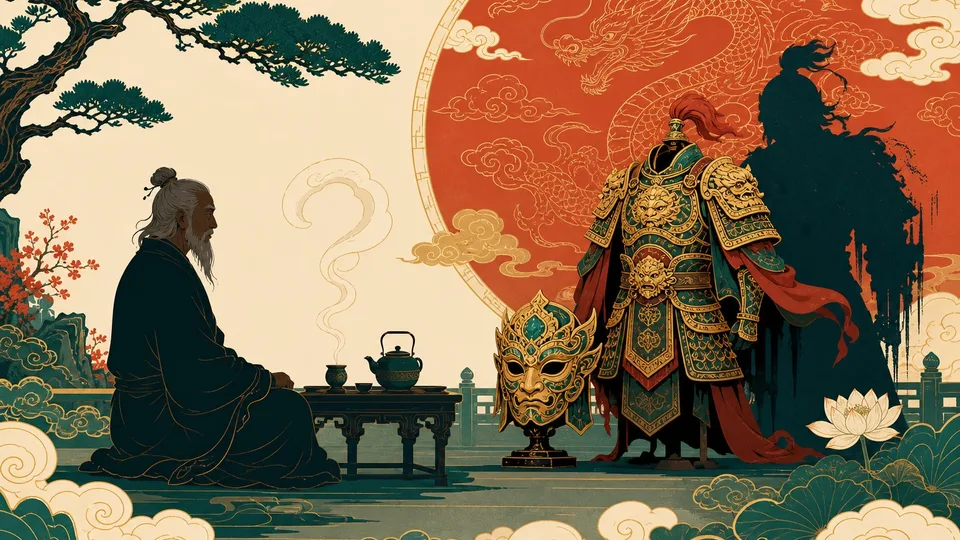
Pride is one of the cleanest non-exposure strategies. Picture someone who is burned and forges golden armor around the burn. From outside, the armor looks impressive, polished and bright. From inside, its whole shape is dictated by where the wound is. Pride is not the antidote to shame. It is shame that has learned to stand upright. The proud person climbs above everyone else and calls the height recovery, but the altitude is still organized around the low place.
Shame says: I am defective. Pride answers: Then I will become untouchable. That sounds like opposition, but both sentences accept the same premise, that the self is on trial. Pride merely changes the plea from guilty to superior. The courtroom remains.
Zuko fits the pattern closely. He is proud of honor because he was dishonored, proud of lineage because the lineage rejected him, proud of strength because his weakness was punished. Each pride sits on top of a specific wound, which is how Iroh can see the shame through it.
Why pride makes shame worse
If pride only covered shame, it might be a tolerable bandage. But it makes healing conditional on maintaining the cover. When the self’s safety depends on being impressive, every ordinary human limitation becomes a threat. Error stops being information and becomes exposure. Need becomes humiliation, apology becomes status collapse, and learning turns dangerous, because learning requires admitting you did not already know.
So pride can look like confidence while functioning as fragility. Real confidence can touch reality and update. Pride needs reality to cooperate with the image, and when it refuses, pride has three moves: devalue the witness, since whoever saw the gap must be inferior; rewrite the event, so the mistake was not a mistake; or raise the armor, so the next performance is even more untouchable. Every move keeps the wound out of reach, which also keeps it from healing. The intellectual who cannot say “I don’t know” because uncertainty feels like stupidity, and the achiever who cannot rest because rest feels like worthlessness, are running the same machine in smaller doses.
Humility is not humiliation
The obvious misreading of Iroh is that humility means self-lowering: think less of yourself, take up less space, become small enough that nobody can accuse you of arrogance. That is shame wearing simpler clothes. Humiliation says I am low. Pride says I am high. Humility says the vertical axis was the trap.
Humility, then, is contact with reality without the extra demand that reality prove something about the self. Adler draws the same line between self-affirmation, which says “I am strong” when the evidence is ambiguous, and self-acceptance, which says “I got 60; how do I get 100?” Humility is self-acceptance applied to status. It can say I failed, I wanted approval, I was jealous, I did not know, not as confession theater but as data. A mistake can remain a mistake, and a wound can remain a wound. Once the self stops converting everything into courtroom evidence, repair becomes possible.
That is why Iroh doesn’t attack Zuko’s pride directly; attacking the armor only proves the armor necessary. He names its source instead. The problem was never that Zuko thinks too highly of himself. It is that his whole self-concept still orbits the original expulsion, and even triumph wouldn’t change that: an exile who returns to the palace in glory has not escaped the palace, because it still decides what he is worth. The harder question is what you would have to let become ordinary enough to touch before you could walk out of the courtroom.
References:
- Avatar: The Last Airbender, Uncle Iroh’s line to Prince Zuko: “Pride is not the opposite of shame, but its source. True humility is the only antidote to shame.”