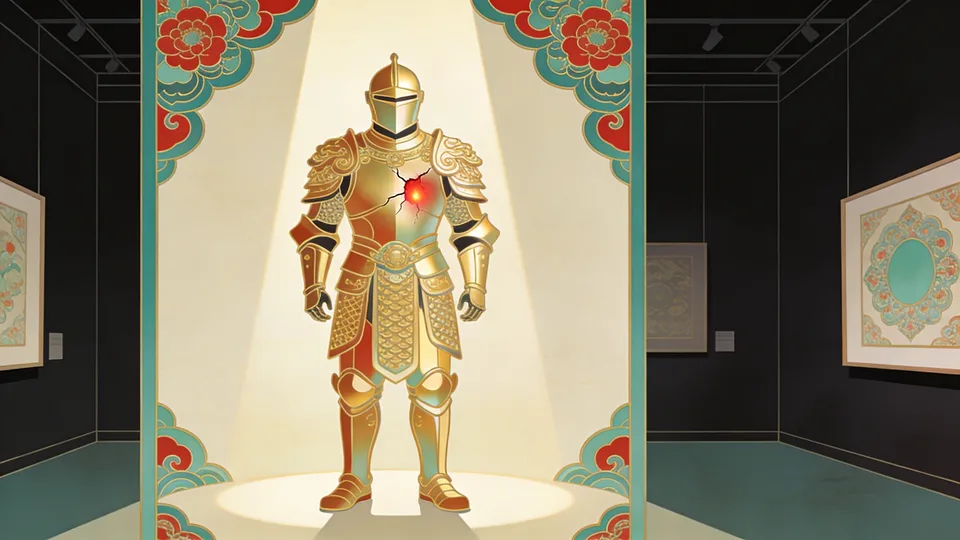
Narcissistic personality disorder is not grandiosity all the way down. It is grandiosity built over a fragmented foundation: unstable self-concept, split views of others, and oscillation between idealized and persecutory inner experience. Structurally, it sits close to borderline-personality-disorder, but hides the chaos behind a more integrated-looking surface.
The Structure
Kernberg’s key idea is the pathological grandiose self: idealized parts of the self, admired qualities of others, and future aspirations fused into a fantasy of already-achieved completeness.
This is not confidence. It is an armored substitute for a rejected self — the clinical extreme of pride as shame’s armor rather than shame’s cure.
The cost? Everyone else gets devalued.
Other people become inferiors, admired objects to absorb, or enemies to fight. There is no fourth category for “equal.” This is the idealize-then-devalue loop from the aggressor’s side: crown the other, feed on the reflected glory, discard them when they stop stabilizing the image.
Origin
NPD usually begins as unprocessed childhood pain: grief or terror overwhelms the child, while adults ignore, minimize, or cause it. The child learns that feelings are wrong, dangerous, or irrelevant.
So the heart closes. Emotions get rationalized instead of felt. A perfect persona replaces the abandoned true self. Eventually the mask becomes identity, and anyone who sees through it feels like an existential threat. This is the children-as-mirrors principle: the child whose emotional reality is not mirrored learns to abandon it.
The Loop
Narcissists often reproduce the structure that formed them: they cause pain, refuse accountability, and deny the other person’s emotional reality exactly as their own was denied. In families, this often produces an Identified Patient who carries the exported shadow so the parent’s grandiose self remains intact.
This is why admitting mistakes is so threatening. A mistake would imply that people cause harm, buried pain was real, and the narcissist is human enough to have been damaged. The whole structure exists to avoid that knowledge.
The Emptiness Paradox
Kernberg names the paradox: grandiosity and emptiness coexist with an incapacity to love. The narcissist needs admiration constantly but cannot reciprocate. Like neediness, self-worth depends on external input; unlike neediness, the dependency must be denied.
Repair means contact with the grief underneath the mask: feeling what was rationalized away, accepting imperfection, and forgiving without denying harm. Until then, the grandiose self must keep feeding, producing the ceaseless outward motion often mistaken for ambition.
NPD is a stability solution that sacrifices love for safety.
References:
- Otto Kernberg on narcissistic personality organization