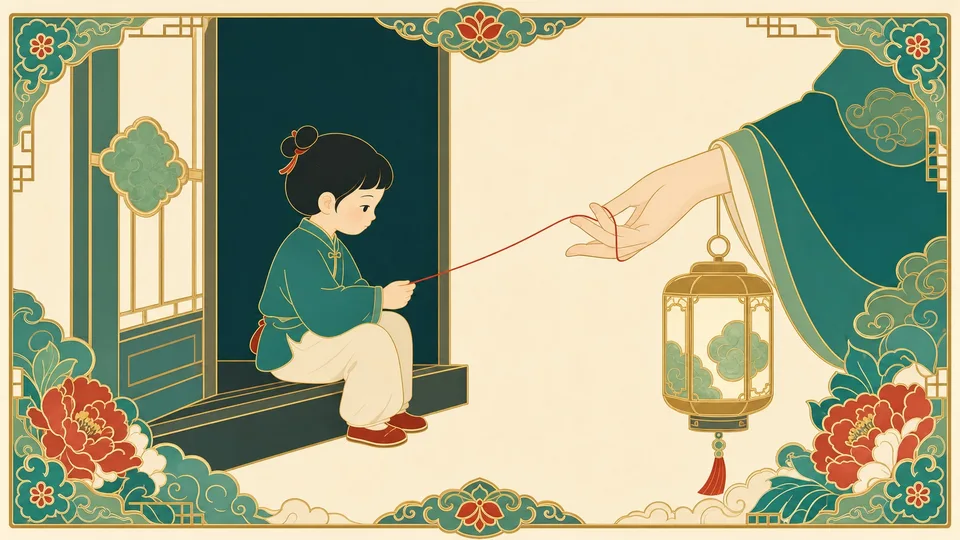
The fear behind many fears is not loneliness in the ordinary sense. It is uncontained helplessness: the sense that when reality overwhelms you, no one will witness it, regulate it, rescue you, or receive the signal.
The deepest human fear is not being alone in a room. It is being alone with an experience too large for the self to metabolize.
This note grows from the intersection of polyvagal-theory, running-on-empty, the-exile-equation, totalitarianism-and-loneliness, pain-tether, and travel-and-abandonment. The question it answers: is the fear of being alone behind all other fears? The claim it makes: many human fears route through aloneness, but the load-bearing structure is not solitude itself — it is the loss of a containing other.
The Simple Picture
A baby does not fear loneliness as a philosophical state. It fears dysregulation without a regulator.
Hunger arrives. Cold arrives. Noise arrives. The body floods. The infant cannot interpret the sensation, soothe the body, acquire food, or know that the wave will pass. Another nervous system must arrive as part of the baby’s own regulatory architecture: face, voice, warmth, rhythm, milk, touch.
At that level, “alone” does not mean “nobody is texting me.” It means:
No regulator. No witness. No rescue. No proof that this sensation can be survived.
Adult fear keeps this grammar. The objects get sophisticated — money, romance, status, ideology, health, achievement, God — but the old question remains underneath:
If this overwhelms me, will I be held by anything?
Solitude Is Not Abandonment
The first distinction is brutal because it exposes most bad advice.
Solitude is aloneness with an intact inner companion. The person can keep themselves company. Arendt called this the difference between solitude and loneliness: solitude is being alone with yourself; loneliness is losing the capacity to be with yourself at all.
Abandonment is aloneness without a container. The self becomes a signal with no receiver. The body scans for a face, a voice, a reliable other, a ritual, a God, a room, a task, anything that can hold the overflow. Nothing answers.
This is why the same empty room can feel like peace to one person and annihilation to another. The room is not the variable. The internalized container is.
travel-and-abandonment captures the healing version: solitude becomes freedom only when the nervous system learns that being alone does not mean being unsafe. The person does not become anti-social. They become less hostage to the old equation: alone = left = unsafe = unlovable = gone.
Why So Many Fears Wear This Mask
Fear of failure is rarely only fear of the failed object. It is fear that failure will exile you from admiration, usefulness, and welcome.
Fear of poverty is rarely only fear of having less. It is fear that if you fall, no one will catch you, and the world will reveal that your belonging was conditional on performance.
Fear of rejection is the cleanest form: the other mind refuses to hold your image. You do not merely lose the person. You lose the proof that you exist safely in another nervous system.
Fear of shame is social death: the group does not just see your mistake; it sees through you and withdraws your right to appear.
Fear of illness is the body’s betrayal plus dependency: I may become helpless, unattractive, burdensome, and unable to manage the terms on which others encounter me.
Fear of death is the final version: the threshold no one can cross for you. Even when surrounded by love, the body must perform its last letting-go alone.
These are not identical fears. But they share a conversion layer. Each becomes existential when it implies unwitnessed helplessness.
Co-Regulation Comes Before Selfhood
The modern self-help fantasy says the mature person self-regulates. The developmental truth is stranger: self-regulation is internalized co-regulation.
polyvagal-theory makes the nervous-system layer visible. A person in ventral vagal connection can feel intensely without losing access to thought. A person in threat or shutdown cannot simply reason themselves into safety. They need contact, breath, rhythm, warmth, orientation, and often another person whose body loans them regulation until their own system can climb back up.
This is why abandonment terror is not childish. It is ancient mammalian math.
The child first borrows itself from the caregiver’s nervous system. If the caregiver reliably receives distress, the child gradually installs that function inside. If the caregiver is absent, frightening, fragile, self-absorbed, or inconsistent, the child learns a different lesson:
My inner world has no valid address.
running-on-empty names the wound made of absence. Nothing dramatic needs to happen. The failure may be precisely that nothing happened: no attunement, no naming, no warmth, no adult who could help the child metabolize the experience. Later, the adult can be loved and still not feel loved, because the receptor for being held was never fully built.
The Self Becomes an Emergency Architecture
When the containing other is missing, the self tries to become its own container too early.
It builds strategies:
- Neediness: make another person into an external regulator.
- Counter-dependence: need no one, so no one can fail you.
- Achievement: become valuable enough that abandonment becomes irrational.
- Money: buy distance from helplessness.
- Status: keep the tribe’s attention on you.
- Ideology: outsource the inner companion to a doctrine.
- Drama: keep contact alive through friction.
- Numbness: reduce the signal until no container is needed.
Each strategy works locally. That is why it survives.
neediness chases approval because approval feels like regulation arriving from outside. self-abandonment suppresses truth because truth might threaten the connection that regulation depends on. depression chooses numbness because the specific pain would require a container the psyche does not trust exists. pain-tether explains why even suffering can become precious: pain is a crude proof that something is still touching the self.
The system is not stupid. It is trying to prevent an old free fall.
The Fear of Being Unreceived
The deepest aloneness is not the absence of people. It is the absence of reception.
A person can be surrounded and still alone if no one can receive the real signal. The family hears the words but not the need. The friend hears the crisis but rushes to advice. The therapist hears the symptom but misses the ontology. The partner hears the complaint but not the terror underneath. The ideology hears the loneliness and offers a uniform.
This is why the-exile-equation gets dangerous. The thought “I do not belong here” often means:
I cannot find a receiver for the signal I actually am.
If the signal remains unreceived long enough, the map collapses. This room becomes the world. This state becomes the future. This failed connection becomes proof that connection itself is fake.
The fatal scaling error is converting local unreceivedness into metaphysical exile.
Why Wealth, Love, and Status Become Substitutes
Many adult projects are anti-aloneness technologies.
Money promises: I will not be helpless.
Romance promises: I will be chosen so completely that abandonment becomes impossible.
Status promises: the tribe will keep me in view.
Beauty promises: I will remain receivable.
Competence promises: I will be needed.
Ideology promises: I will never again have to think alone.
Spirituality promises: the universe itself holds me.
None of these promises are fake. They each touch part of the truth. Money really can reduce helplessness. Love really can regulate. Status really can protect. Competence really can create belonging. Spiritual practice really can reveal a deeper ground.
The trap begins when any of them is asked to do the whole job of an internalized secure base.
That is where true wealth and the fear behind fears meet. Money is positive wealth when it removes coercion. It becomes negative true wealth when it becomes a shrine against abandonment: guarded, displayed, identified with, and asked to guarantee that no helpless state will ever arrive.
The Cat, the Monk, and the Secure Child
Cats give the simplest image of aloneness without abandonment. A cat can be alone because it has no self-image requiring continuous social confirmation. Its solitude is not a referendum on worth.
The monk gives the trained human version. The monk is not invulnerable. The monk has stopped trying to take shelter inside objects, status, and continuous mirroring. The bowl feeds; it does not certify. The robe warms; it does not complete. The room shelters the body; it does not promise that experience will become permanently controllable.
The secure child gives the developmental version. When a child is sure enough of love, the child can forget the mother and explore. Security produces curiosity. Insecurity produces orbiting.
The secure person does not need fewer people. They need people less desperately because connection has become portable. Some of the containing other has become structure inside the self.
Dimwit / Midwit / Better Take
The dimwit take is “people are afraid of being alone because humans are social animals.”
True but thin. It names the species fact while missing the regulatory machinery.
The midwit take is “the real root fear is death, not loneliness.”
Also true at the biological layer. But death becomes psychologically unbearable partly because it is imagined as the final unaccompanied threshold: no witness can cross it for you.
The better take is that human fear has layers. The biological root is bodily annihilation. The psychological root is uncontained helplessness. The social root is abandonment and exile. The spiritual root is the terror that consciousness is not held by anything larger than itself. “Fear of being alone” is where these layers meet, but only if alone means unheld, not merely physically separate.
The Repair
The cure is not to become someone who needs no one. That is counter-dependence wearing armor.
The cure is to separate two sentences:
I want connection.
from:
I need another person to prevent psychic collapse.
The first is human. The second is emergency architecture.
Repair means building enough internal and external containment that fear can become specific again. Not “I am alone with reality.” More like: I am scared of this email, this market drawdown, this illness, this goodbye, this night, this memory, this conversation. Specific fear can be held. Total exile cannot.
The practical moves are ancient and unglamorous: reliable people, repeated rituals, a body that sleeps, rooms that feel inhabited, work that returns you to reality, honest speech before the signal becomes desperate, enough money to remove genuine ruin, and practices that let sensation pass without instantly becoming self-verdict.
Main Payoff
A lot of life secretly asks one question:
Can I be with reality if no one else is there to soften it for me?
If the answer is no, every fear recruits abandonment. Failure means exile. Poverty means no rescue. Rejection means annihilation. Shame means social death. Illness means burdensomeness. Silence means the void.
If the answer becomes yes, fear does not disappear. It localizes. You still want love, money, health, welcome, reputation, and company. But they stop carrying the impossible burden of proving you will never be left alone with experience.
That is the shift from abandonment to solitude. The room may still be empty. But the signal is no longer alone with itself.