The best people leave first, and the ones who stay decide who gets hired next.
A company hires steadily. It pays market rates and fills its open seats. Yet each year the place gets a little less capable: projects slip further, the code gets harder to change, and the promising people it hired fade or leave within a year or two. Management concludes it has a hiring problem and buys better recruiters, or a retention problem and buys better perks. Neither helps, because both look at the wrong end of the pipe.
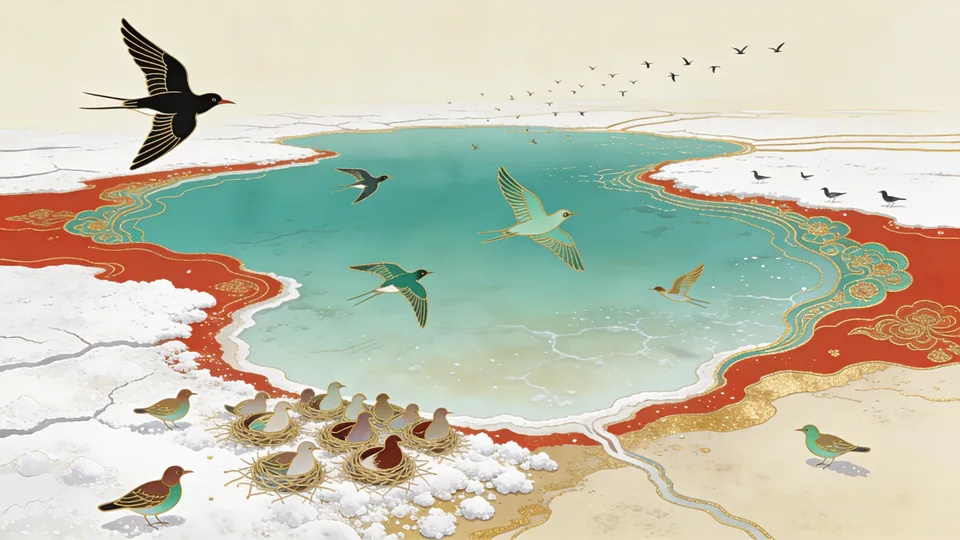
Bruce Webster calls this the Dead Sea Effect. The Dead Sea has no outlet. Water flows in but leaves only by evaporation, which carries off the water and leaves the salt behind, so the concentration rises until the sea cannot support life. An organization can work the same way. Talent flows in through hiring, and what decides its fate is which talent leaves. The more talented and effective engineers are the ones most likely to leave — to evaporate.
Who evaporates
They go first because they are the least willing to put up with frequent dysfunction and the most likely to have alternatives. When reported issues are prioritized into nothingness, as they are in an entropic organization, the most capable people, who see the problems most clearly, are the first to conclude that their input does not matter. What remains is the residue: the least talented, who tend to be grateful they have a job, make fewer demands, and are the least likely to find work elsewhere.
The residue does not stay passive. Its members become maintenance experts on critical systems, taking on responsibilities nobody else wants and becoming indispensable through knowledge of legacy systems only they understand rather than through excellence. That makes them the people who define what good work looks like, and the people who interview the next hire.
Here the company’s steady hiring breaks down. A newcomer with higher standards arrives and is soon described as “not a good fit” or “hard to work with.” Her objections reach management through a narrow pipe, because she has no institutional credibility yet. The residue survived by not trusting, and it extends that posture to her. After months spent learning systems nobody documented, she does what her talented predecessors did. Inflow matches outflow, and the concentration of residue never changes.
Changing what stays
So the Dead Sea Effect is not a talent problem but an environment problem, and the environment is created by whoever stays. Compensation retains bodies; environment retains minds. A company that cannot tell the two apart will keep adding perks while its talent evaporates around the snack bar. The intervention that works is changing the composition of what stays, not the volume of what arrives, which means confronting the dysfunction the residue has normalized.
The model has a flattering blind spot, though. It casts the people who leave as the talent and those who stay as the residue, and the people who leave are happy to agree. But success is often personalized in one person while discounting how vital the team was. That person marginalizes the team or leaves, and discovers the hard way that the team was what produced the work. Once dissolved, that particular team will likely never return, because the chain of events that assembled it was too improbable to repeat. Sometimes what evaporates is a group, broken up by someone who thought the talent was theirs.
Either way, the company that keeps hiring has to admit that the problem is not out there in the talent market but in here, in the environment it has built for itself. And the people with the most power to change that environment are, by now, the ones it selected.
References:
- Bruce F. Webster, The Wetware Crisis: The Dead Sea Effect