The demo you can’t stop replaying is the song you’ll never finish.
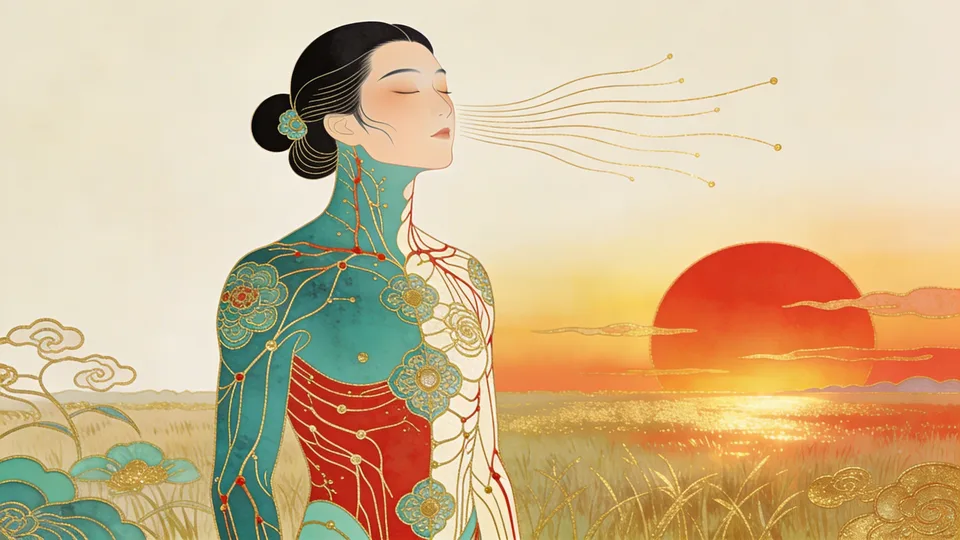
创作不是拿起画笔那一刻才开始,而是你第一次为落日屏住呼吸。艺术家不是职业,是感官全开地活着:像把皮肤翻到外头,让风直接吹进神经末梢。
Creation does not begin the moment you pick up the brush. It begins the first time you hold your breath for a sunset. An artist is not a profession — it is living with all your senses turned outward, as if your skin were flipped inside out and the wind blows directly on the nerve endings.
Most people treat “artist” as a job title or a talent: some have it, and the rest of us are bad at drawing. Rick Rubin’s The Creative Act rejects both. Living as an artist is a practice. You are either engaging in the practice or you are not. It makes no sense to say you are not good at it — it is like saying “I’m not good at being a monk.” And because it is a practice of perception rather than production, no matter what tools you use to create, the true instrument is you. What you make does not have to be witnessed, recorded or sold to count.
Attention is the work
If the instrument is you, then the work starts with what you notice. Living in discovery is at all times preferable to living through assumptions. Children manage this easily. They accept new information with delight instead of checking it against what they already believe, and they stay curious, not jaded. The universe is only as large as our perception of it. When we cultivate our awareness, we are expanding the universe.
The price of sensitivity
That openness has a cost, and Rubin doesn’t hide it. If you see tremendous beauty or pain where other people see little or nothing, you live with big feelings all the time, and when nobody around you sees what you see, you feel alone. The sensitivity that allows artists to make the art is the same vulnerability that makes them tender to being judged. One reason so many great artists die of overdoses is that they use drugs to numb a painful existence, and the reason it is painful is the reason they became artists in the first place.
So the book’s open-hearted promise comes with a condition: the creative act is not about the artifact but about the quality of attention that produced it — and that quality of attention is available to anyone willing to pay the price of sensitivity. The price is feeling everything more deeply, which means hurting more and needing more courage to stay open. Numbing the sensitivity to avoid the pain kills the art and the artist together.
Letting go of the work
The same sensitivity makes finishing hard. When you believe the work before you will forever define you, it is difficult to let go. You polish, freeze, and sometimes decide the whole thing must be thrown away. Musicians have a name for one version of this, demo-itis: falling in love with an early rough recording so completely that every later take sounds wrong. But each piece reflects who you are at this moment, not the whole of you. Clinging to it is like spending years rewriting the same diary entry, and it robs the next works of being made.
Structure can help here. A rule is a way of structuring awareness. It narrows the field so you can see, rather than caging what you find. What hurts is the weight that comes from outside the work: fear of criticism, attachment to commercial results, competing with your own past.
Recognition is the heaviest of these. Artists who chase it as a remedy for not feeling enough are rarely ready for what it is like. Most of fame is not as advertised, and many end up as empty as before, sometimes emptier, depressed to find that what they spent their lives chasing has not fixed their insecurities. Success occurs in the privacy of the soul.
What, then, is the work for? Rubin’s answer is that it may not be possible to know who you are without somehow expressing it. Making something is how the self becomes visible to itself, and failure is the information you need to get where you are going. The goal is not perfection but sharing how you see the world, which starts again every time a sunset makes you hold your breath.
References:
- Rick Rubin, The Creative Act: A Way of Being