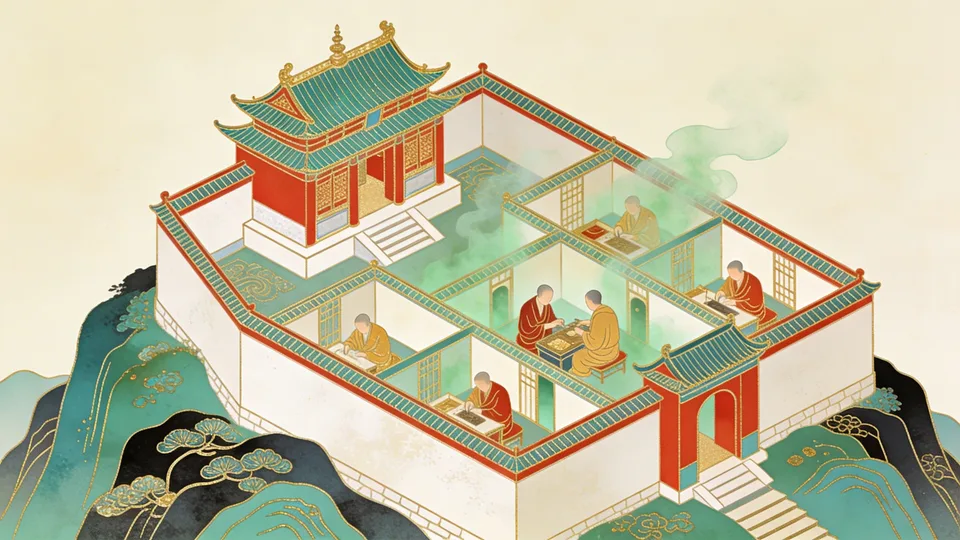
The wall that keeps the crowd’s bad ideas out also keeps the experts’ bad ideas in.
Dr. Oz was a professor of surgery at Columbia, by all accounts quite good. Then he went on television and started catering to the public, and the medical profession treated him as though he had defected. Imagine a bishop declaring that The Da Vinci Code is 100% real. Why would a field punish one of its own for being popular, and what does that habit cost it?
Scott Alexander’s answer is that expert fields work like priesthoods, and Only your reputation within the priesthood matters. Someone can have tens of thousands of fans for popular writing in a field, and the extra status it gives them within the field is within a rounding error of zero. That contempt for two-way traffic with the public looks snobbish, but it is an adaptive artifact. The outside world is so much bigger, so full of delicious status waiting to be consumed, that any weaker border would soon be overrun.
The borders that make experts useful
The medical priesthood keeps three borders. The first is against the public, which is the one Oz crossed. Ideas that sound too much like the public’s get penalised for that reason alone.
The second is against money. A doctor who seems too mercenary loses status. By the time you finish medical school and residency, your non-doctor friends have drifted away, and all the old sources of status have been excised and replaced with the all-seeing eye of the medical priesthood. Sell out and start a supplement line, and you might get a Ferrari, but everyone whose opinion you respect will hold you in contempt.
The third is ritually pure communication. Findings go into journals, not Twitter threads, and everyone in the field reads the same few journals, so the whole priesthood ends up on the same page. That solves a real coordination problem. Together the three borders let doctors care about being right in front of other doctors instead of being liked by patients, and that is most of what makes medical consensus worth trusting.
Why the borders let plagues in
The same borders that keep out bad public taste also produce a monoculture. Priesthoods draw from a narrow type: upper-class, well-educated, successful but not too successful, prone to abstract thought. Then they place many people of that type in a community with dense internal connections and thin external ones. Aurochs in the wilderness probably got diseases rarely. Cram ten thousand genetically near-identical cows into a warehouse, and your beef ends up 95% antibiotics by weight. The priesthoods are a perfect environment for memetic plagues.
The dangerous ideas are the ones especially appealing to smart people and especially repugnant to the public they are defining themselves against. Alexander’s main example is wokeness, which let priests stay apart from the public while feeling more in touch than it: learning the special language made you both exclusive and current. Once an idea like that spreads through dense internal discussion, the priesthood locks it in as consensus and stands firm against the rest of the world. Their intelligence made them easy prey for bad ideas that flattered them as intellectuals. This is paradigm lock-in with an institution built around it.
Trusting a priesthood anyway
None of this makes the priesthoods worthless. There is only one medical priesthood, and its reputational incentives still mostly work: priests fear provoking other priests more than they want worldly rewards for lying. A New York Times article is probably spun and selected to support an agenda, but it is 99% likely to be factually true in a way a random YouTuber is not. So the priesthoods are indispensable and unreliable at the same time. But the priesthoods are no longer trustworthy on anything adjacent to politics, because that is where the plague has hit hardest.
The obvious fixes both fail. Abolishing the priesthood loses the consensus we need, and opening it to the public destroys the border that gives it value. What would help is more internal diversity without a weaker external boundary, which makes a priesthood less fragile, in antifragile terms, without making it less of a priesthood. Historically, that is the one thing priesthoods are worst at doing. And the border cuts both ways for the people inside it. You can resign from a priesthood. You can even be excommunicated. But you will always be a defrocked priest. You can never go back to being a normie.
References:
- Scott Alexander, On Priesthoods, Astral Codex Ten