Modern systems survive by pretending unlike things are interchangeable.
A bank deposit is treated as a dollar. A treasury is treated as cash. A metric is treated as reality. A job title is treated as a person. A ticket is treated as work. A specification is treated as intent. A soft yes is treated as commitment. A social script is treated as connection. Most of the time this is not deception. It is infrastructure. Civilization would stop if every symbol had to be redeemed into the thing itself before anyone could act.
This is the token mechanics underneath consensus reality: the shared world becomes operational when enough people accept the same substitutions and the same redemption systems.
The danger appears when the substitution is treated as unconditional. The token works as long as nobody demands too much redemption at once. The crisis is not that the token was fake. The crisis is that everyone forgot the token was a token.
The deep pattern: every abstraction creates liquidity by hiding conversion risk. The more liquid the abstraction becomes, the more the system forgets the risk it is warehousing. Then stress arrives, people ask for final settlement, and the equivalence breaks.
Simple Picture
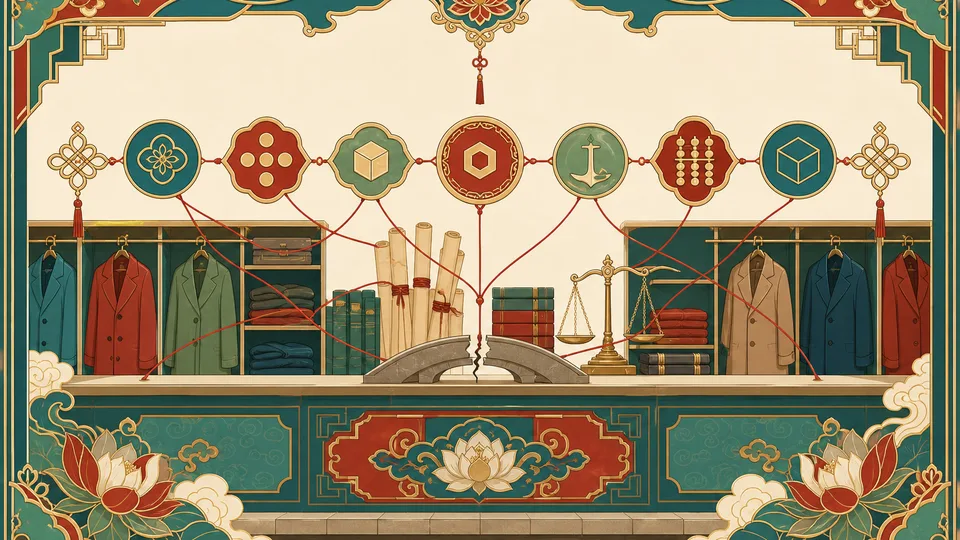
Imagine a coat check at a crowded theater. You hand over your coat and receive a numbered ticket. For the next two hours the ticket is functionally your coat. You can relax because the ticket gives you a claim. You can move through the theater without carrying the bulky object. The system is better because coats have been converted into light, portable symbols.
But the ticket is not the coat. It is a claim on the coat under normal operating conditions. If the coat room catches fire, if the attendant loses the rack, if everyone rushes the counter at once, the distinction becomes violently real. A ticket is only as good as the redemption system behind it.
Civilization is a tower of coat checks. Money is a ticket for stored labor. Credentials are tickets for competence. Titles are tickets for identity. Metrics are tickets for understanding. Contracts are tickets for trust. Social roles are tickets for personhood. The question is not whether tickets are bad. Tickets are miraculous. The question is whether the thing behind the ticket still exists, whether it can be redeemed under stress, and who is carrying the conversion risk while everyone else enjoys the liquidity.
The Financial Version
Central banking makes the mechanism explicit. The financial system depends on treating deposits, reserves, treasuries, money-market shares, and other pseudo-dollars as interchangeable with dollars. This is not a minor convenience. It is the system. If everyone had to inspect the backing of every dollar-shaped object before accepting payment, economic life would freeze.
The central bank’s real job is therefore not simply setting interest rates. It is maintaining the field of equivalence: making the market believe that a treasury can become cash, that a deposit can become reserves, that a money-market share can become a dollar. The Fed is the theater manager standing behind the coat check, promising that the ticket will redeem.
The 2020 treasury run was terrifying because treasuries are supposed to be the safe ticket. They are the rich person’s cash, the foreign central bank’s savings account, the collateral layer underneath half the system. When holders tried to convert treasuries into dollars all at once, the system discovered that even the safest ticket had redemption risk. The Fed had to buy the tickets to restore the fiction that the tickets had always been as good as coats.
This is why load-bearing illusions are not mere lies. The equivalence between treasury and cash is not metaphysically true. It is operationally necessary. Shattering it in the name of realism does not reveal a clean world underneath. It collapses the settlement layer everyone is standing on.
The Social Version
Personhood has the same architecture. A role is not a person, but society treats the role as a redeemable claim on the person. Doctor, mother, founder, artist, engineer, wife, monk: each is a social handle that lets others process an illegible interior without inspecting it directly.
The handle creates liquidity. It lets a stranger know how to address you, what to expect from you, where to place you in their predictive model. Without the handle, you are not free in some romantic sense. You become hard to route. You become a null value in the social parser.
But the handle is not the person. It is a ticket for access to a compressed version of the person. Under normal conditions, this is useful. Under stress, the difference becomes cruel. The company man retires and discovers that people were bonded to the title. The spouse leaves and discovers that the social world recognized the couple-script more readily than either inner life. The successful child breaks the family role and discovers that love was partly a claim on performance.
Catalog mode is the romantic version of this failure: beauty, income, height, fertility, charisma, and status circulate as useful tokens until stress demands redemption into the person behind them.
A social crisis is a final settlement run on personhood. Someone asks: will you still see me when the ticket no longer matches the coat? When the role fails, when the brand collapses, when the face cannot be maintained, when face is not convertible into actual trust — is there a person-to-person redemption system underneath?
Most relationships cannot answer this question because they were never built on the person. They were built on the ticket.
The Organizational Version
Agile and metric management are equivalence machines. A ticket becomes work. Velocity becomes productivity. Standup updates become understanding. Compliance becomes alignment. The dashboard becomes the team.
The substitution is attractive because it creates managerial liquidity. Actual work is thick, local, tacit, context-dependent, and hard to inspect. Tickets are portable. Metrics are comparable. User stories can be rearranged, reprioritized, counted, charted, and explained upward. They make the work legible to people who do not understand it.
The cost is that the conversion risk is pushed downward. Engineers must constantly redeem the ticket into reality. They must turn underspecified fragments into coherent systems, preserve context that the ticket cannot contain, and absorb the damage when a manager confuses ticket-completion with value-creation. The abstraction has liquidity for the observer because it has illiquidity for the doer.
Specifications expose the same trap. The spec is treated as the thing-to-be-built, but the only completely unambiguous specification of a program is the program. Everything else is a coat-check ticket with missing clauses. The more novel the work, the worse the equivalence. Delegation works when the conversion path is already known. It fails when discovery is the work itself.
Goodhart’s Law is the general formula: the metric was a ticket for the reality; once targeted, the ticket becomes its own economy. People stop redeeming it into the underlying thing and begin trading the ticket itself.
Trust as the Redemption Layer
The reason high-trust systems feel magical is that they do not require constant settlement. In a high-trust relationship, imprecise words still redeem into intended meaning. In a low-trust relationship, even precise words are discounted. Every sentence demands documentation. Every promise demands collateral. Every ambiguity becomes a potential default.
Trust is the reserve asset beneath social equivalence. It allows tokens to circulate without immediate redemption. A friend can say the wrong sentence and you still receive the right intent because the relationship has reserves. A competent engineer can take an ambiguous task and return the right system because the organization trusts judgment more than tickets. A reliable person can give a soft explanation and be believed because previous behavior backs the claim.
When trust is low, the system demands cash settlement everywhere. Contracts multiply. Metrics multiply. Screenshots multiply. People ask for proof because the token no longer clears. This is why bureaucracy feels like deflation: everyone is hoarding interpretive liquidity. Nobody wants to accept anyone else’s paper.
The bid ledger names the intimate version. A bid is a tiny token asking to be redeemed into attention. Most bids are small enough that the system can clear them casually. But the important bids carry real settlement risk: the confession, the apology, the invitation that matters, the request to be seen without the role. A life optimized for safe bids is liquid but weightless. The bids that change you are the ones where the token can fail.
The Straussian Read
Surface text: abstractions are useful but dangerous when mistaken for reality.
Hidden text: most social order depends on everyone politely not asking for final settlement. The credential is not competence. The marriage script is not intimacy. The KPI is not value. The title is not authority. The diagnosis is not self-knowledge. The like is not love. The apology is not repair. The AI-generated output is not understanding. The fact that these substitutions often work is exactly what makes them dangerous. They work well enough to become load-bearing, then fail badly enough to reveal what they were replacing.
The taboo knowledge is that maturity is not seeing through every token. That is adolescent lucidity. Maturity is knowing which tokens must circulate, which need better backing, and which should be redeemed before they rot the balance sheet.
Dimwit / Midwit / Better Take
The dimwit take is “all symbols are fake — only the real thing matters.”
The midwit take is “abstractions are necessary — society runs on roles, metrics, money, contracts, and credentials.”
The better take is that abstractions create liquidity by warehousing conversion risk, and wisdom is tracking where that risk is hiding. The point is not to abolish tokens. A world without tokens is a world without scale. The point is to ask: what does this token claim to redeem into, under what conditions does redemption fail, who pays when it fails, and what reserve asset backs the system when everyone wants settlement at once?
Main Payoff
The diagnostic question for any modern system is simple:
What is being treated as interchangeable that is not actually interchangeable under stress?
Ask it of money and you find central banking. Ask it of work and you find the ticket system. Ask it of relationships and you find roles mistaken for persons. Ask it of communication and you find trust. Ask it of AI and you find the difference between fluent output and situated understanding. Ask it of yourself and you find the proxies you have been living through because direct contact with the thing was too expensive.
The mature move is not to smash the fiction. It is to inspect the backing. Keep the ticket, but know where the coat is. Use the metric, but keep talking to the people doing the work. Wear the role, but do not confuse it for the self. Accept the contract, but remember the universe did not sign it. Let tokens circulate, but build enough trust, competence, and direct contact that the system can survive redemption.
A token is not a lie. A token is a promise about conversion. The lie begins when the promise forgets the converter.
Threads to Pull
Ideas, thinkers, and questions worth pursuing — and why.
- Final settlement as a general systems test — bank runs are only the cleanest version. A marriage, team, identity, or friendship can also experience a settlement run when too many deferred questions demand redemption at once. The interesting research question is which systems maintain reserves before they are needed.
- Trust as social collateral — trust lets ambiguous tokens circulate because people believe failed conversions will be repaired. This suggests trust is less like sentiment and more like working capital: the buffer that prevents every interaction from becoming cash-on-delivery.
- AI and the counterfeit converter — AI delegation produces fluent tokens at high speed, but the conversion layer remains human intent, taste, and verification. The value question is not whether the output looks right but whether the system can redeem it into situated usefulness under stress.
- Personhood after role failure — legibility gives a person social liquidity, but the rare relationship is one that survives when the role stops clearing. Rogers’ unconditional positive regard may be a relationship where the other person accepts the coat directly, without requiring the ticket.