Jouissance is not happiness. It is the satisfaction extracted from the very pain that appears to block happiness. The subject says, “I want this suffering to end,” but the suffering keeps the Other present, keeps the grievance alive, and protects the subject from the silence that would arrive if the case were actually closed.
Jouissance is suffering that has become a relational technology: pain preserved because it keeps someone, something, or some imagined judge in the room.
Simple Picture
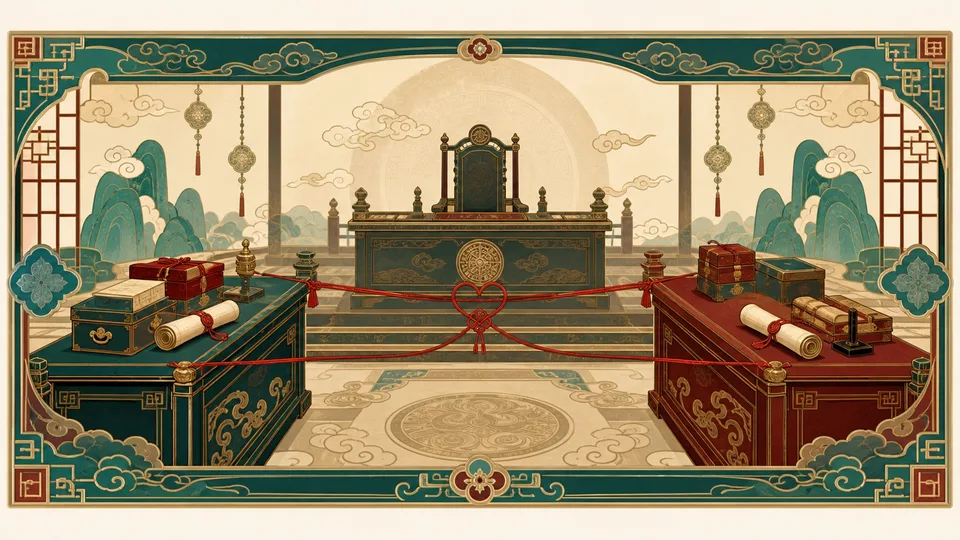
Imagine an unresolved lawsuit. The plaintiff insists they want justice. They preserve every insult, rehearse every argument, and keep the defendant psychically present through the case. The lawsuit gives life a structure: wrong, wrongdoer, court, possible verdict. The person is not alone because the defendant is always there, even as an enemy.
The hidden terror is settlement. If the damages are paid and the defendant leaves, the plaintiff has to go home. The grievance hurt, but it also organized reality. It gave the self a role, an audience, an explanation, and a tether to the one who supposedly caused the pain. The case must never end because the case is the relationship.
The Happiness Trap
The ordinary model treats happiness as a terminal node: get the partner, body, money, diagnosis, healing, or family resolution, and happiness becomes available. This sounds practical, but it keeps the project machine running forever.
Completion is dangerous because it removes motion. If the relationship is fixed, the trauma processed, the achievement secured, and the body optimized, the psyche has to face the blank question underneath: what am I when there is nothing left to fix? So it manufactures new deficits. The relationship becomes slightly wrong. The body becomes slightly wrong. The job becomes spiritually dead. The next diagnosis, lover, subculture, upgrade, or crisis appears as a fresh arena for motion.
The uncompletable game is the prestige version: the wound needs a game it cannot complete because completion would expose the wound’s real function. Not arrival. Perpetual motion.
Suffering as Tether
Jouissance begins where pain stops being merely aversive and becomes load-bearing. The bitter person does not simply remember the injury. They preserve it. They return to it for warmth. The grievance proves that someone mattered enough to damage them, that the world still owes them an answer, that the Other is still implicated in their being.
Resentment is the treasure-chest form: trash guarded as evidence because handing it over would feel like losing the last proof that the injury meant something. Bitterness is what happens when this compounds. The world becomes a debtor that must never repay, because repayment would terminate the only relationship the subject still knows how to sustain.
Therapy can accidentally feed this structure. “I cannot be happy yet because I still need to process my trauma” can be true for a season. Past that season, it becomes jouissance with clinical permission. Therapeutic etiology names the stopping condition: trace the cause far enough to dissolve the stuckness, then set the key down. The diagnosed life is what happens when the key becomes identity.
Baseline Happiness
The way out is not to achieve happiness. That keeps happiness at the end of a project, which keeps the psyche generating projects to avoid arriving.
The sharper move is to acknowledge the obscene reversal: you have always been “happy” through jouissance. Not cleanly happy, not peacefully happy. Happy in the sense that the system has been receiving satisfaction from the suffering it claimed to want removed. The wound has been paying out: identity, explanation, moral leverage, connection to the Other, protection from the blankness of autonomy.
That acknowledgment makes baseline happiness possible because it reveals that misery is not pure deprivation. It is an active arrangement. Once the payoff is visible, the mechanism becomes visible.
The childhood bully made you feel impotent. The parent made you feel permanently judged. The peer group made worth conditional. The original scene mattered because it installed the template. But present reality may be simpler: the bully no longer exists. The parent is not in the room. The peer group has no jurisdiction. What remains is an internal court continuing to hold proceedings after the defendant, judge, and audience have left.
Baseline happiness is not the prize after the case is won. It becomes available when you notice that the case has been over for years and you have been keeping it alive for the satisfaction of prosecution.
This is not positive thinking. It is structural subtraction. If the mechanism says “I am being dominated,” but no one is currently dominating you, the pain is no longer information about the present. It is a loyalty ritual to the past.
The Internalized Bully
This clarifies one central pathology of Chinese culture: the bully is not only external. It is installed.
In a mianzi system, the judging Other is parents, grandparents, teachers, classmates, relatives, group chats, school rankings, marriage markets, and the invisible tribunal of “what people will say.” The child does not merely face judgment. The child learns to run the judging system internally.
This is why leaving the room often does not help. The parent can be silent and still speak inside the child. The social circle can be absent and still audit the self. The phantom child is one form: the real child is compared against an idealized future self whose imagined excellence makes every present state deficient. Displacement exposes how much of the self was built from external metrics. Shame freezes the exit: relaxation itself feels like negligence under surveillance.
The result is little access to ordinary baseline okayness. There is always another audit, comparison, invisible audience. Even rest becomes performative: rest as recovery for future achievement, rest as something deserved after suffering, rest as something that must be justified. Unconditioned rest looks irresponsible because the internal judge has no category for a self allowed to exist without earning its existence.
That is why jouissance is so sticky here. Suffering proves the court is still real. The pain keeps you inside the family and consensus structure even when your body has left it. Letting it go does not feel like relief at first. It feels like betrayal, exile, and suspicious freedom.
Better Take
The dimwit take is “I am unhappy because I lack the right things.”
The midwit take is “external achievements do not last, so I must finish my healing work before I am allowed to feel joy.”
The better take is that many people are not trying to become happy. They are trying to preserve the structure that makes unhappiness meaningful.
They do not merely suffer from the wound. They draw identity, connection, and moral leverage from it. The suffering is not only a problem. It is a solution to a deeper problem: the terror of being separate, unsupported by grievance, and no longer able to blame the Other for the shape of one’s life.
The worse-is-better reality is less heroic: you need motion, friction, and renewable difficulty. The answer is not permanent bliss. It is to stop choosing projects whose hidden function is self-punishment. Keep clean loops: craft, service, practice, friendship, maintenance, play. Do not make your private void into other people’s weather.
Main Payoff
The brutal question is not “why am I still suffering?” It is: what does this suffering let me keep?
Often the answer is not flattering. It lets you keep the old defendant, the fantasy of a final verdict, the self-image of the wronged one, and the avoidance of a life no longer organized by prosecution.
This does not mean the injury was imaginary. Pain is the wound. Jouissance is the psychic economy that grows around the wound and learns to feed on it.
Freedom begins when the subject can admit the obscene fact: part of me wants this to continue. Not all of me. Not the part that wants peace. But some part has been getting exactly what it wanted from this misery.
That admission is not self-condemnation. It is the first honest withdrawal from the lawsuit. The Other leaves the room. The judge disappears. The case file closes. What remains is not instant happiness, but something more workable: a life that no longer gets to outsource its shape to the wound.