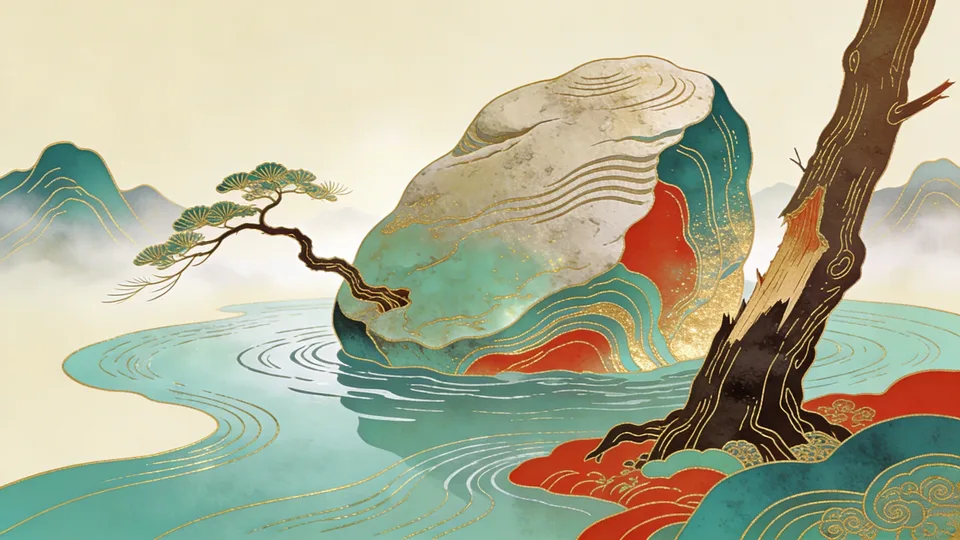
Water never fights the stone, and the stone still loses.
Most advice about getting things done assumes force: try harder, add more, hold tighter. The Tao Te Ching, eighty-one short chapters attributed to Laozi, argues the other way at almost every turn. Strength comes from what yields, usefulness from what is empty, and order from leaving things alone. The passages below are the ones that make that reversal clearest.
The Nameless
无名天地之始,有名万物之母 Wú míng tiān dì zhī shǐ, yǒu míng wàn wù zhī mǔ The nameless is the origin of heaven and earth; the named is the mother of all things. What can be spoken is already one step removed from the source. The ground of consciousness is prior to language: the moment you name it, you have created an object rather than pointed at the ground.
Wuwei (无为)
道常无为而无不为 Dào cháng wúwéi ér wú bù wéi The Dao does nothing, yet nothing is left undone. Effortless action is not passivity but action so aligned with the nature of things that it needs no force. Meditation shows the same thing in miniature: any effort to still the mind stirs it further. Wuwei is what remains when trying stops.
我好静,而民自正 Wǒ hào jìng, ér mín zì zhèng I prefer stillness, and the people align themselves. Lead by non-interference. This is the leader-leader principle in its oldest form: create the conditions for self-organization rather than imposing order.
善结无绳 Shàn jié wú shéng Good knots need no rope. The strongest connection, between people or between an organization and its purpose, holds without visible binding.
Softness and Reversal
弱者道之用 Ruò zhě dào zhī yòng Weakness is the Dao’s function. Softness overcomes hardness, the way water wears down stone without ever pushing back.
企者不立,跨者不行 Qǐ zhě bù lì, kuà zhě bù xíng Tiptoers stand unsteady; straddlers walk poorly. Forceful effort fails on its own terms: straining for height makes you less stable, not taller.
大成若缺 Dà chéng ruò quē Great perfection seems flawed. The thing that looks complete is brittle; the thing that looks unfinished has room to grow.
五色令人目盲,五味令人口爽 Wǔ sè lìng rén mù máng, wǔ wèi lìng rén kǒu shuǎng Five colors blind the eye; five flavors dull the palate. Adding more stimulation does not add pleasure. It raises the threshold for feeling anything at all.
The Utility of Emptiness
当其无,有器之用 Dāng qí wú, yǒu qì zhī yòng In emptiness lies a vessel’s utility. The cup is useful because of the space inside, not the clay around it. The hub is useful because of the hole. The room is useful because of the emptiness within the walls. What is not there is what makes what is there useful.
天地不仁,以万物为刍狗 Tiān dì bù rén, yǐ wàn wù wéi chú gǒu Heaven and earth are not kind; they treat all things as straw dogs. This is the hardest passage to sit with, and the necessary counterweight to the gentle ones. Nature’s softness is not kindness but impartiality: the universe does not care about your narrative. The cat does not ask whether the world is fair, and its freedom begins in that refusal.
References:
- 老子 (Laozi), 《道德经》(Tao Te Ching)