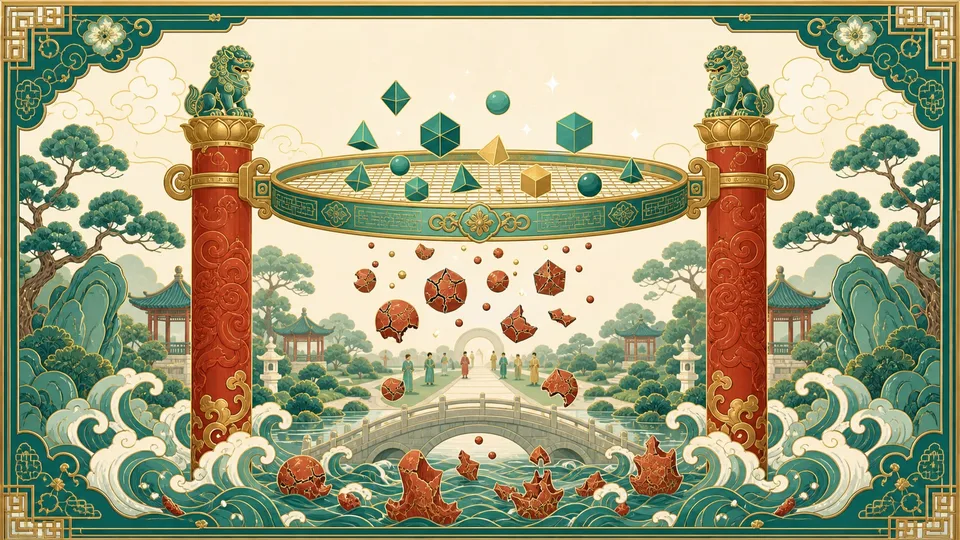
Nothing non-shit survives without a filter that hurts. The hurt may be mild, private, and early: a draft rejected, a design killed, a person told the work is not good enough. Or it may be deferred, public, and late: users trapped in broken software, juniors maintaining a pile of compromises, customers paying for cowardice. The cruelty does not disappear. It only moves.
Simple Picture
Imagine a kitchen where nobody is allowed to throw away bad ingredients because throwing them away would be “mean” to the farmer, the buyer, or the chef who selected them. Everyone is kind at the intake point. The meal is terrible. The diners get sick.
That is what organizations do when they refuse selective pain. They protect the producer from the pain of rejection and pass the pain downstream to the consumer, maintainer, teammate, or future self. The system congratulates itself on kindness because the cruelty was laundered through time.
Cruelty Means Selection Pressure
“Cruelty” here does not mean sadism. Sadism enjoys pain. Quality control imposes pain because reality requires discrimination.
The minimum act of quality is saying no. No, this does not ship. No, this person cannot own that system. No, this feature makes the product worse. No, this explanation is not good enough. No, the deadline does not justify poisoning the codebase. No, the committee does not get to blur the decision until everyone can feel included.
Without a no, everything enters. When everything enters, the system becomes premium mediocre: polished enough to avoid shame, compromised enough to avoid excellence. The visible texture may improve. The underlying standard disappears.
Trust is what makes this cruelty metabolizable. In a high-trust environment, a hard no can be received as contact with reality. In a low-trust environment, the same no reads as domination, humiliation, or exclusion. This is why bad organizations oscillate between fake kindness and bureaucratic brutality. They lack the trust required for direct standards, so they substitute process, metrics, and passive aggression.
The Forms of Cruelty
Cruelty appears in different costumes.
Reality cruelty is the cleanest form. The prototype fails. The market ignores the feature. The test breaks. The user gets confused. Reality gives feedback without politics. Strong teams move this pain as early as possible because early reality is cheaper than late reality.
Taste cruelty is the practiced judgment that refuses ugliness, bloat, incoherence, and false notes before a metric can prove them wrong. This is taste before it becomes status theater: discrimination in service of the object, not the critic’s superiority.
Managerial cruelty is the willingness to make decisions that hurt in order to preserve the work: narrowing scope, removing someone from a role, killing a project, refusing a promotion, ending a meeting, naming a tradeoff. It becomes legitimate only when tied to reality and responsibility. Detached from those, it becomes mere domination.
Peer cruelty is distributed competition: comparison, shame, rivalry, involution, the ambient pressure to never be the slowest or weakest. It can produce intensity, but it corrodes judgment because each person optimizes against nearby people instead of the work.
Bureaucratic cruelty is pain administered by rules. Nobody owns the wound. The form was required, the process was followed, the escalation path was clear, the rejection came from a panel. This is the cruelty of simple sabotage: procedure doing violence while every individual remains innocent.
Ritual cruelty is inherited harshness treated as sacred. The pain proves seriousness. The ordeal proves belonging. The organization forgets what the filter was supposed to select for and preserves the suffering as tradition.
Survival cruelty is the darkest form: people under threat capture chokepoints and make others pay toll because the alternative is exposure. The cruelty is neither aesthetic nor operational. It is defensive. This is why it is so hard to dislodge.
Necessary vs Pathological Cruelty
Necessary cruelty has three properties.
First, it is object-facing. The pain is attached to the work, the user, the truth, the constraint. “This design fails because the user cannot understand it” is object-facing. “This design fails because I outrank you” is not.
Second, it is owned. Someone takes responsibility for the judgment. A named person says no and absorbs the social cost. Anonymous committees are almost always cruelty-laundering machines.
Third, it is learning-producing. The rejection clarifies the standard. The person who receives it understands more about reality afterward, even if they are angry. Feedback that only injures without increasing perception is not quality control. It is status violence.
Pathological cruelty has the inverse properties. It is self-facing, deniable, and perception-destroying. It protects the gatekeeper, hides behind process, and leaves the recipient more confused than before. Gatekeeping antipatterns are pathological cruelty disguised as care for quality.
The ethical distinction is not kind versus cruel. It is reality-aligned pain versus status-aligned pain.
The Chokepoint Problem
Every high-quality system needs a chokepoint somewhere. Someone or something must decide what gets in. A publication has editors. A product has taste-holders. A codebase has maintainers. A school has admissions. A laboratory has replication. A craft has apprenticeship. Remove the filter and you do not get democracy. You get sludge.
But the constraint that preserves quality is also the point most tempting to capture. The editor can become a clique. The maintainer can become a tyrant. The admissions office can become a class membrane. The architecture council can become a veto machine. The standard starts as service to the object and ends as service to the gate.
This is the tragedy: quality requires concentrated judgment, and concentrated judgment attracts power games. Distributed judgment avoids tyranny but produces mush. Centralized judgment preserves coherence but risks capture. There is no final escape from the tradeoff. There is only governance of where the cruelty lives and what it serves.
Why “Be Nice” Produces Bad Work
Niceness often means refusing to impose local pain. Do not reject the weak proposal too sharply. Do not tell the underperformer the truth. Do not kill the beloved feature. Do not make the stakeholder angry. Do not embarrass the person who is wrong. Each refusal looks humane in isolation.
At scale, this is cruelty to the system.
The weak proposal becomes roadmap debt. The underperformer becomes everyone else’s hidden workload. The beloved feature becomes product confusion. The stakeholder’s feelings become the product strategy. The wrong person becomes harder to correct because everyone has silently collaborated in pretending they were right.
This is CYA culture with a gentle face. Nobody wanted to be cruel at the decision point, so the organization became cruel everywhere else.
Dimwit / Midwit / Better Take
The dimwit take is “high standards require being harsh; soft people make bad products.”
The midwit take is “psychological safety and inclusive process produce better work.”
The better take is that good work requires enough safety to absorb cruelty and enough cruelty to prevent safety from becoming unreality. Psychological safety without standards becomes indulgence. Standards without safety become fear. The hard thing is not choosing kindness or cruelty. The hard thing is building enough trust that reality can hurt people without making them stop learning.
Main Payoff
The question to ask of any organization is not “is this place cruel?” Every organization is cruel. The question is:
- Who feels the pain?
- When do they feel it?
- Does the pain improve contact with reality?
- Can a named person explain and own the standard?
- Does the cruelty protect the work, or does it protect the gatekeeper?
The best organizations are not cruelty-free. They are cruelty-honest. They spend pain early, locally, and explicitly so they do not compound it downstream. They reject weak work before it becomes architecture. They tell people the truth before the truth has to arrive as humiliation. They let reality bite while the wound is still small.
The alternative is the sentimental organization: kind at every visible interface, brutal in every invisible consequence. It never says the cruel sentence, so the product says it for them.